The Bharat Renewable Energy (BRE) Summit & Expo ended on 5 November. By the official count, it drew over 75,000 visitors and delegates from about 135 countries. The government’s headline figure was USUS$400 billion of investor commitments. But the talk in the halls kept returning to a simpler question: how do households, farmers and new power users run on clean energy?
What stood out was the distance between the scale of the announcements on stage and the everyday applications of the technologies displayed across the exhibition floor.
Behind the billions of dollars in investment commitments and ambitious capacity targets were practical solutions aimed at homes, farms and businesses. It was a reminder that India's energy transition will ultimately be judged not just by the money committed or capacity added, but by how deeply clean energy enters everyday economic life.
Energy security sets the tone
The summit was held in a year of fuel shocks. Prime Minister Modi opened it with that backdrop.
In the official text of his address, he said the year had been dominated by talk of energy shocks, and that the West Asia crisis is still on. India has handled it better than many others, he said. He credited a decade of clean energy investment. His conclusion was that energy security is tied to economic security.
Indoen’s reporting on how India rebuilt its LNG supply chain after the Hormuz disruption shows why that argument lands.
On targets, the Prime Minister said about 300 GW of non-fossil capacity is in place against the 2030 goal of 500 GW. He then added a longer-range aim. Over the next 10 to 11 years, he said, the effort is to add another 500 GW. He called it somewhat challenging.
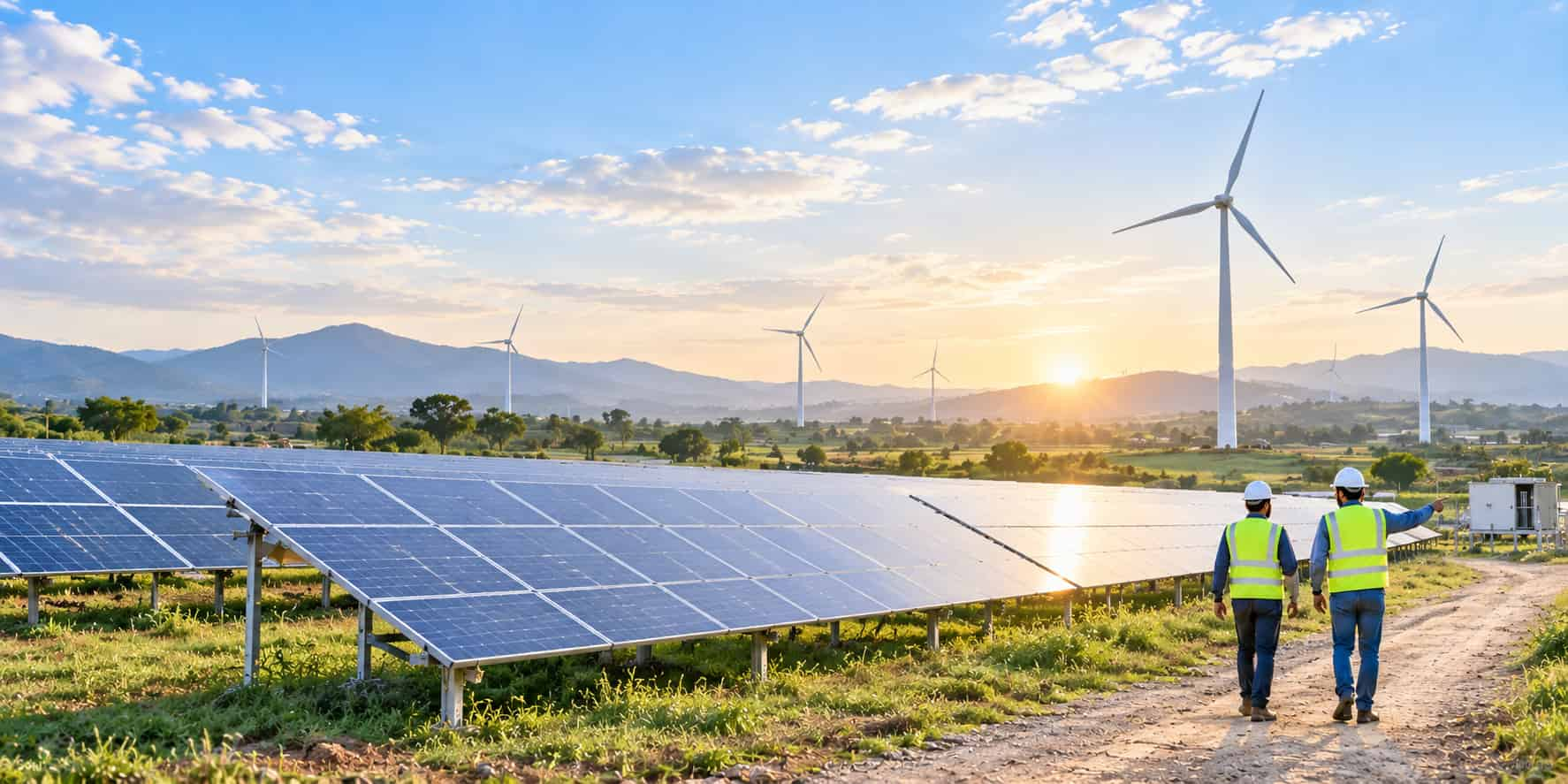
Union Minister Pralhad Joshi gave the sector’s present position. Non-fossil capacity has reached 310 GW, he said, with solar at 171 GW and wind at 60 GW.
 The US$400 billion
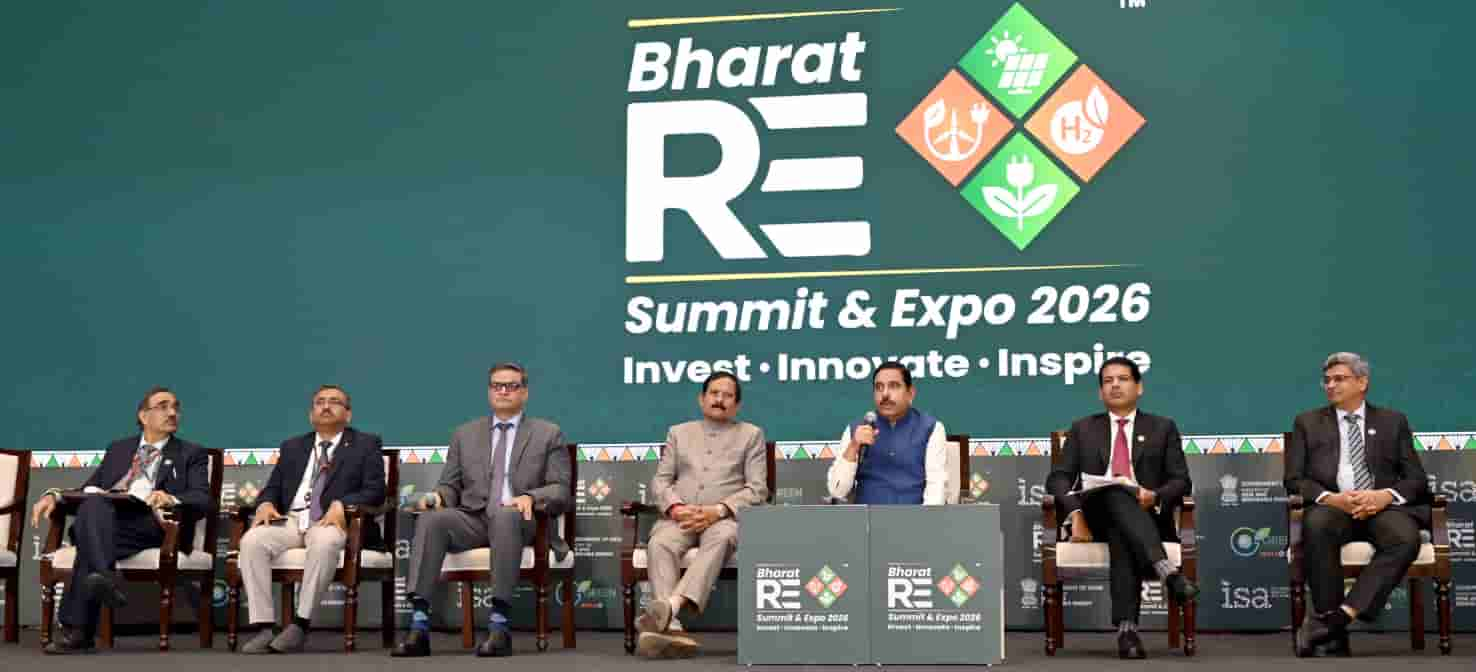
The largest number of the event came from Mr Joshi. He told reporters that investors at a CEO roundtable had committed about US$400 billion to the renewable sector. Domestic and foreign investors were both part of it, he said. He repeated the figure at the closing session.
He said company-wise details would follow. He set the figure against the sector’s requirement of about US$220 billion by 2030. Even if only part of the pledge materialises, he said, India would come close to that need.
The Prime Minister’s own figures gave the background. Over ₹15 lakh crore (USUS$164 billion) has come into renewables in a decade, he said. Nearly ₹6 lakh crore (more than US$63 billion) came in the two years since RE-INVEST 2024. He put the opportunity to the end of this decade at over ₹20 lakh crore (about US$220 billion).
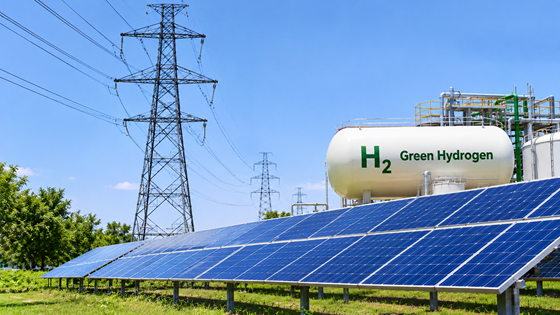
The concrete deals came mostly from states. Odisha signed 18 MoUs worth ₹1,17,557 crore (US$12.4 billion) for about 11,742 MW of tentative capacity. They span pumped storage, solar, wind, hybrids, batteries, green hydrogen and green data centres. ReNew signed for a 1,500 MW pumped hydro project in Ganjam, at about ₹9,000 crore (US$953 million). It is part of a ₹45,000 crore (US$4.76 billion) plan for the state. Datta Power Infra signed for 200 MW of renewables with 400 MWh of storage, at about ₹2,500 crore (US$265 million).
Goa signed with Bondada Engineering for about ₹3,000 crore (US$318 million) of projects. Maharashtra placed second in a national state assessment for 2025-26.
The summit also logged 10 MoUs and framework agreements. One was with SECI, with potential supply of 3 lakh tonnes a year of green methanol. Mr Joshi also reported meetings with France, Denmark, the Canada Pension Plan Investment Board and several Global South countries.
Homes, farms and kitchens
The most talked-about part of the Prime Minister’s speech was not about capacity. It was about households.
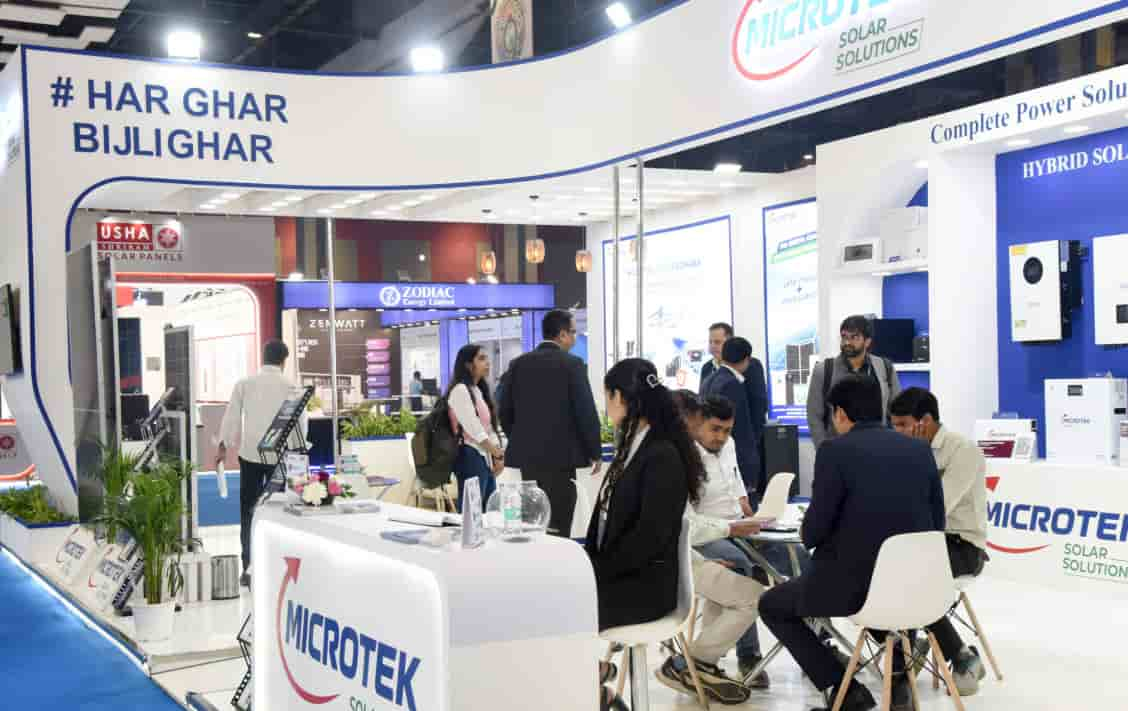
He asked startups, IITs and innovators to design solar models that meet a family’s needs round the clock. A family should be able to cook on power from its own rooftop, he said. “We need to launch a clean cooking movement,” he told the hall. He added that dependence on imported gas should come down as far as possible. He also wants more middle-class families to charge scooters and cars at home from rooftop solar.
The rooftop scheme was his example. More than 65 lakh homes have joined PM Surya Ghar in about two years, he said. For farmers, he said more than 30 lakh now have solar irrigation under PM-KUSUM. He wants the “annadata” to become an “urjadata,” with panels on unused land and field boundaries.
Mr Joshi gave a target for this side of the business. Distributed solar for self-consumption would cross 100 GW by 2030, he said at the closing session. Indoen has tracked the next phase of the rooftop scheme.
 Grid, storage and new demand
The second theme was that generation is only half the job.
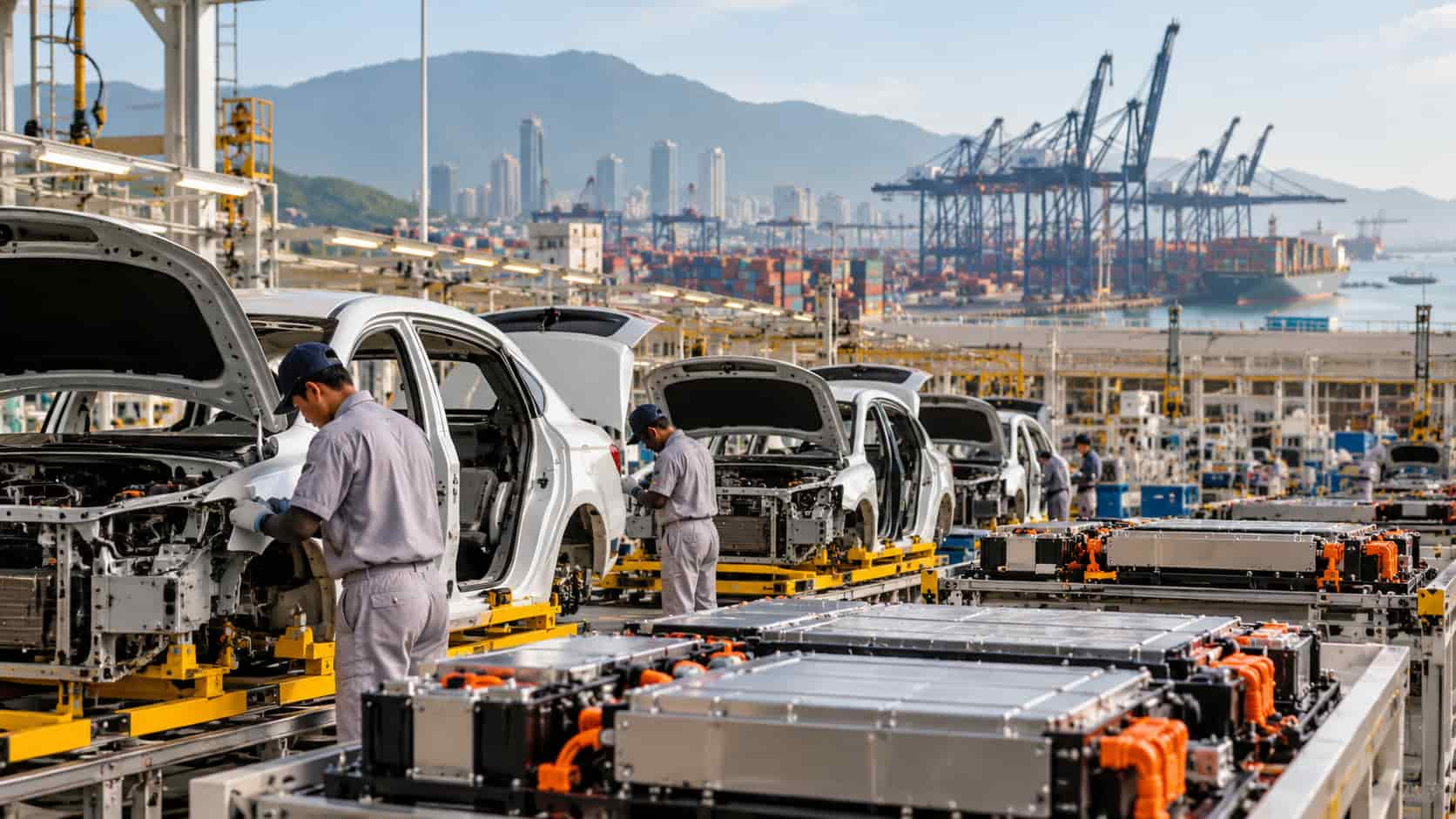
The Union Cabinet gave it a policy anchor on 4 November. It approved a ₹14,500 crore (US$1.54 billion) viability gap funding scheme for 92 GWh of grid-scale storage, from 2026-27 to 2030-31. The mix is 60 GWh of pumped storage, 30 GWh of batteries and 2 GWh of other technologies. Estimated investment is ₹97,600 crore (US$10.3 billion). The Cabinet also cleared a ₹2,814 crore (US$298 million) scheme for processing lithium and nickel.
These followed the Green Energy Corridor Phase III, approved on 30 September with an outlay of ₹1,86,405 crore (US$19.7 billion). Indoen has covered that approval.
Mr Joshi tied the schemes to curtailment. The government cannot ask investors to build 500 GW while generation is switched off, he told reporters.
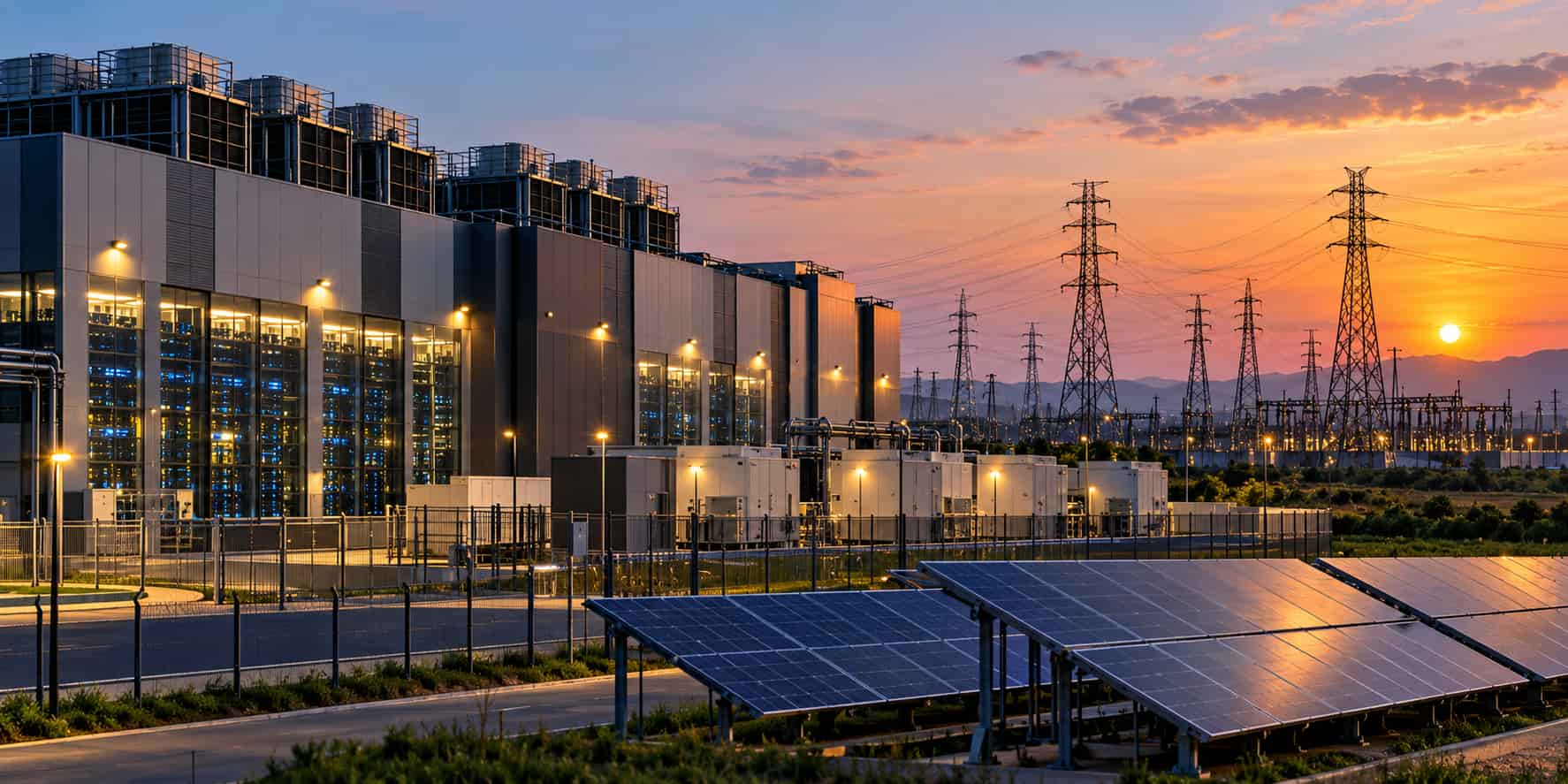
A newer thread was demand from artificial intelligence. At the closing session, he said AI data centres are expected to add 26.3 GW of electricity demand by 2031-32. “AI will power the future. Clean energy will power AI,” he said.
Sessions such as ‘The Next Terawatt’ ministerial plenary, organised by the ISA, CEEW and Energiva Ventures, and the ‘Watts Next’ forum run with BloombergNEF, covered the same ground: integrated planning with storage, resilient infrastructure, project finance, and digital and AI tools. The closing statement adds that round-the-clock supply contracts drew strong interest from foreign delegates. It cited a recent SECI tender at ₹5.25 a unit (5.6 US cents).
The global track
The summit hosted two international events under one roof.
At the ninth ISA Assembly, India was elected ISA President for a third consecutive term. A US$200 million Africa Solar Facility was proposed, to raise finance for solar in African countries. The ISA also launched an Academy and a capacity hub called SHINE.
The Green Hydrogen Conference looked at what projects need to move from demonstration to commercial scale. The Prime Minister restated the aim of 5 million tonnes of green hydrogen a year by the end of the decade. Mr Joshi said talks with the European Union on its rules for renewable fuels of non-biological origin are still on. Indoen has looked at the cost and carbon-rule questions around the hydrogen outlook.
The International Energy Agency also launched its India RE Market Report 2026 at the summit. The government says 37 reports and guidebooks were released in all.
Vice-President C. P. Radhakrishnan, speaking at the closing session, said India’s record shows environmental commitments can support growth. He pointed to jobs, lower industrial costs and lower import dependence.
Mr Joshi summed up the aim of the week in a line. The talks would move from “partnerships to projects, and from ambition to impact,” he said.
What to watch
A few decisions follow from the week. Mr Joshi said solar cell capacity is now 47 GW, and manufacturers have promised 70 GW by 31 December. He expects a decision within 10 days on extending relief under the approved-manufacturers list.
The rooftop target of one crore homes is set for March. The company-wise list behind the US$400 billion is still to come. The storage scheme now moves to bidding.
Image courtsey: PIB