The Middle East conflict has shaken Southeast Asia’s energy system. Before the war, about 60% of the region’s crude oil imports and one-fifth of its gas imports came from the Middle East. Governments responded with curbs and consumer relief, which added to fiscal pressure.
A new special report from the International Energy Agency (IEA) asks a different question. If demand for clean technology is rising, who will build it? The answer is not simple.
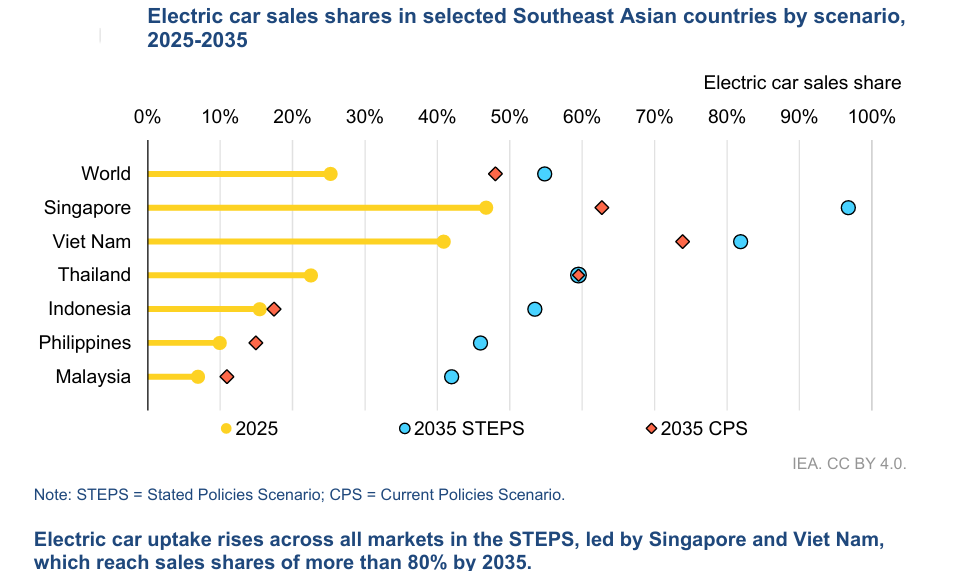
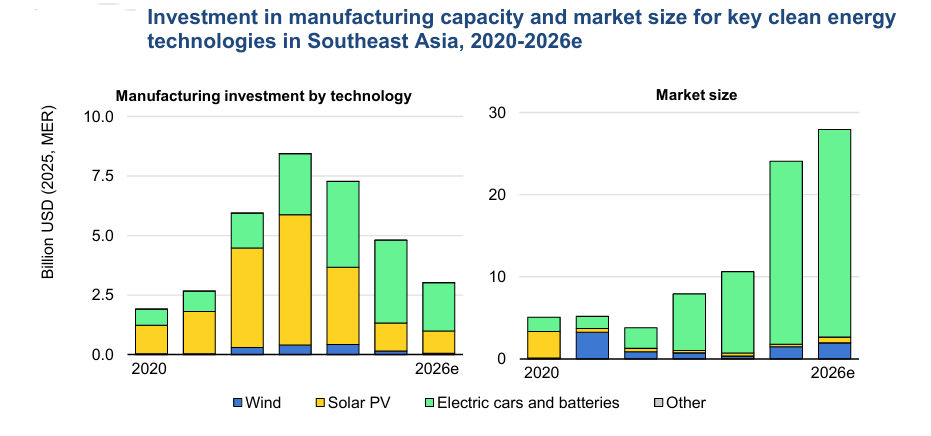
The demand side looks strong. Electricity use is over 70% higher than in 2015. By the end of the third quarter of 2026, more than one in four cars sold in the region was electric. The market for key clean technologies has grown from about US$5 billion in 2020 to around US$25 billion in 2025.
Under the Stated Policies Scenario (STEPS), that market crosses US$80 billion by 2035. Under current policies alone, it reaches about US$55 billion. The gap of roughly US$25 billion shows how much policy direction matters.
There is a second, quieter point. Under the STEPS, annual manufacturing investment in the region stays near US$6.5 billion, even as global investment falls sharply. Southeast Asia is swimming against the tide.
Solar is overbuilt and blocked
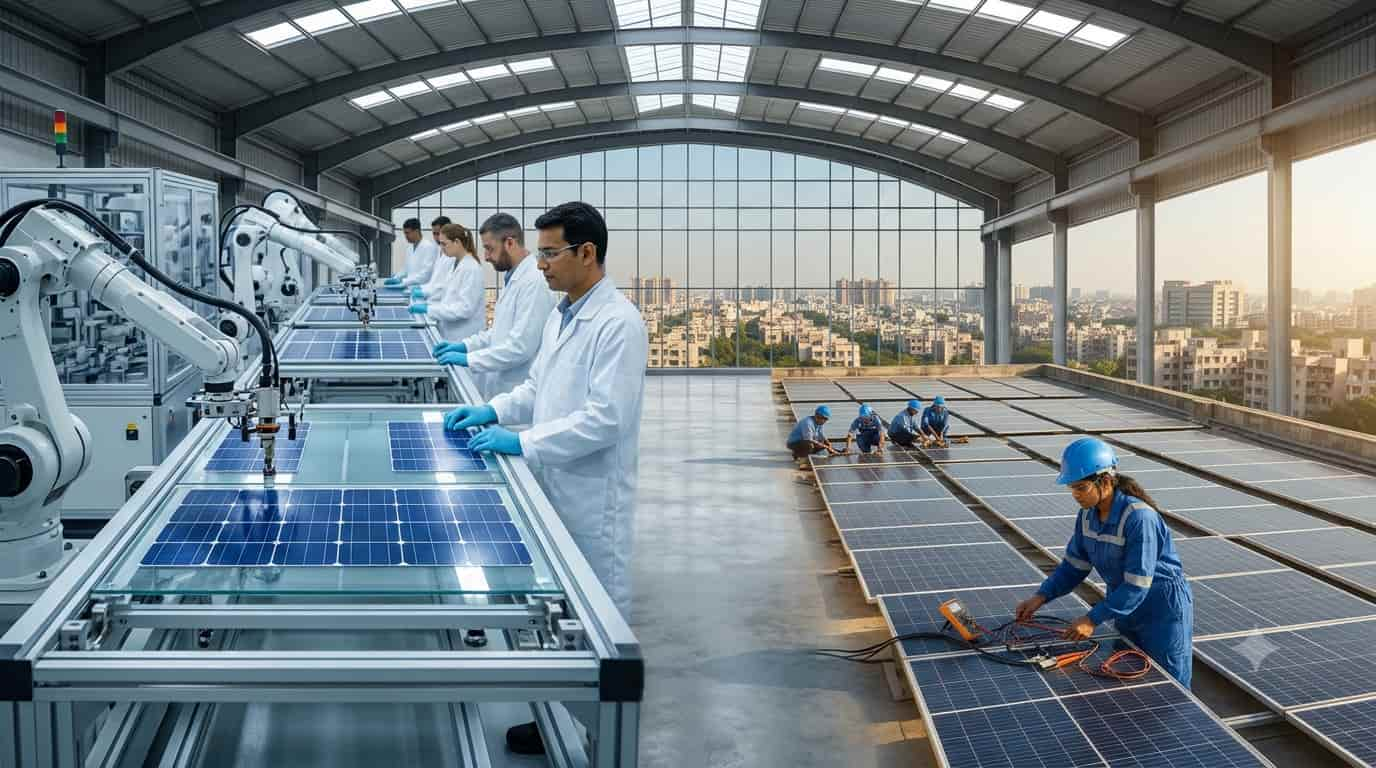
Solar was the region’s first big manufacturing success. Today it is the weak spot.
Module capacity fell from about 106 GW in 2023 to around 82 GW in 2025. It is projected to slip to 72 GW by 2030. The region has dropped from second place to third, behind India, in global module manufacturing.
The cause is trade policy. Factories came up in Southeast Asia to serve the United States when Chinese goods faced restrictions. American authorities then followed the supply chain. By the third quarter of 2025, Indonesia and Lao PDR supplied nearly half of US module imports.
Preliminary duties soon followed. In February 2026, countervailing duty rates of 86–143% were set for Indonesia and 81% for Lao PDR. Preliminary anti-dumping margins announced in April added 35% for Indonesia, 22% for Lao PDR and 123% for India. Readers who want the India side of these duties can turn to Indoen’s report on how Indian makers are responding after being shut out of the US.
Here is the first surprise. The region’s module capacity is now more than three times its own demand. Potential output equals 147% of regional demand in the STEPS, even after allowing for utilisation limits. Yet wafer capacity falls short. The study finds that solar exports could fall nearly 85% from their 2023 peak by 2035.
Chinese money is moving too. Project-level Chinese investment in the region fell from US$31 billion in 2023 to US$10 billion in 2025. Total clean manufacturing investment halved from about US$8.5 billion to just under US$5 billion over the same period.
Electric cars and batteries take over
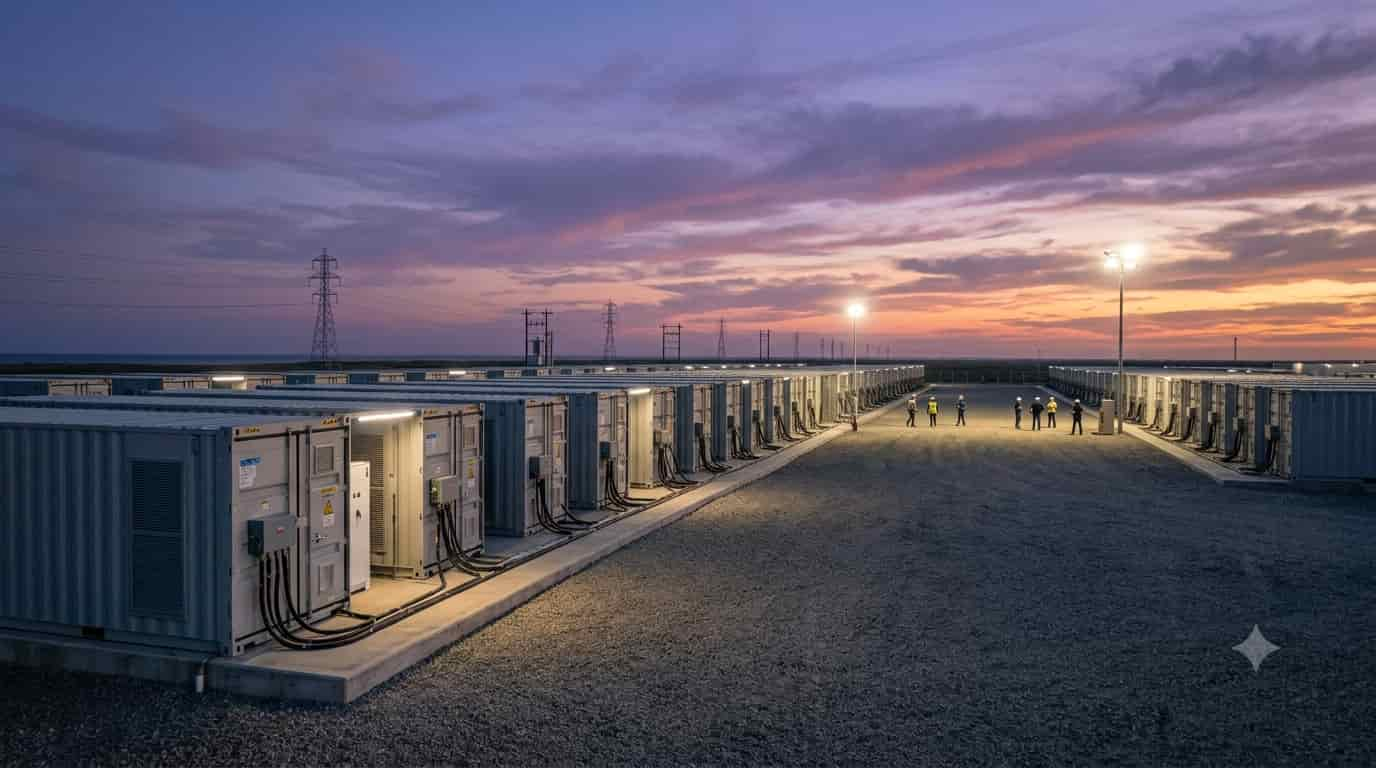
Money is now moving to electric vehicles (EVs) and batteries. Investment in these two grew to around US$3 billion in 2025.
Car-making capacity is set to almost double, from about 1 million vehicles in 2025 to 1.8 million by 2030. Under the STEPS, it could reach 3.6 million by 2035. The region would then export to Europe, Australia and New Zealand. The value of electric car output could rise from US$6 billion to over US$60 billion.
Battery cell capacity is small today, at around 40 GWh, or about 1% of the global total. Announced projects could take it past 100 GWh by 2030. By 2035, output could exceed 300 GWh.
The second surprise lies upstream. By 2035, the region could account for 25% of global cathode material production outside China, up from 4% today. For anode materials, its share could pass 40%. A region known for assembly may become a quiet supplier of the chemistry inside the battery.
Mind the ownership, though. Chinese carmakers run about half of today’s EV capacity. They account for over 70% of planned additions. In batteries, Chinese firms hold just over half of installed capacity. Their share could rise to nearly three-quarters by 2030 if all announced projects are built.
Cheap enough to compete, but not yet independent
Costs are the region’s strongest card. Battery production costs are only about 10% above China’s and around 25% below the European Union’s. For battery materials, the gap with China is under 1%. For EVs and wind towers, it is 4–6%. For solar cells, the region is close to parity with India.
Regional clean technology exports have more than doubled since 2015 to US$16 billion. But the pattern is uneven. Only Indonesia and Malaysia ran a surplus in 2025. The United States took over half of all exports.
That dependence is the central weakness. Exports make up a large share of production, so a small policy change abroad can push utilisation down sharply. Wind towers show the problem. Existing capacity at higher utilisation could produce over 300% of the region’s 2030 deployment. Yet there is no local production of nacelles or blades. The study is blunt on the lesson: “Capacity expansion alone does not necessarily translate into a stronger manufacturing position globally.”
EVs show a similar gap. Under the STEPS, domestic factories would meet around 90% of regional demand by 2035. Even so, battery cell imports for electric cars would still exceed US$13 billion. India’s storage sector shows a parallel pattern, as Indoen has reported in its look at a battery boom built on imports, not factories.
Cooling demand and the hydrogen gap
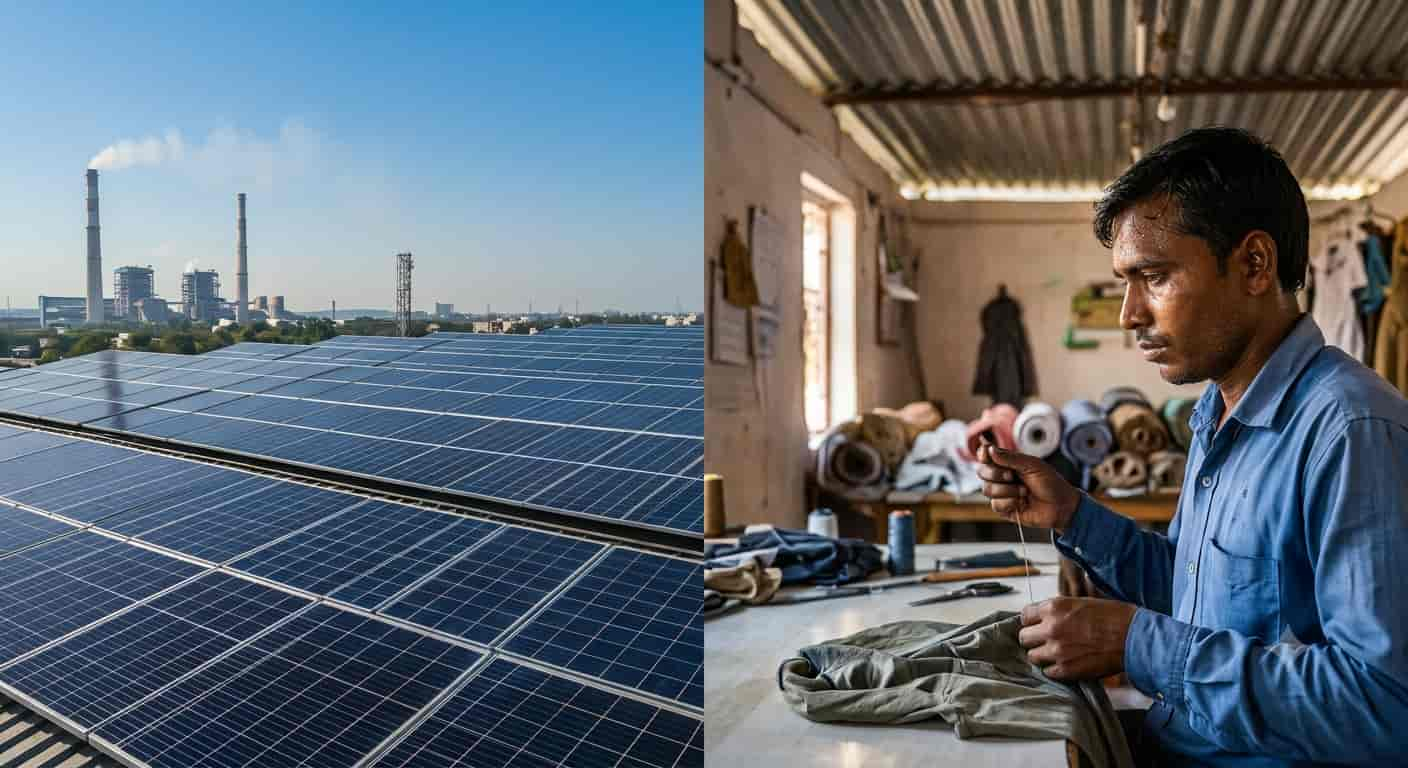
Air conditioners offer a quieter opportunity. Thailand is already a globally significant base for making them. Almost 30% of households in the region own one today. In Malaysia and Singapore, ownership is above 75%. In Indonesia and the Philippines, it is below 20%. As incomes rise, demand for cooling should climb.
Electrolysers are the opposite case. Manufacturing remains limited and is not expected to change much. Only under the announced-policy case does stack capacity reach 0.5 GW a year by 2035.
Four countries, four routes
The study uses case studies to show that there is no single path.
Thailand opened its market in 2022 while demanding local production in return. The electric car share rose from 2% in 2022 to nearly 15% in 2024, and price parity with petrol cars arrived the same year. But around 30% of the value in each car still flows abroad.
Indonesia chose its nickel. Exports of nickel-related products rose from US$0.8 billion in 2020 to US$10 billion in 2025. The approach has two risks. The World Trade Organization ruled the ore export ban non-compliant in 2022. Also, lithium iron phosphate batteries, which need no nickel, now make up over half of global EV battery capacity. Indonesia’s nickel-heavy plants may find demand softer than planned.
The Philippines went the other way. It removed import duties on electric cars and extended the exemption to 2028. Sales reached nearly 10% of new cars in 2025. Essentially all of those cars were imported, mostly Chinese. Energy security improved, but supply chain dependence grew.
Viet Nam backed a national champion. VinFast stopped making petrol cars and built chargers and a fleet customer alongside. The electric share reached around 40% in 2025. Battery cells, however, still come mostly from China.
The lesson is consistent. In several countries, protecting local makers delayed affordable EVs. Open markets sped up adoption but gave fewer industrial gains. As the study notes, “no industrial strategy can maximise all objectives simultaneously.” The same speed-versus-factories debate is playing out in India, as Indoen’s analysis of the ICCT study shows.
What could change the picture
The study also tests an “Announced Industrial Policy Case”, where governments deliver on their stated ambitions. Cumulative investment then rises by about US$14 billion, or 20%, over the STEPS. Batteries gain US$7.6 billion of that. Cathode capacity in 2035 would be 40% higher.
Seen another way, the region’s outlook depends on policy more than on cost. India offers a useful comparison. The study describes it as a growing rival in solar exports, with tariffs closely aligned to its industrial goals.
The study offers a few low-regret steps. Keep trade open and diversify partners. Work with best-in-class foreign firms for technology and skills. Improve data and standards.
A fair counterpoint exists. Dependence on Chinese firms brought investment, technology and jobs that the region could not have built alone. Cutting that link too fast could cost more than it saves. Indoen has asked a similar question of India in Can India build a globally competitive EV industry without Chinese technology?
The coming decade will test whether Southeast Asia can turn assembly lines into real industrial depth. The solar story shows the risk of leaning on one export market. The battery story offers a second chance to get it right.