

India’s $19.3bn Green Energy Corridor III targets 135 GW of renewables and 50 GWh of storage
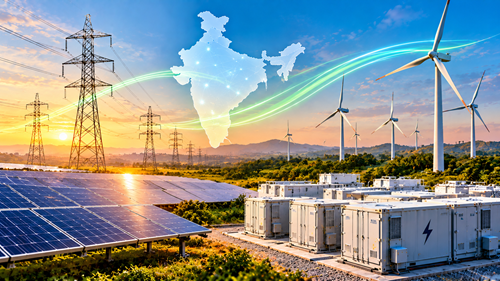
The Union Cabinet has approved Green Energy Corridor Phase III, with a total outlay of ₹1.86 lakh crore (US$19.3bn), targeted for completion by FY2032-33, with central financial support of ₹54,082 crore (US$5.6bn). The outlay is split into ₹1.36 lakh crore (US$14.2bn) for intra-state transmission and ₹50,000 crore (US$5.2bn) for 50 GWh of battery storage. The scheme is intended to evacuate up to 135 GW of renewable power and will add 51,126 circuit kilometres of lines.
The financing design matters as much as the headline number. Central support covers roughly 29 per cent of the outlay and is intended to offset intra-state transmission charges rather than directly fund assets. Greenfield lines will be awarded through tariff-based competitive bidding under a build-own-operate-maintain model, while brownfield upgrades will be on a cost-plus basis. State transmission utilities remain the implementing agencies, so private transmission developers are being drawn into state networks under a common template.
Folding storage into the same scheme is the notable shift. The battery component is intended to address intermittency, congestion, peak-hour curtailment and non-solar-hour demand, and it can be located at the generator end or at other important grid locations. Storage is being treated as shared grid infrastructure, not merely a developer-side add-on. The government links the scheme to its target of 900 GW of non-fossil capacity by 2035.
The test now moves to execution: how quickly state utilities award and commission lines, and how the ₹50,000 crore storage envelope holds up against battery pricing, an issue Indoen has examined in its storage coverage.
Reliance raises Andhra biogas commitment to $10.4bn, targeting farm waste
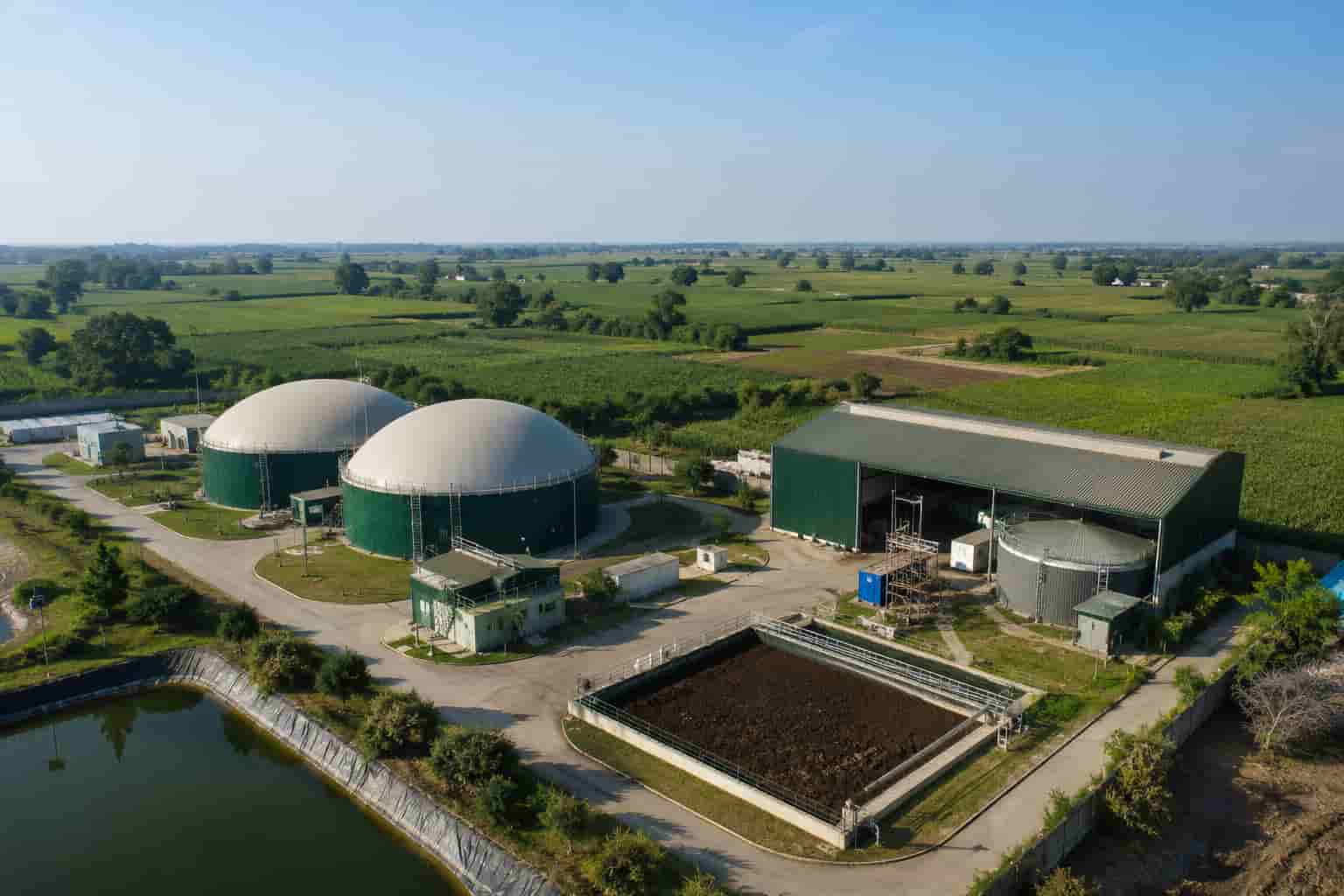
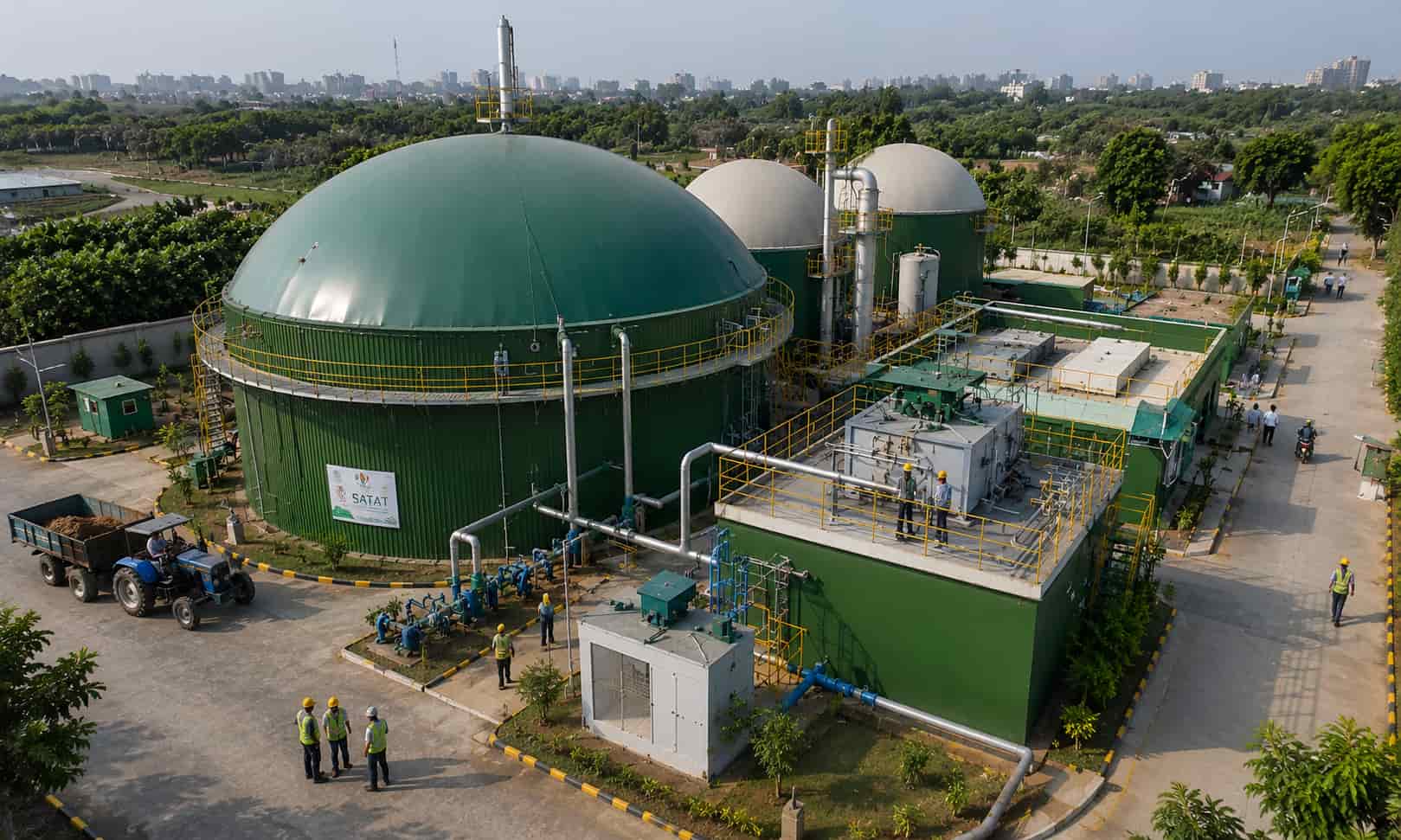
Reliance Industries has said it plans to invest ₹1 lakh crore (US$10.4bn) in compressed biogas plants in Andhra Pradesh, as Anant Ambani announced on 2 October. The company projects more than 3 lakh jobs and nearly ₹60,000 crore (US$6.2bn) in state revenue over the coming decades. These are company projections for a proposed programme, not realised outcomes.
The figure expands on a memorandum signed in late 2024, which outlined ₹65,000 crore (US$6.7bn) for 500 plants. The announced capital also far exceeds the operating base: Reliance's FY2025-26 reporting showed 35 operating plants and roughly 700 tonnes per day of installed capacity. This is a long-dated envelope, not near-term capex.
The scale is strikingly at odds with national policy. The GOBARdhan scheme has an outlay of ₹23,731 crore (US$2.5bn) and aims to achieve about 5 million standard cubic metres per day of CBG by 2035-36. One company's Andhra programme is therefore more than four times that outlay in rupee terms. The model rests on organic waste, agricultural residue and Napier grass, with Andhra Pradesh's clean energy policy offering capital subsidies and SGST reimbursements.
The risks lie in feedstock and policy rather than in capital. Procurement from decentralised rural hubs, the durability of subsidies, and execution across many sites will determine whether the commitment translates into a functioning private biogas supply chain.
Inox Clean Energy’s $1bn IPO puts debt repayment at the centre
Inox Clean Energy, part of the INOXGFL Group, has filed draft papers for an IPO of up to ₹10,000 crore ($1bn). The issue comprises a fresh issue of up to ₹8,000 crore ($830m) and an offer for sale of ₹2,000 crore ($210m) by promoter Devansh Jain. A pre-IPO placement of up to ₹1,600 crore (US$165m) is also possible and would reduce the fresh issue. PTI reports it would be the largest private-sector renewable energy public issue in India to date.
The use of proceeds is the structural signal. Fresh capital is intended to repay or prepay borrowings of the company and its subsidiaries, as well as for general corporate purposes, with ₹6,000 crore (US$620m) earmarked for debt. The issue is considerably larger than the ₹6,000 crore confidential pre-filing reported earlier. Public equity is being used to refinance an already underway build-out.
The asset base explains this. As of 31 August 2026, the IPP portfolio stood at 9.29 GW across India and Africa, of which 2.37 GW is operational and about 0.80 GW is under construction, so roughly a quarter is generating.
The company also has 6 GW of solar module capacity across India and the US, with cell capacity under construction. It joins a queue, with Avaada Electro, Sembcorp's India unit, and SAEL Industries preparing their own offerings.
SEBI clearance and pricing are still pending. The valuation will show how public markets weigh an integrated generator-manufacturer against listed peers such as Adani Green, NTPC Green, ACME Solar and Waaree Energies.
IRFC's $435m loan to DVC extends railway-linked financing to solar and battery storage
Indian Railway Finance Corporation has signed a ₹4,200 crore (US$435m) term loan agreement with Damodar Valley Corporation to fund floating, ground-mounted and rooftop solar projects and battery storage in Jharkhand and West Bengal. The projects utilise DVC's existing land, reservoirs and transmission infrastructure, thereby avoiding the land-acquisition friction that slows greenfield solar. Land scarcity is a theme Indoen has covered in its floating solar reporting.
The deal is part of IRFC's diversification beyond core railway lending. Its CMD described it as "IRFC 2.0", and its portfolio now spans renewable energy, power, metro rail and logistics. The link back to the Railways is on the demand side: the loan serves the railway ecosystem's clean energy needs and supports the Railways' target of net-zero emissions by 2030.
The structural point is the channel: a state-owned financier lending long-term to a state-owned utility, with the assets feeding a captive public-sector customer. The release did not disclose tenor, pricing or project capacities, so the credit terms are the missing piece. Whether other public-sector lenders follow this route will show how far state balance sheets are becoming the default financiers of the transition.
Vedanta's $200m Rajasthan push targets a decline in India's largest onshore oil basin
Vedanta Oil and Gas plans to invest about US$200m in 2026-27 across the Mangala, Bhagyam and Aishwariya fields in northern Rajasthan, according to an Economic Times report. The aim is to arrest the decline of natural reservoirs and increase recovery from producing wells, with polymer flooding and well interventions as the primary tools.
The numbers show why. Mangala is expected to rise from about 80,000 barrels per day to more than 150,000, while Vedanta's average gross operated production in the first quarter was 77.7 kboepd, down 17 per cent year on year. Recovery from producing wells stands at 41 per cent, against a 60 per cent target.
For India, enhanced recovery from mature fields is one of the few domestic crude levers available, even as S&P Global has flagged India as among the most exposed to the Hormuz supply shock. The outlay is modest, so field-level results will matter more than the headline figure.