Jakson Solar’s $525m push into 3 GW solar manufacturing
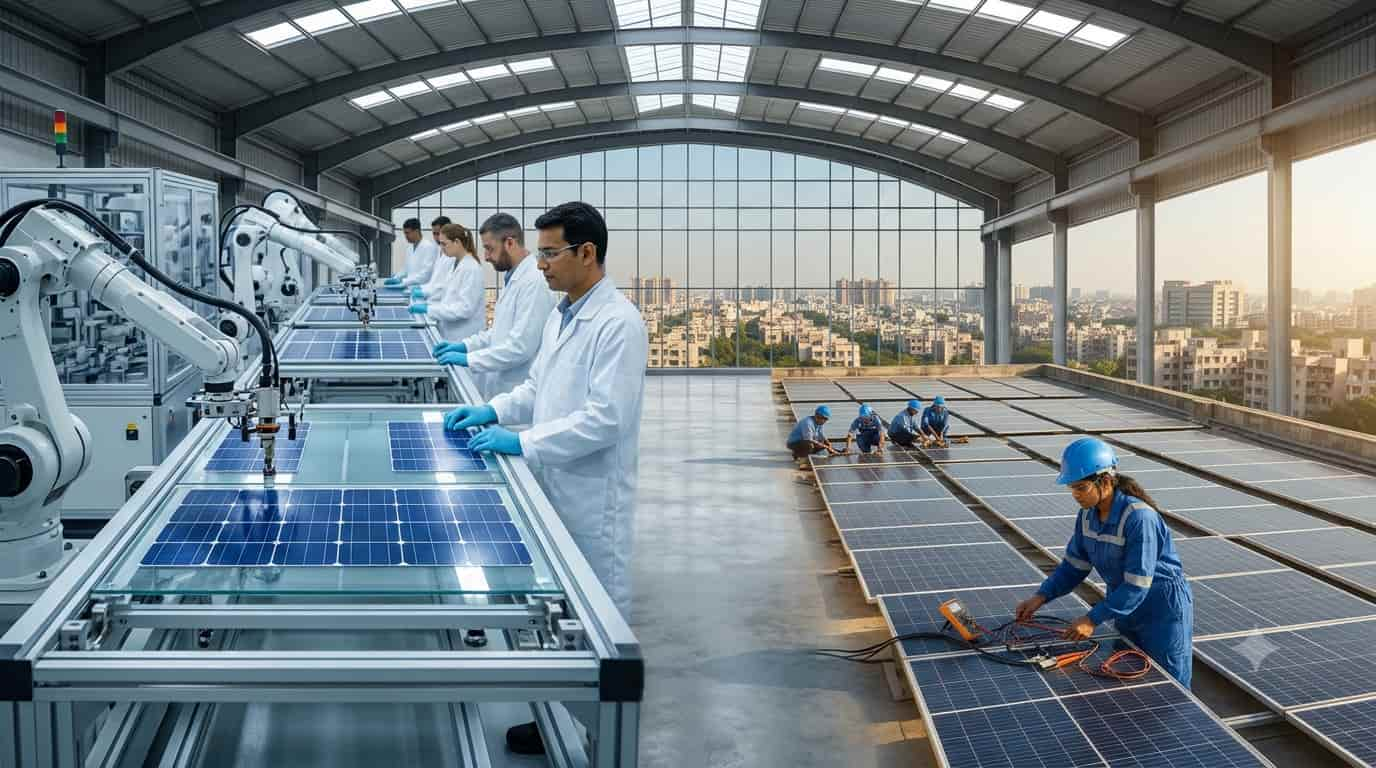
Jakson Solar plans to invest up to ₹5,000 crore ($525m) in 3 GW each of solar cell and ingot-wafer capacity. The company runs a 1.2 GW module plant today. The cell facility is targeted for commissioning by December 2027, with ingots and wafers following in the third quarter of FY2028. The report describes the outlay as a plan, not a committed budget, and names neither a site nor a funding mix.
The timing follows policy. Domestic sourcing requirements already cover modules and cells, and will extend to ingots and wafers from 1 June 2028. Module assembly alone no longer gives a durable position. Margins and supply security now sit in the upstream steps, where India has the least installed capacity. Jakson’s Managing Director Ivan Saha says the output will mainly serve the merchant market. That means the company is not relying on captive demand or anchor offtake. It is betting that policy-protected domestic demand will absorb the volume.
Others are moving the same way. Navitas Green Solutions, which has 2.2 GW of module capacity, is raising up to $20m of growth capital from responsAbility’s Asia Climate Fund for a planned 2.2 GW cell facility. It has separately announced about $1bn of investment over five years across ingots to storage. Taken together, mid-sized module makers are using domestic-content rules to justify backward integration, and foreign impact capital is starting to back it. The open question is whether wafer and cell plants of this size can reach competitive costs.
Green hydrogen deals target 400,000 tonnes a year, attract $9.5bn
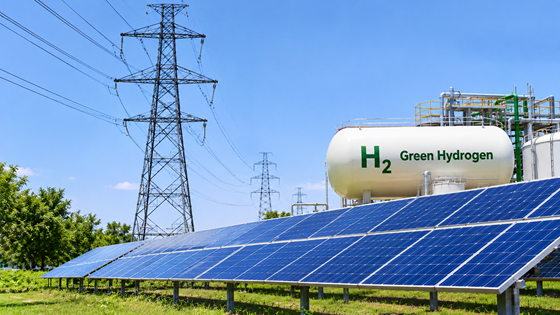
India’s green hydrogen offtake commitments stand at 555,610 tonnes a year as of October 2026, per MNRE. That is about 11% of the five-million-tonne annual target for 2030. Indian companies signed 18 new agreements in 2026 covering more than 400,000 tonnes a year, bringing the total since the mission began in 2023 to 23. The agreements are expected to attract over ₹90,000 crore ($9.5bn) across production, supply infrastructure and industrial facilities.
Offtake is the harder test of a hydrogen market. Capacity announcements are easy to make, but bankable projects need contracted buyers. The shift from tenders to signed agreements is therefore the more meaningful development. The investment figure, however, is a third-party estimate reported through projectstoday.ai. The source names no counterparties, locations or deal sizes, so it should be read as an indicator and not a verified capex ledger.
The scale gap matters. CARE ESG Ratings puts total sector investment needed through 2030 at $180–200bn. Offtake-backed spending so far covers a small share of that. Nearly 90% of the 2030 volume target is still uncontracted.
Jyoti Structures wins $100m Power Grid contracts for Barmer HVDC lines
Jyoti Structures has received two turnkey packages worth ₹949.35 crore ($100m) from Power Grid, excluding GST. They cover the supply, erection, testing and commissioning of ±800kV HVDC transmission lines for the Barmer HVDC scheme. Each lot is worth about ₹475 crore ($50m) and carries a 38-month completion period. Power Grid acquired the project SPV on 23 September 2026 after winning it under tariff-based competitive bidding.
HVDC is the corridor technology for moving renewable power over long distances with low losses. The order shows how quickly an awarded transmission asset becomes a supply-chain contract. Jyoti had also secured ₹689.93 crore ($73m) from GETCO for a 765kV line in Gujarat. Together, the two orders point to a steady flow of transmission work for tower and line contractors as evacuation capacity is added.
Coal India awards $115m Telangana battery storage contract to Pace Digitek
Coal India has awarded a battery energy storage project at Choutuppal, Telangana, to Pace Digitek for ₹1,073.74 crore ($115m). Pace Digitek was the successful bidder among 11 bidders. The field included L&T, Waaree Renewable Technologies and a KPI Green–Amara Raja pairing. The report does not give the capacity of this award. It separately notes that Coal India earlier won a 187.5 MW/750 MWh, four-hour project at the same location, and does not say whether the two are the same.
The structural point is that the country’s largest coal producer is now commissioning grid-scale storage and contracting out the build. That fits a pattern of coal-linked public enterprises redeploying balance sheets and land into the assets the grid needs as renewables grow. A competitive field of 11 bidders also shows how many domestic EPC and manufacturing groups now see storage as a core line of business. Pace Digitek has other Telangana and Delhi wins in its recent order book, which shows how concentrated BESS EPC work is becoming among a few bidders.
Tata Capital backs Fourth Partner’s 300 MW solar, wind and storage project
Tata Capital Cleantech Finance has lent ₹750 crore ($79m) to Fourth Partner Energy for a hybrid project under construction in Maharashtra. The project combines 300 MW of solar, 50 MW of wind and a 750 MWh battery system. It is expected to produce more than 630 million units a year, mainly for corporate consumers in Maharashtra.
Two features stand out. The debt comes from a domestic non-bank lender, and the output is meant for private buyers. That points to a commercial-and-industrial market financing hybrid generation with storage, so clean power can be delivered closer to a firm profile. This is Fourth Partner’s second large BESS project, after a 500 MWh project in Karnataka connected to the interstate transmission system. The lender has not disclosed the tenor or pricing, so the cost of this debt remains unclear.