
For years, critics of renewable energy repeated a familiar argument: solar panels stop producing at night, and wind turbines cannot spin on command. Fossil fuels, they argued, remained indispensable because they could provide “firm” or continuous electricity whenever demand surged.
That assumption is beginning to weaken.
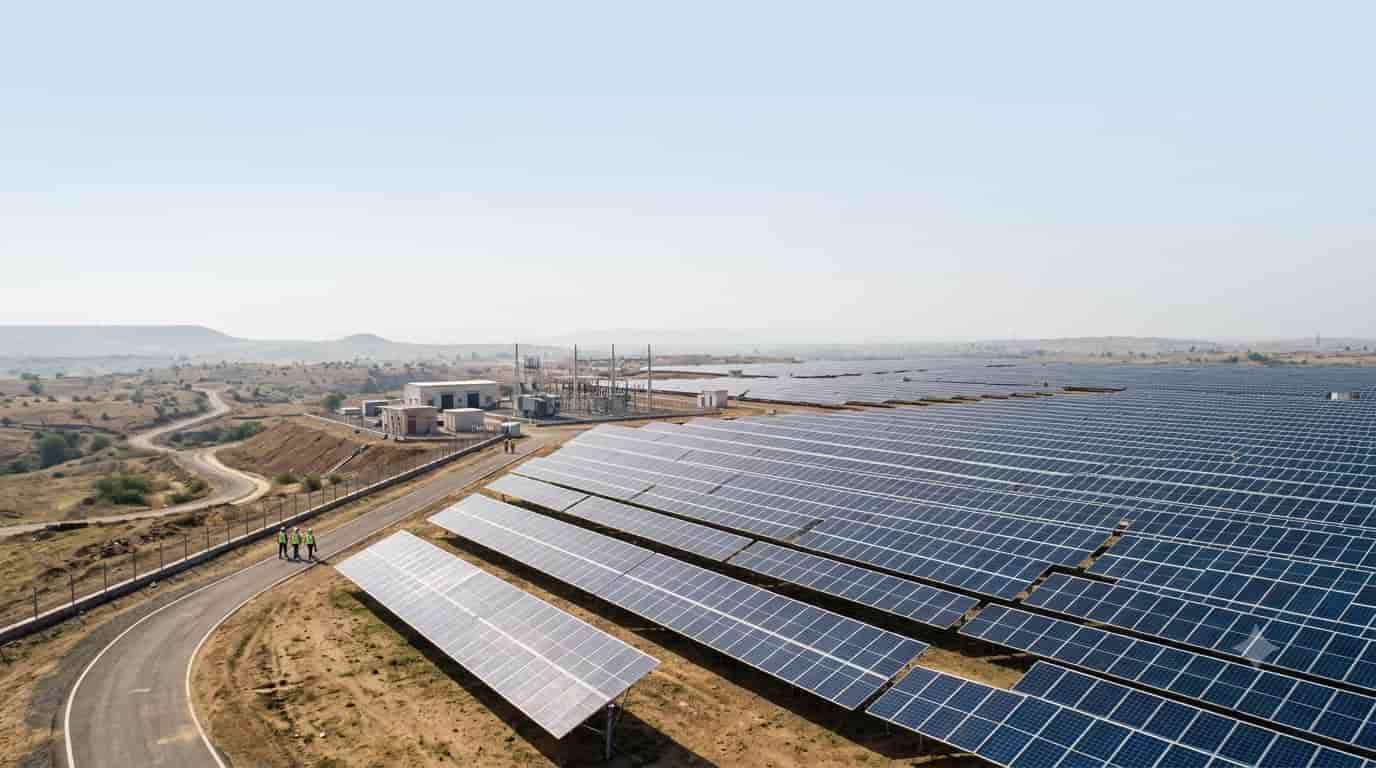
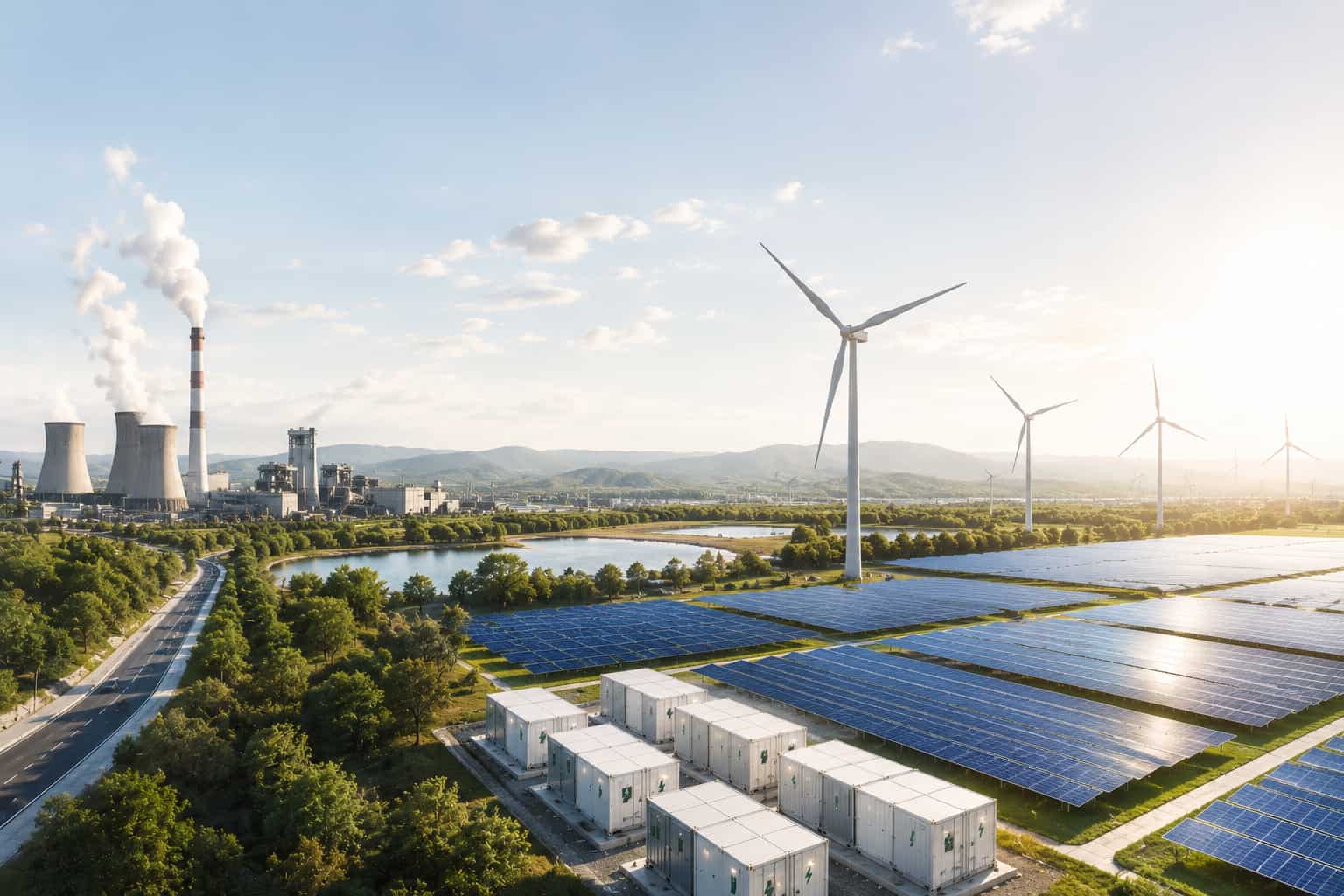
A growing wave of hybrid renewable projects combining solar power, wind energy and battery storage is now challenging the economic logic of conventional coal and gas generation in several parts of the world. What was once seen as technically possible but commercially unrealistic is increasingly becoming a serious market proposition.
The implications stretch far beyond climate targets. They could reshape industrial competitiveness, global energy trade, electricity pricing and even geopolitical power balances.
The shift comes at a particularly sensitive moment for the global energy system. Oil market volatility linked to tensions around the Strait of Hormuz, supply chain disruptions, rising gas turbine costs, and the explosive growth of electricity demand from artificial intelligence and data centres are all forcing governments and corporations to rethink what “energy security” actually means. In that context, renewable energy is no longer merely an environmental discussion. It is rapidly becoming a strategic economic asset.
A recent study by the International Renewable Energy Agency explored this transformation through the economics of “24/7 renewables” — renewable systems capable of delivering electricity around the clock through combinations of solar, wind and battery storage.
What makes the debate remarkable is that the discussion is no longer centred only on carbon emissions. The real contest is increasingly about cost, reliability and deployment speed.
The rise of the hybrid power plant
The modern renewable energy plant is changing shape.
Earlier solar farms and wind projects were essentially standalone generators feeding electricity into the grid whenever nature allowed. Today’s emerging model is different. Developers increasingly combine solar photovoltaics, wind turbines and battery energy storage systems into integrated facilities capable of smoothing fluctuations and supplying electricity more consistently.
The logic is straightforward.
Solar power peaks during daylight hours. Wind generation often strengthens at night or during seasonal variations. Batteries store excess energy and release it during peak demand periods. Together, these technologies reduce the intermittency problem that long haunted renewables.
The scale of some projects now under development would have seemed implausible a decade ago.
In the United Arab Emirates, the Al Dhafra complex aims to combine more than 5 GW of solar capacity with massive battery storage to provide firm electricity comparable to a large thermal power station. Similar trends are emerging across India, China, Saudi Arabia, Australia and the United States.
India has quietly become one of the world’s most important testing grounds for this transition.
The country’s “round-the-clock renewable” tenders require developers to guarantee minimum supply levels through combinations of solar, wind and storage. The structure effectively pushes the market beyond simple renewable generation towards reliability-focused clean energy systems.
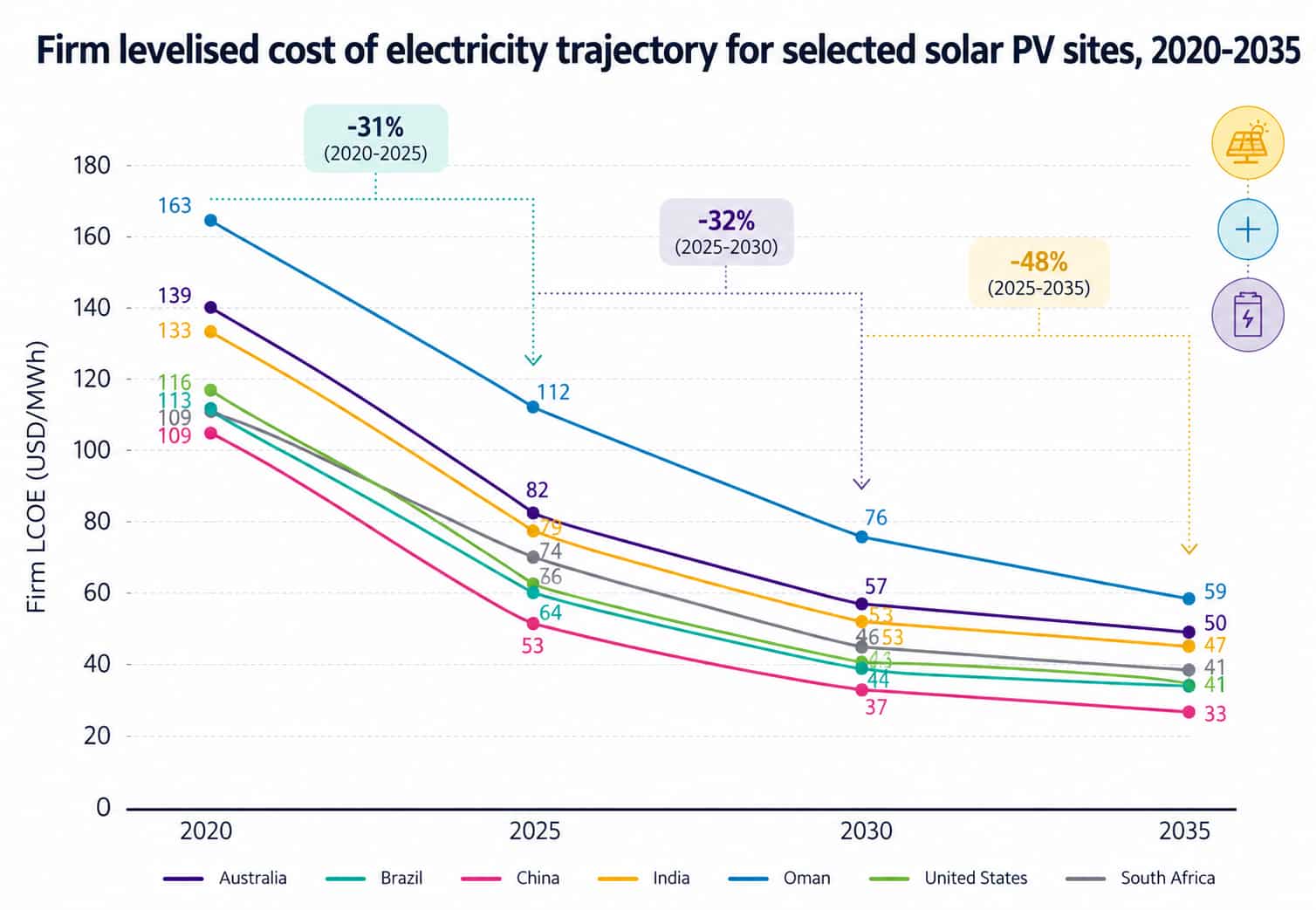
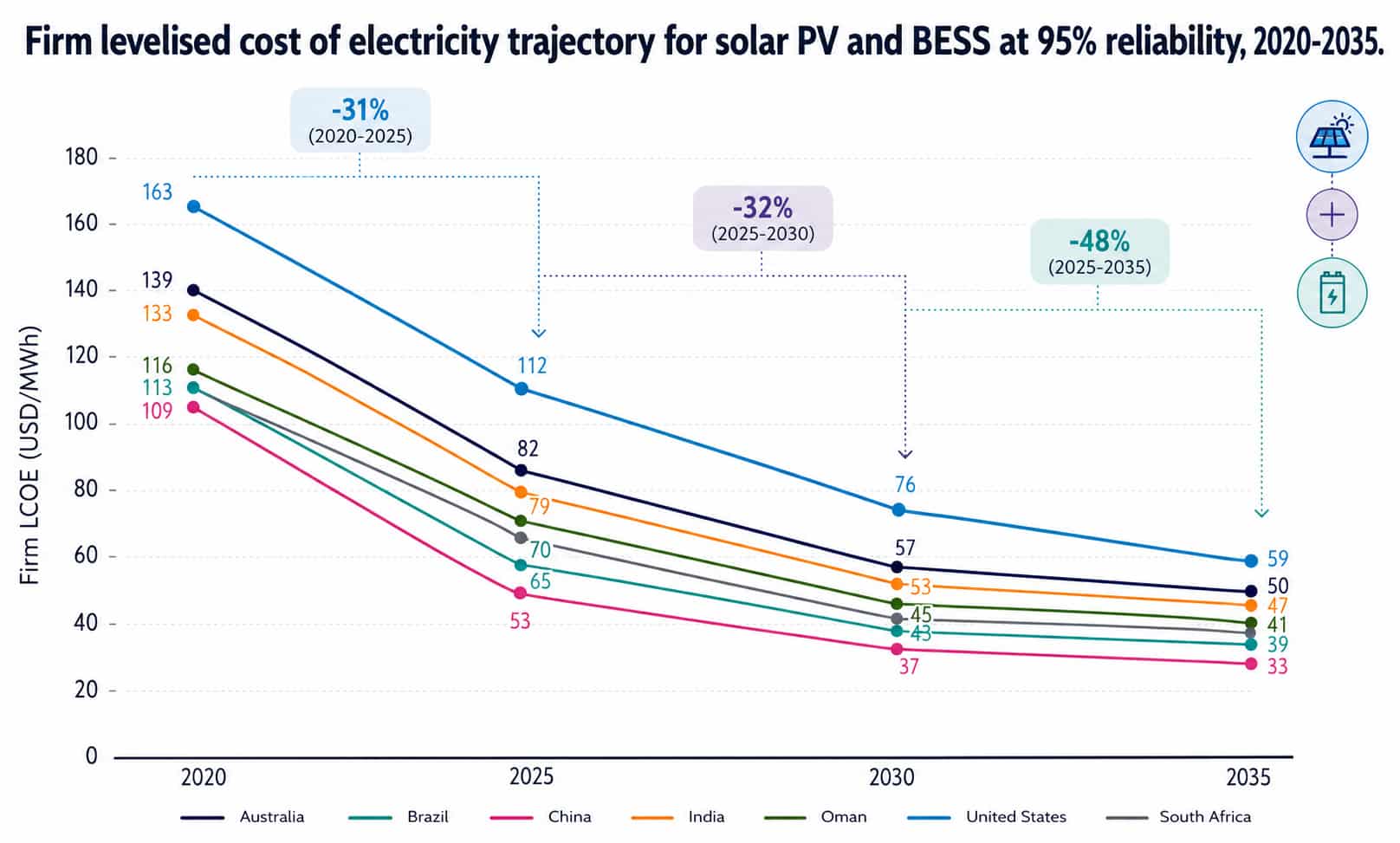
Several Indian auctions have already delivered prices reportedly below USD 60-65/MWh for near-continuous clean electricity. That matters enormously because India remains one of the world’s fastest-growing power markets, while simultaneously facing mounting pressure to reduce coal dependence.
The broader geopolitical significance is hard to miss. Countries once dependent on imported fossil fuels increasingly see domestic renewable resources as tools for strategic autonomy.
Saudi Arabia, despite being one of the world’s largest oil exporters, is aggressively investing in solar-plus-storage systems because domestic oil consumption for electricity generation reduces export revenues.
China views batteries and renewables as central to industrial leadership. Europe sees clean power as a hedge against gas supply shocks after the Russia-Ukraine war.
The energy transition is no longer driven solely by climate diplomacy. It is increasingly driven by industrial competition.
Why batteries changed the conversation
The most important factor behind the transformation may be batteries.
Lithium-ion battery prices have collapsed dramatically over the past decade. According to the IRENA analysis, utility-scale battery storage costs have fallen by over 90% since 2010. Solar costs dropped by around 87% during the same period, while onshore wind costs fell by more than half.
That decline fundamentally changes the economics of renewable electricity.
Until recently, storing solar or wind power for later use was prohibitively expensive. Renewables were therefore treated as supplementary sources rather than primary providers of reliable electricity. But once storage costs began collapsing, the entire equation shifted.
Battery storage also solves another growing problem in renewable-heavy markets: price cannibalisation.
In countries with large solar deployment, electricity prices often crash during sunny midday periods because too much power floods the grid simultaneously. In parts of Europe, negative electricity prices are becoming increasingly common during peak solar generation hours.
That erodes revenues for standalone solar plants.
Hybrid systems with batteries can instead store electricity and sell it during higher-priced evening hours. This not only improves profitability but also stabilises the grid.
“Five years ago, storage was seen as an optional add-on. Today, investors increasingly treat it as essential infrastructure,” an executive at a renewable developer told Indoen Energy.
Even conservative financial institutions have started adjusting their assumptions.
Banks financing renewable projects now frequently prefer hybrid configurations because they generate steadier revenues and face lower exposure to wholesale market volatility.
China’s manufacturing machine is redrawing the global map
No country illustrates the scale of change more dramatically than China.
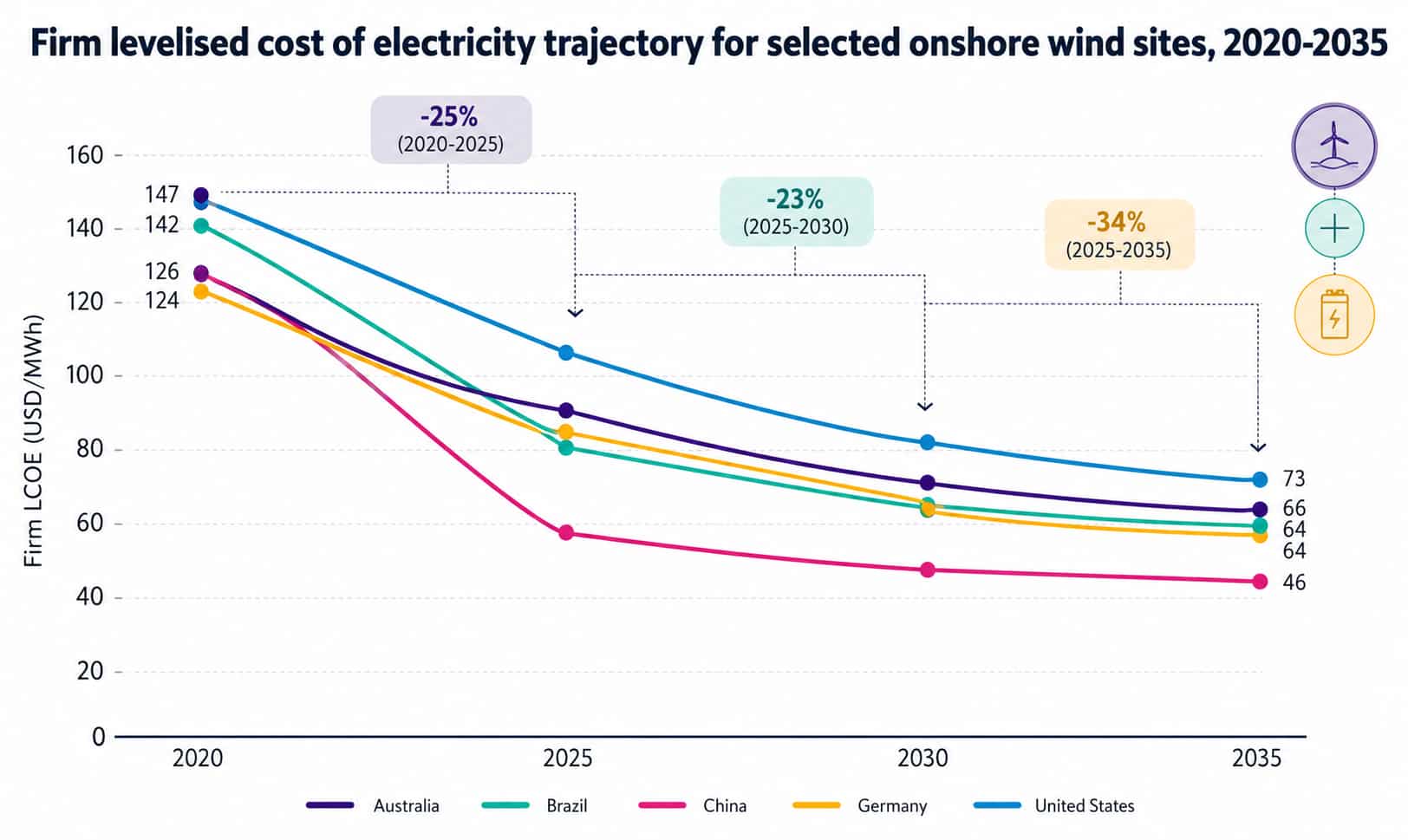
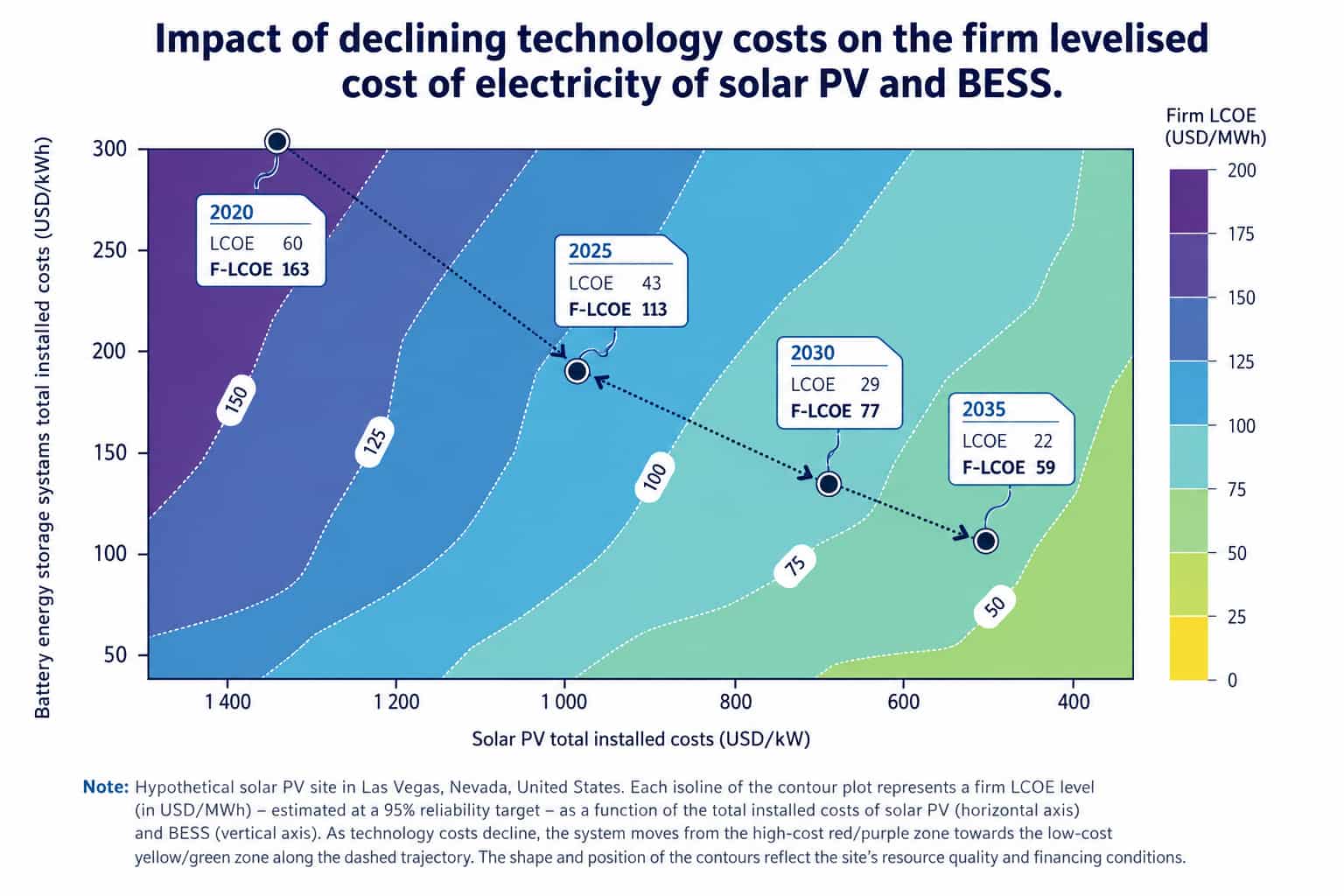
The IRENA modelling suggests that China currently sets the global benchmark for low-cost firm renewable electricity. In some high-resource regions, solar-plus-storage systems are already capable of delivering firm power at costs approaching USD 30-46/MWh depending on reliability levels.
That is extraordinary because it places firm renewable electricity within striking distance of — and sometimes below — the cost of new coal-fired generation.
China’s dominance stems from multiple factors.
It controls enormous manufacturing capacity for solar panels, batteries and related supply chains. Provincial policies aggressively encouraged battery integration. Massive deployment created economies of scale. Financing costs are relatively lower than in many Western economies.
The consequences extend globally.
Chinese battery exports are already reshaping energy economics across Asia, Africa and Latin America. Countries previously unable to consider large-scale storage projects due to cost barriers are now entering the market.
This has profound implications for the Global South.
Historically, developing countries faced a painful trade-off between energy affordability and environmental sustainability. Cheap coal often appeared economically irresistible. But if hybrid renewable systems continue becoming cheaper, that trade-off may weaken substantially.
The majority of the world’s population lives in regions with strong solar irradiation or favourable wind conditions. That means many emerging economies possess enormous untapped renewable advantages.
For India, the opportunity could be transformative.
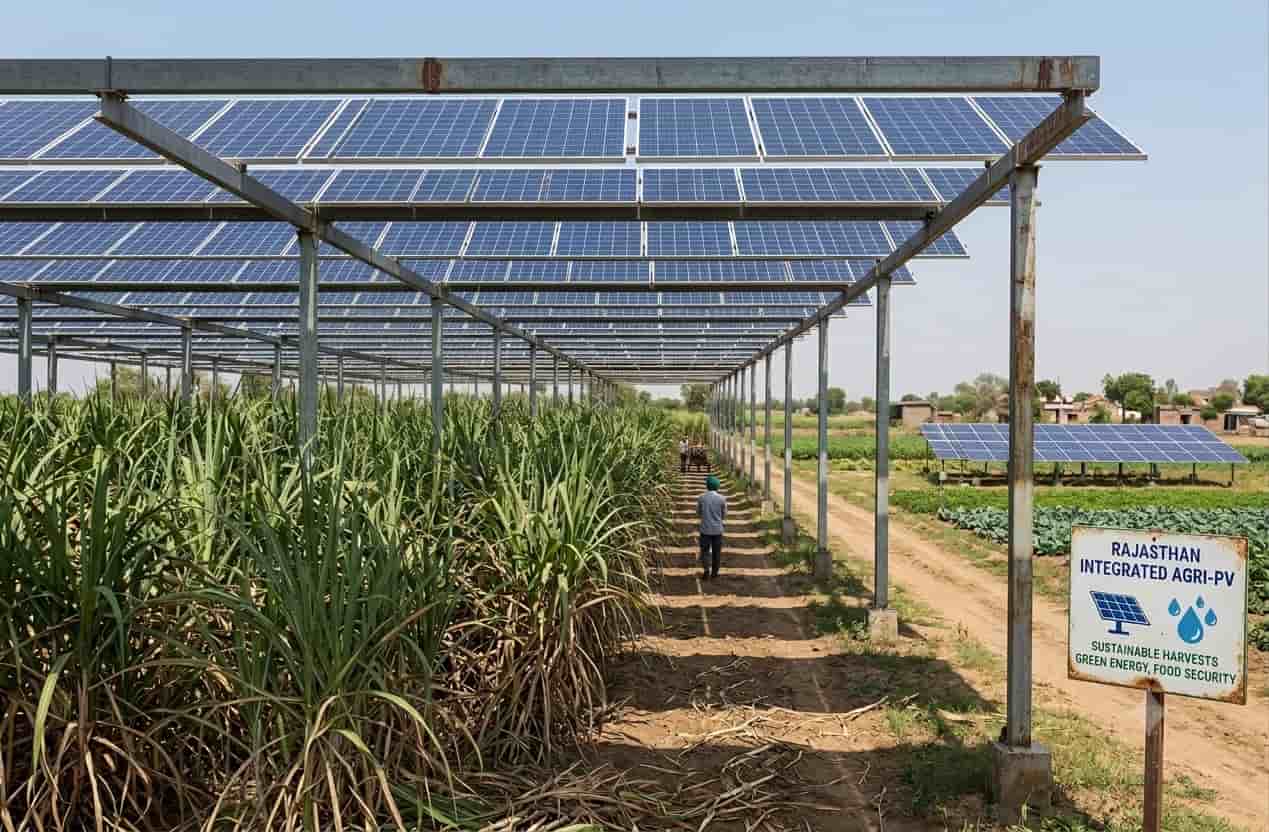
States like Rajasthan and Gujarat already host some of the world’s most competitive solar projects. If storage costs continue declining, India could theoretically support massive low-cost industrial growth powered increasingly by domestically produced renewable electricity.
That matters not only for climate policy but for manufacturing competitiveness, hydrogen production and export industries.
The AI boom may accelerate renewable deployment
An unexpected force is now accelerating this transformation: artificial intelligence.
Data centres powering AI applications consume staggering amounts of electricity. Global electricity demand from data centres is projected to rise sharply over the coming decade, creating enormous pressure on power systems.
The conventional response would once have been more gas plants. But the economics are becoming complicated.
Gas turbine lead times have reportedly stretched dramatically in several markets due to surging demand and manufacturing bottlenecks. Construction costs have risen sharply as well.
Hybrid renewable systems, by contrast, can often be deployed more rapidly.
Large solar and battery projects can sometimes be operational within one to two years once permits and grid access are secured. That speed advantage is becoming commercially critical.
Major technology companies increasingly seek “24/7 clean energy” contracts because annual renewable accounting methods are no longer considered sufficient. Investors and regulators increasingly want proof that clean electricity is available continuously, not merely averaged across the year.
This has triggered a subtle but important shift in energy procurement.
Companies are moving from simply purchasing renewable certificates towards demanding hourly-matched clean electricity. That trend strengthens the commercial case for storage-backed renewable systems.
A senior analyst at an energy consultancy: “The AI economy values reliability above almost everything else. Once renewables can provide reliability competitively, the market dynamics change very quickly.”
Fossil fuels are not disappearing overnight
Yet declaring victory for renewables would still be premature.
The transition remains uneven, complicated and politically contested. One major limitation is geography.
Not every region possesses strong solar irradiation or stable wind resources. Some areas experience prolonged low-wind and low-sun conditions — known in European energy discussions by the German term Dunkelflaute. During such periods, batteries alone may struggle to maintain supply over multiple days.
That means backup systems remain necessary. Long-duration storage technologies, hydropower, geothermal energy, nuclear power, flexible gas generation and expanded transmission networks will still play major roles in many energy systems.
Critics also point to mineral dependency concerns.
Battery manufacturing requires lithium, nickel, cobalt and other materials concentrated in relatively few countries. China dominates much of the processing capacity. Some analysts warn this could simply replace one form of resource dependence with another.
Others question whether renewable-heavy grids can maintain stability during extreme weather events or cyber disruptions.
These concerns are not trivial. Recent blackouts and grid instability episodes in several countries have intensified scrutiny of how rapidly grids can absorb variable renewable generation without major infrastructure upgrades.
There is also a financial dimension.
While technology costs have declined sharply, financing costs remain high in many developing economies. Expensive capital can significantly raise renewable project costs even when equipment itself becomes cheaper.
Energy security is being redefined
Still, the broader direction appears increasingly clear.
The concept of energy security itself is evolving. For much of the twentieth century, energy security primarily meant securing access to fossil fuel supplies through pipelines, shipping routes and geopolitical alliances. The world’s strategic geography revolved around oil fields and gas reserves.
Renewables change that logic because sunlight and wind are widely distributed resources.
A country with strong renewable infrastructure becomes less vulnerable to global commodity price spikes, maritime disruptions or geopolitical embargoes.
The Strait of Hormuz tensions offered a recent reminder of fossil fuel vulnerability. Oil prices reacted immediately to fears of shipping disruptions. Renewable electricity systems, once built, are largely insulated from such volatility because their “fuel” is free.
That creates a fundamentally different economic model.
Instead of paying continuously for imported fuel, countries invest upfront in infrastructure and then operate with relatively stable long-term costs.
This stability could become increasingly attractive in a world marked by geopolitical fragmentation and trade uncertainty.
Europe’s experience after the Russia-Ukraine conflict reinforced this lesson dramatically. The scramble for alternative gas supplies exposed how deeply energy dependence can shape foreign policy and economic vulnerability.
For countries like India, balancing energy security, industrial growth and decarbonisation will remain enormously complex. Coal will likely continue playing a significant role for years. But the economics of round-the-clock renewables suggest that future investments may increasingly tilt towards hybrid systems rather than new fossil infrastructure.
The next battle will be about grids and policy
Technology alone will not determine the outcome.
Electricity grids were largely designed around centralised fossil fuel plants. Integrating massive amounts of decentralised renewable generation requires major upgrades in transmission networks, market design and system flexibility.
Policy frameworks will therefore become decisive.
Governments must determine how markets reward storage, flexibility and reliability. Grid connection processes need reform. Electricity pricing structures may need redesign. Permitting delays remain a huge bottleneck in many countries.
The irony is that technology costs are now falling faster than institutional systems can adapt.
In many regions, renewable deployment is constrained less by economics than by bureaucracy, grid limitations and political inertia.
That creates a peculiar situation: the technical ability to produce low-cost firm renewable electricity is advancing rapidly, while the policy environment often remains anchored in older fossil-era assumptions.
The stakes are enormous.
Electricity increasingly underpins everything from transport and manufacturing to artificial intelligence and strategic industries. Whichever countries build abundant, reliable and affordable clean electricity systems fastest could gain significant economic advantages over the coming decades.
The energy transition is therefore becoming something larger than an environmental project. It is turning into a contest over industrial competitiveness, technological leadership and geopolitical resilience.
And for the first time, renewable energy appears increasingly capable not merely of supplementing fossil fuels — but of directly challenging them on their own traditional ground: reliable power delivered at scale.