
What began as an unassuming exchange with a colleague soon unfolded into something far more evocative. Drawing on the image of a kitchen hearth and its steady, unrelenting flame, she remarked that in an enclosed space, burning firewood continuously will slowly but inexorably fill the room with unbearable heat.
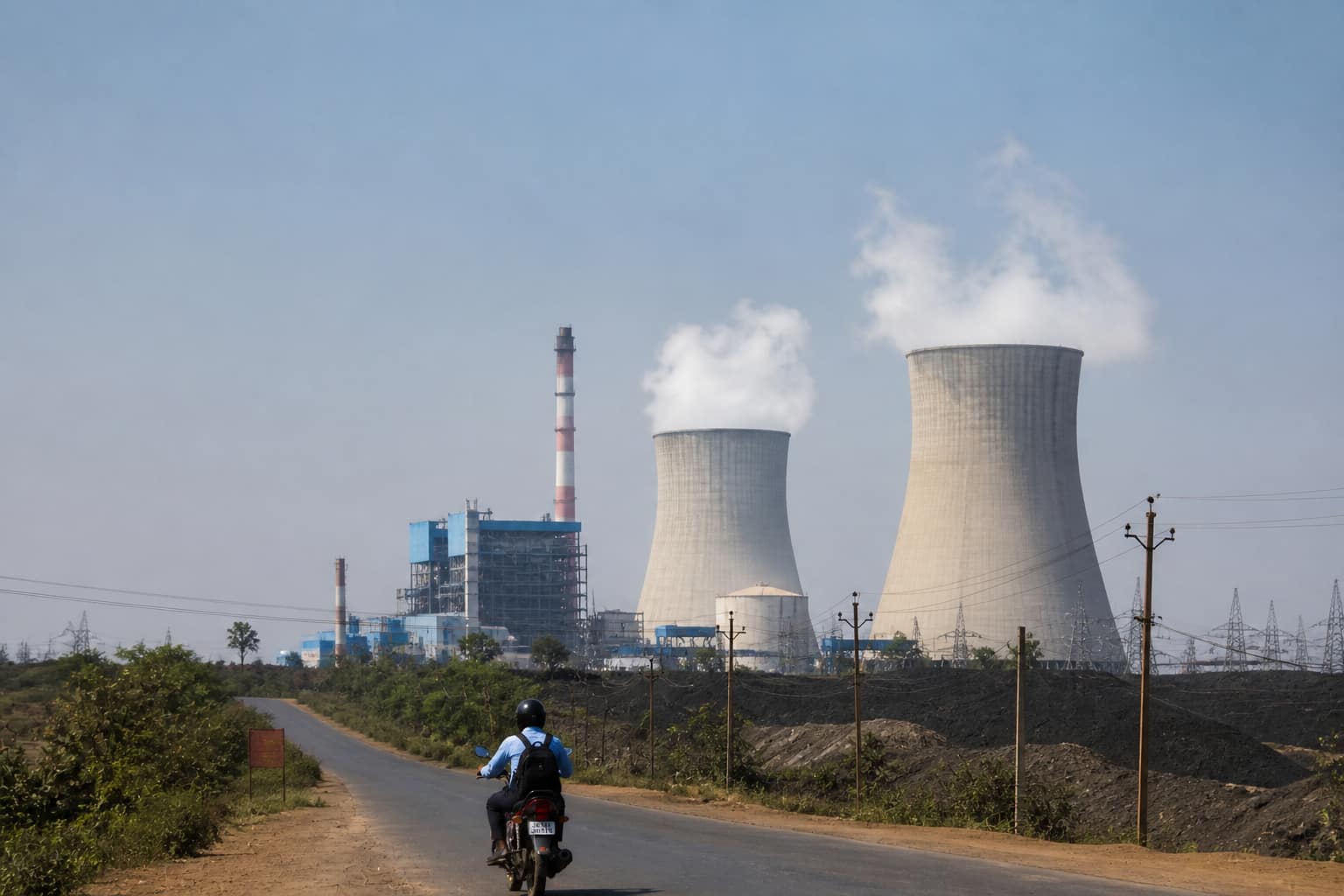
It was a simple illustration, familiar in its domesticity, yet it lingered because when that image is scaled to that of India, a nation with around 1.4 billion people, it takes on a different proportion altogether. Across the country, hundreds of coal-fired thermal power plants burn ceaselessly in the scorching summer heat; their furnaces remain aglow, persistently shaping the temperature of the environment we inhabit.
In today’s India, especially during the peak summer months, the question is no longer whether energy fuels growth; it is whether the way we produce that energy is intensifying the heat we are trying to escape.
When the grid meets the climate
Summers in India aren’t just another season in the cycle anymore; they are a stress test for humanity. As temperatures soar past 40°C across several parts of India, electricity demand is surging. Cooling needs dominate consumption patterns, straining the grid to its limits. India’s peak electricity demand has surpassed a record 256 GW amid a surge in heatwaves, reflecting the combined pressures of heatwaves, urbanisation, and rising incomes.
In moments such as these, the shaky structure and limitations of India’s power system are starkly visible. For example, solar power peaks during the day but fades after sunset; wind is often variable; storage facilities are limited; and thereafter what is consistently and reliably available is thermal power, primarily coal.
“As India’s summers grow harsher and electricity demand surges, the coal-fired backbone continues to keep the lights on; it also underscores the urgency of accelerating cleaner, reliable alternatives like nuclear to balance growth with sustainability,” according to a ministry source.
The numbers behind the narrative in India’s power mix
India’s total installed power capacity reached 5,20,511 MW (around 520 GW), according to the Ministry of Power’s estimates. Of this, fossil fuel-based capacity is estimated at 2,48,542 MW, accounting for roughly 47.7% of the total.
Coal alone accounts for around 221 GW, constituting the bulk of fossil fuel capacity. Non-fossil sources, including solar, wind, hydro, and nuclear power, now account for more than 50% of the installed capacity, marking a major structural shift in India’s energy landscape.
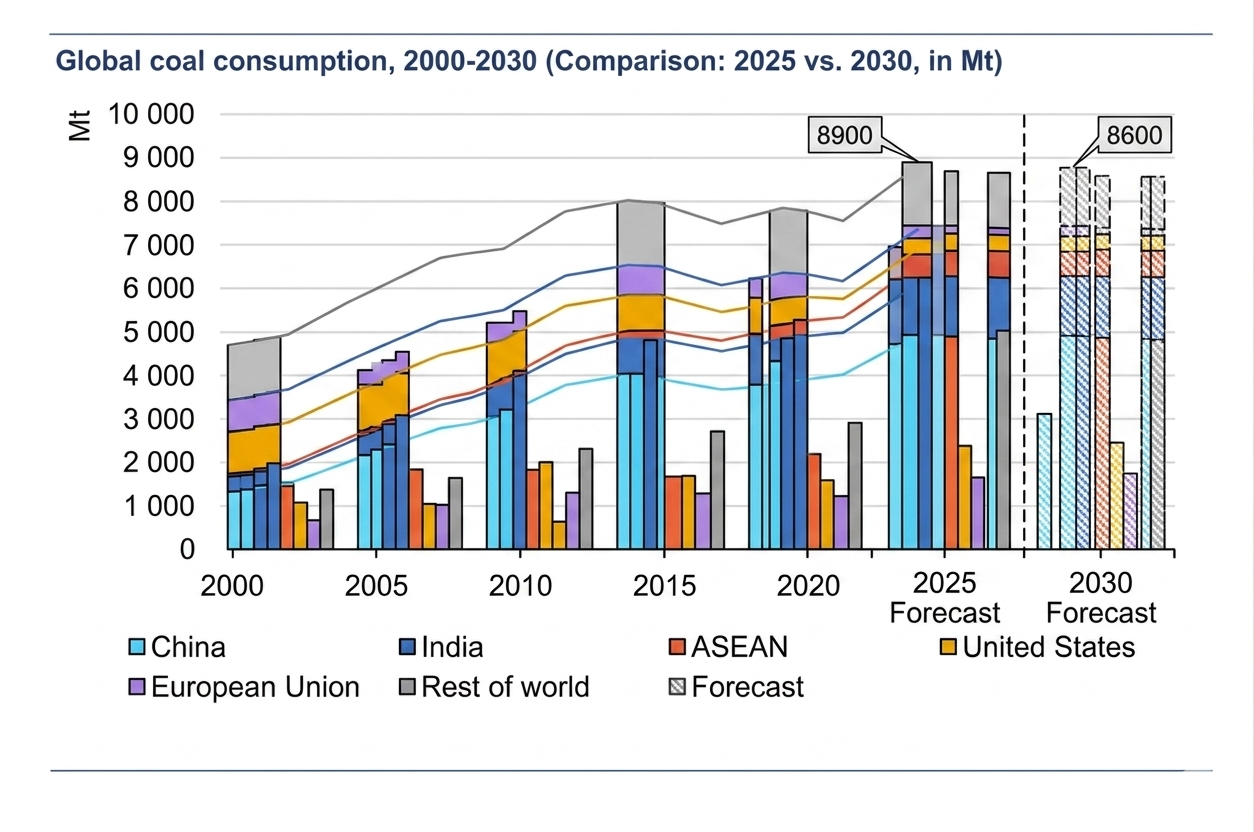
At first glance, this suggests that a transition is already underway, but capacity is not the same as generation. In actual electricity produced, coal continues to dominate, supplying roughly two-thirds to three-quarters of India’s power, depending on seasonal demand and renewable output.
This gap between capacity and generation is the heart of India’s energy paradox. Across the country, several hundred coal-based generating units operate continuously, clustered in states such as Chhattisgarh, Odisha, Maharashtra, and Gujarat, and others, forming the industrial backbone of India’s electricity ecosystem.
Does coal heat the environment? A closer look
Returning to my colleague’s argument that continuous burning raises temperatures, the observation is not unfounded, but it requires further refinement. Thermal power plants do not heat the surrounding air in a direct, localised way, as in firewood burning in a kitchen. The heat they generate is largely dissipated; however, their impact is far more significant at a systemic level.
Coal combustion releases large volumes of carbon dioxide (CO₂), the primary greenhouse gas driving global warming into the atmosphere.
Over time, this leads to rising average temperatures, more intense heatwaves, and shifting climate patterns. Thermal plants also contribute by operating high-temperature cooling systems that discharge waste heat into rivers and lakes, consume vast quantities of water, often in already stressed regions, and emit pollutants such as particulate matter and sulphur dioxide.
The result is not a single “heated room,” but a slowly warming atmosphere.
Renewables: India’s rapid, incomplete transition
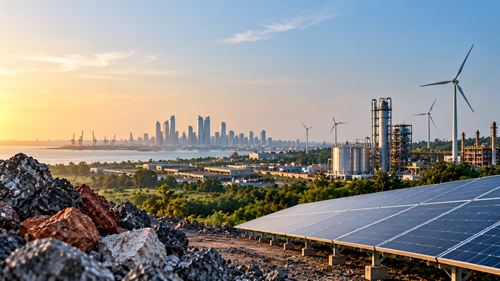
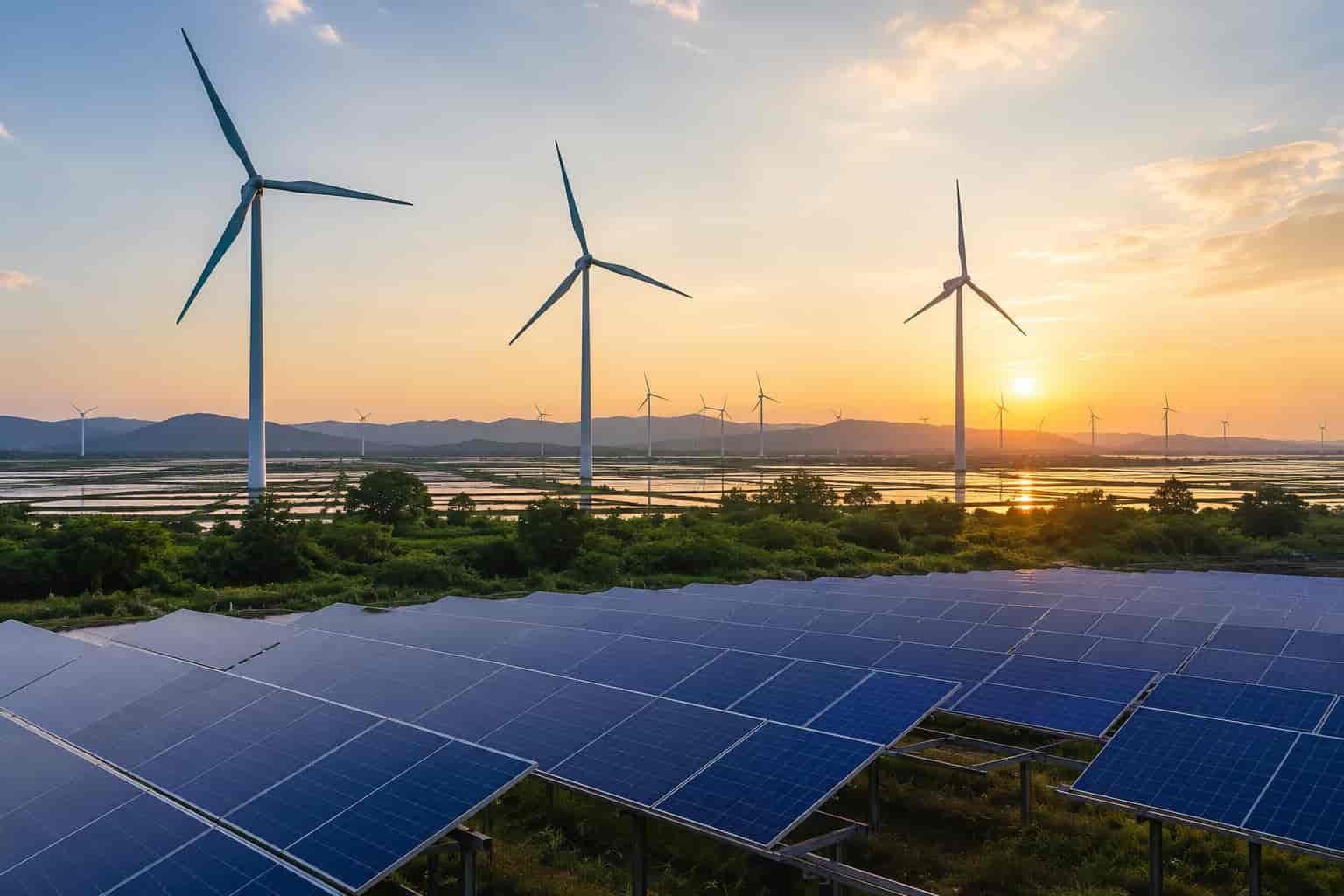
Renewable energy capacity has crossed 263 GW, accounting for more than 50% of total installed capacity. Solar power alone has expanded dramatically, now exceeding 130–150 GW, depending on classification and recent additions. Wind, hydro, and biomass further strengthen this portfolio. In recent months, renewable generation growth has even outpaced demand growth, temporarily reducing reliance on fossil fuels, according to industry insiders.
Yet the limitations are structural: solar power disappears at night, wind is inconsistent, and grid-scale storage is still evolving. This means that during peak evening demand, especially in the summer, thermal power remains indispensable. India is not replacing coal; it is building around it.
Nuclear energy, the understated alternative
In this scenario, nuclear power occupies a curious position: technically robust and environmentally friendly yet relatively underdeveloped in India. India’s nuclear capacity stands at about 8,780 MW, contributing roughly 1.6-1.7% of the total installed capacity, according to the Ministry of Power's estimates. There are 24 nuclear power plants, with around 10 under construction, according to a Government of India press statement.
Nuclear power is distinct because it generates electricity without direct carbon emissions, provides stable, continuous baseload power, and operates independently of weather conditions. Recognising this, India has articulated long-term ambitions to significantly scale nuclear capacity, potentially reaching 100 GW by 2047, as discussed in international nuclear energy assessments.
The thorium path, India’s unique bet
India’s nuclear strategy is not just about expansion—it is about transformation. Unlike many countries, India has large reserves of thorium, accounting for about 25% of the world’s known thorium reserves. This has led to a three-stage nuclear programme, beginning with uranium-based reactors, followed by the deployment of fast breeder reactors, and culminating in a transition to thorium-based systems. Thorium promises long-term energy security and reduced dependence on imported fuel. However, commercial deployment remains limited, and the technology is still maturing. For now, thorium represents a future horizon rather than a present solution.
Can nuclear replace coal?
The idea is compelling, but the reality is more measured, analysts point out. Nuclear energy can reduce coal dependence by providing clean, reliable baseload power. It can complement renewables and stabilise the grid.
Over time, it can play a meaningful role in decarbonisation. However, significant constraints persist, including high capital costs, long construction timelines, complex regulatory frameworks and limited private participation. Even in optimistic scenarios, nuclear power will expand gradually; it will not and cannot replace coal overnight. Once in place, it can reshape the balance.
India’s energy paradox
India today embodies a deliberate contradiction: it is among the world’s fastest-growing renewable energy markets, yet it still relies heavily on coal for electricity generation and is investing in nuclear power as a long-term solution. As a Guardian analysis observed, India is pursuing an ‘all of the above’ strategy to meet its energy needs while transitioning to cleaner sources. This is not policy confusion but a structural necessity.
Summers are mirrors
The peak summer months reveal what policy papers often obscure. As temperatures rise, electricity demand surges, coal plants ramp up, emissions climb, and renewables offer partial relief but do not fully replace coal-fired plants. This daily cycle, solar dominance by day and coal dependence by night, mirrors India’s broader transition.
Beyond the firewood analogy
The image of a burning hearth endures because it is intuitive, yet India’s energy reality is far more complex. Coal remains the dominant flame, renewables are reshaping the airflow, and nuclear power stands as the controlled reaction, waiting in the wings.
The question is no longer whether India can afford to transition; it is whether it can afford to wait. With every passing summer, the cost of delay is measured not only in megawatts but also in degrees.
Each summer is no longer just a season; it is a verdict. It tests the resilience of our grids, the limits of our energy choices, and the pace of our transition. Coal may still power the present, but the future will belong to systems that can drive growth without amplifying the heat we are struggling to endure.
The real challenge before India is not merely to meet demand, but to redefine how that demand is met in a warming world.
Cover image: AI-generated (representative)