
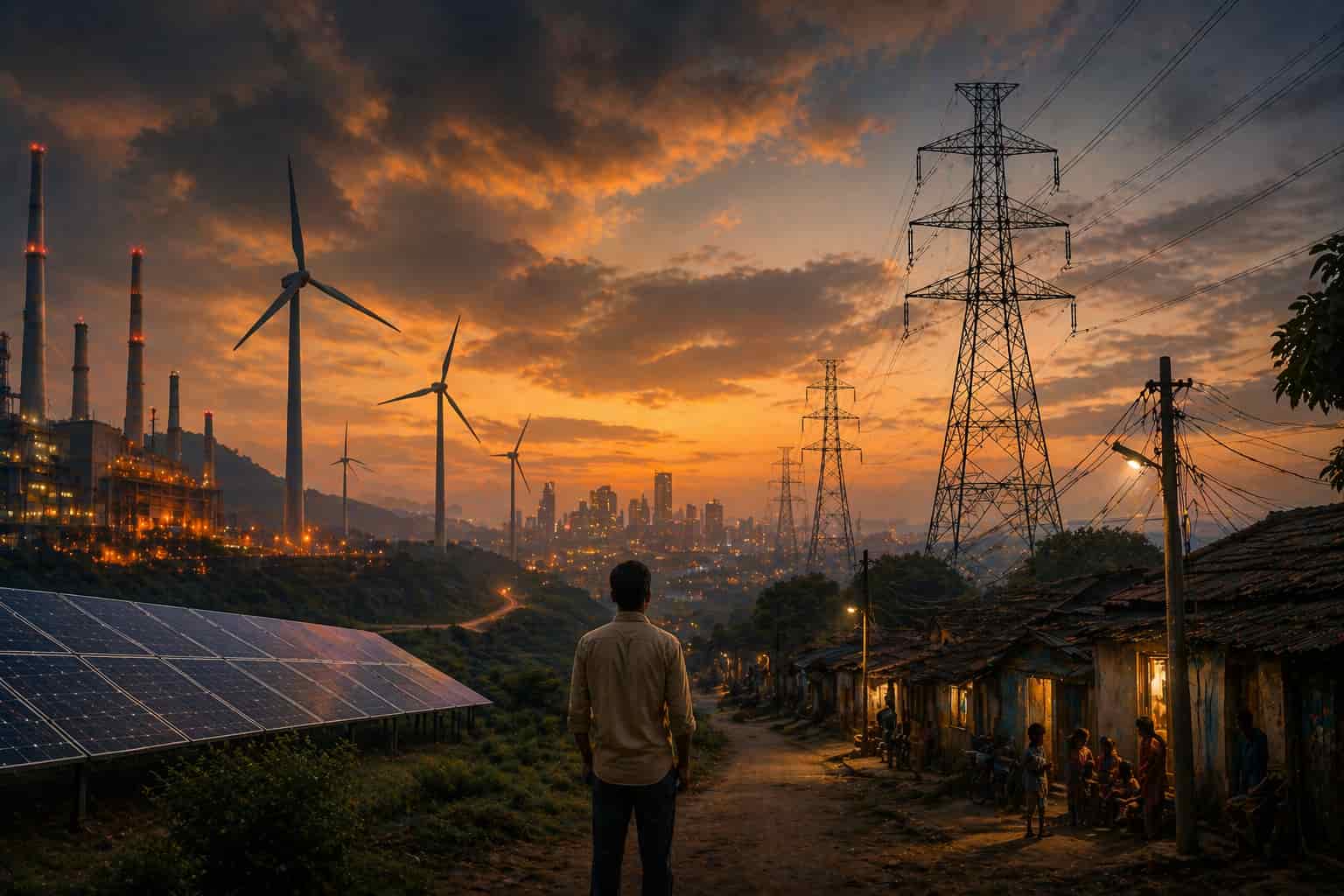
India’s energy transition is often framed through ambitious targets and rising investments, but its success may ultimately hinge on a far less visible part of the system—the financial health of power distribution companies, or discoms.
Even as renewable energy capacity expands and capital flows into generation projects, the last mile of the power value chain remains under persistent stress. Mounting losses, delayed payments, and structural inefficiencies within discoms continue to pose a significant risk to the sustainability of India’s energy transition.
Discoms occupy a pivotal position in India’s electricity ecosystem. They purchase power from generators, supply it to consumers, and serve as the primary point of revenue collection. Any weakness in this link reverberates across the entire sector. As of early 2026, outstanding dues owed by discoms to power generators remain substantial, with payment delays stretching across months in several states.
This financial stress is not new but deeply embedded in the way electricity distribution is organised in India. Tariffs for key consumer segments, particularly agriculture and households, often remain below the cost of supply. While such pricing structures are driven by socio-political considerations, they create a consistent revenue gap for discoms. State governments are expected to compensate for this through subsidies, yet these payments are frequently delayed, further straining already weak balance sheets.
 At the same time, aggregate technical and commercial losses—reflecting inefficiencies in transmission, distribution, and billing—remain elevated. Government data suggests that national AT&C losses hover around 15 to 16 per cent, though significantly higher in certain states.
The implications of this stress are particularly acute for the renewable energy sector. Renewable developers rely heavily on long-term power purchase agreements with discoms, under which timely payments are critical for servicing debt and maintaining investor confidence. When payments are delayed, developers face increased working capital requirements, forcing them to rely on costlier short-term financing.
The government has, over the years, launched multiple reform programmes to address these challenges. The latest among them, the Revamped Distribution Sector Scheme (RDSS), envisages significant investments in infrastructure modernisation, loss reduction, and operational efficiency improvements. Earlier initiatives, including the UDAY scheme, attempted to address the problem by restructuring discom debt and imposing performance-linked reforms.
As renewable energy penetration increases, these challenges are beginning to manifest in new ways. Instances of delayed PPA signings and attempts to renegotiate tariffs have been reported in recent years, reflecting the financial pressures faced by discoms. In some cases, renewable energy curtailment has also emerged as a concern, raising questions about contract sanctity and regulatory certainty.
The broader implication is that discom reform is no longer a peripheral issue but central to India’s energy transition. The country is expected to require hundreds of billions of dollars in investment across generation, transmission, and storage over the coming decade. However, investors assess risk across the entire value chain, and persistent weaknesses at the distribution level inevitably translate into higher risk premiums.
Ultimately, India’s energy transition will be defined not just by the scale of renewable capacity added, but by the resilience of the systems that support it. Discoms, despite being the least visible part of the value chain, represent its most critical link.