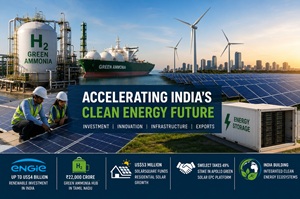

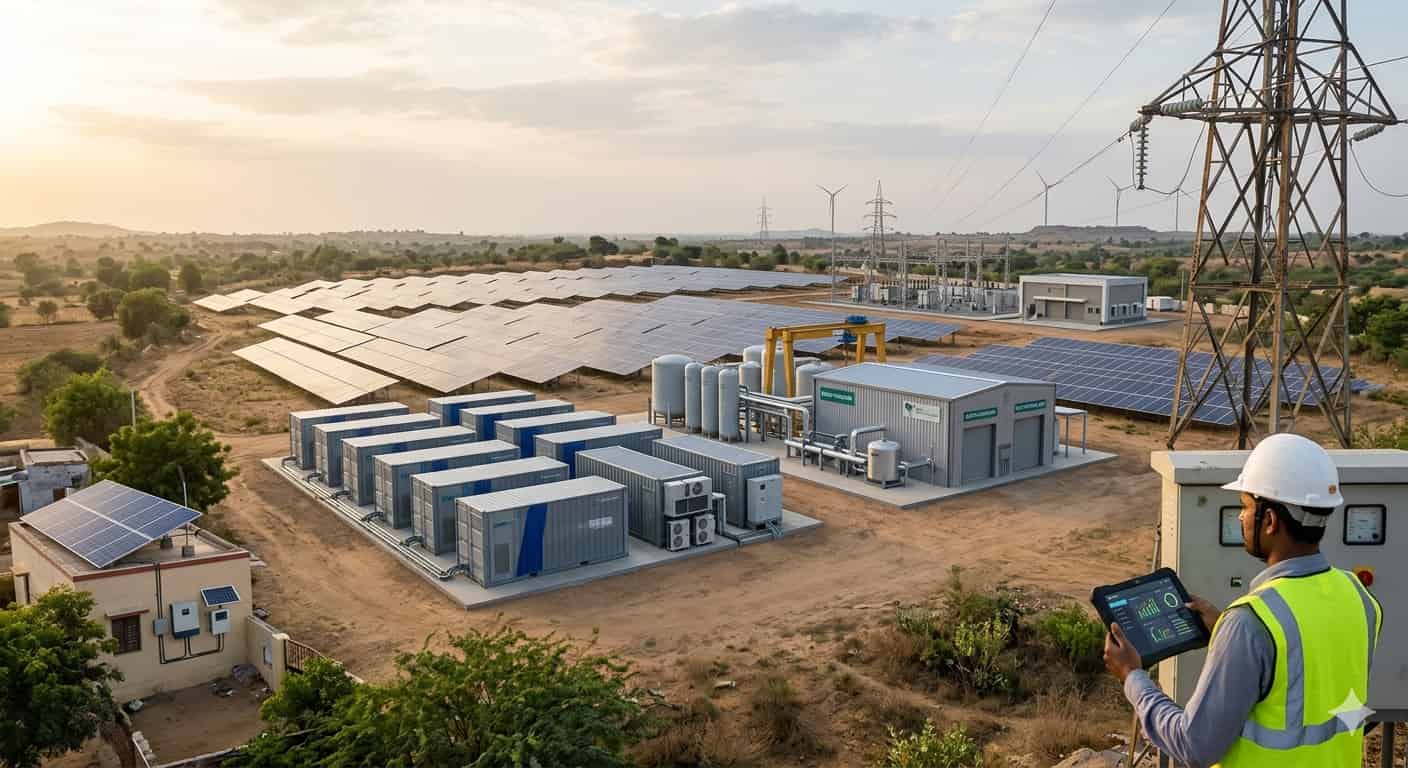

India’s energy transition is no longer defined solely by the scale of renewable capacity addition. Increasingly, it is being shaped by a new generation of technologies that promise to solve the deeper structural challenges of intermittency, efficiency, and system integration. From grid-scale storage to green hydrogen and artificial intelligence, the next phase of India’s energy journey is becoming as much a story of technological adaptation as it is of policy ambition.
Over the past decade, solar and wind have emerged as the backbone of India’s clean energy push. With the country targeting 500 GW of non-fossil capacity by 2030, the challenge has shifted from deployment to optimisation. As renewable penetration rises, the need to manage variability and ensure grid stability has become critical.
The storage imperative
At the heart of this transition lies energy storage. Solar power peaks during the day, while demand often surges in the evening. Bridging this mismatch requires technologies capable of storing excess energy and releasing it when needed.
India has begun exploring both battery energy storage systems (BESS) and pumped hydro storage (PHS) to address this gap. Recent policy initiatives, including viability gap funding for battery storage, indicate growing recognition of its importance. However, deployment remains limited compared to the scale required.
According to industry estimates, India may need over 200 GW of energy storage capacity by 2040 to effectively integrate high levels of renewables.
The challenge is not just technological but economic. Storage systems are capital-intensive, and revenue models are still evolving. Without clear pricing mechanisms for ancillary services and grid balancing, investors remain cautious.
Green hydrogen: Promise and pragmatism
Another technology gaining significant attention is green hydrogen. Positioned as a solution for decarbonising hard-to-abate sectors such as steel, fertilisers, and heavy transport, hydrogen is central to India’s long-term climate strategy.
Under the National Green Hydrogen Mission, India aims to produce 5 million tonnes of green hydrogen annually by 2030.
The potential is substantial. Hydrogen can serve as both a fuel and a storage medium, offering flexibility across sectors. However, cost remains a major barrier. Producing green hydrogen requires large amounts of renewable electricity, and current costs are significantly higher than those of conventional hydrogen derived from fossil fuels.
Global experience suggests that scaling up production, improving electrolyser efficiency, and building infrastructure for transport and storage will be essential to bring costs down. Until then, hydrogen will remain a strategic bet rather than an immediate solution.
Artificial intelligence and digital grids
While storage and hydrogen address physical challenges, digital technologies are emerging as critical enablers of efficiency.
Artificial intelligence (AI) and data analytics are being increasingly deployed to optimise grid operations, forecast demand, and manage renewable variability. Smart grids, equipped with advanced sensors and automation systems, can respond in real time to fluctuations in supply and demand.
India has already initiated smart metering programmes and grid modernisation efforts under schemes such as the Revamped Distribution Sector Scheme (RDSS).
The integration of AI into these systems can significantly enhance performance. For instance, predictive analytics can help utilities anticipate demand spikes, reduce outages, and improve asset utilisation. Over time, such efficiencies can lower costs and improve the financial viability of the power sector.
Domestic manufacturing and technology dependence
A key dimension of India’s energy technology strategy is reducing dependence on imports.
At present, a significant portion of solar modules, battery components, and critical minerals are sourced from global markets, particularly China. Recognising this vulnerability, the government has introduced Production Linked Incentive (PLI) schemes to boost domestic manufacturing.
These initiatives aim to create an integrated ecosystem for solar cells, battery storage, and other clean energy technologies. However, scaling up domestic production is not without challenges. Supply chain constraints, high capital requirements, and technology gaps continue to pose hurdles.
Recent industry reports suggest that domestic solar cell capacity still lags behind demand, raising concerns about potential shortages and cost increases.
The role of emerging technologies in decentralisation
Beyond large-scale infrastructure, technology is also enabling decentralised energy solutions.
Rooftop solar systems, mini-grids, and battery-backed microgrids are transforming energy access in rural and remote areas. These systems reduce dependence on centralised grids and offer greater resilience, particularly in regions with unreliable power supply.
In states such as Bihar and Uttar Pradesh, decentralised solar solutions have already demonstrated their potential to improve energy access and support local economic activity. The integration of digital payment systems and remote monitoring technologies has further enhanced their scalability.
However, financing remains a constraint. Small-scale projects often struggle to attract investment due to perceived risks and limited returns, highlighting the need for innovative financing models.
The technology–finance nexus
What emerges from these developments is a clear pattern: technology and finance are deeply intertwined.
Advanced technologies such as storage and hydrogen require significant upfront investment and long gestation periods. At the same time, digital technologies depend on robust data infrastructure and regulatory support. Without adequate financing frameworks, even the most promising technologies may fail to scale.
Global estimates indicate that clean energy investment needs to reach over $4 trillion annually by the end of the decade to align with net-zero targets.
For India, the challenge is even more complex, given its developmental priorities and cost sensitivities.
The road ahead: Integration over innovation
India’s next energy leap will not be driven by a single breakthrough technology. Instead, it will depend on how effectively multiple technologies are integrated into a coherent system.
Storage, hydrogen, and AI each address different aspects of the energy transition. Together, they can create a more flexible, resilient, and efficient energy system. However, achieving this requires coordinated policy action, sustained investment, and institutional capacity.
Equally important is the need to align technological innovation with ground realities. Solutions must be tailored to India’s unique context, balancing affordability, reliability, and sustainability.
A transition powered by technology
India’s energy transition is entering a phase where technology will play a decisive role. The country has already demonstrated its ability to scale renewable capacity rapidly. The next challenge lies in ensuring that this capacity can be effectively utilised.
In this context, storage systems, hydrogen technologies, and digital innovations are not just complementary—they are essential. They represent the tools through which India can move from a capacity-driven approach to a system-driven energy model.
The success of this transition will depend not only on how much energy India produces, but on how intelligently it uses it.
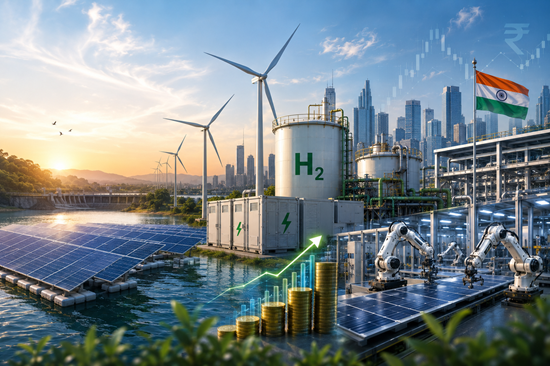
Cover image: AI-generated (representative)