
The world is undergoing a quiet but profound shift. For over a century, geopolitical power flowed through oil fields, shipping lanes, and pipelines. Today, that logic is being steadily rewritten. The new currency of power is no longer fossil fuel reserves, but the ability to generate, manage, and deploy electricity at scale.
This is the emerging age of electricity—and at its centre sits an unlikely protagonist: wind energy.
What was once dismissed as intermittent and marginal is now being recast as foundational infrastructure. Not merely a climate solution, wind is increasingly seen as a strategic asset—one that determines economic resilience, industrial competitiveness, and geopolitical autonomy. The implications are vast, and they are unfolding faster than most policymakers had anticipated.
From oil shocks to electricity security
The modern global order was shaped by fossil fuels. Control over oil routes influenced wars, alliances, and trade systems. From the oil crises of the 1970s to the more recent disruptions triggered by geopolitical conflicts, the vulnerabilities of fossil fuel dependence have been repeatedly exposed.
Today, those vulnerabilities are intensifying. The past few years have seen supply chain disruptions, sanctions regimes, tanker seizures, and chokepoint risks—most notably around the Strait of Hormuz. For economies heavily dependent on imported fuels, such disruptions translate almost immediately into inflation, fiscal strain, and political instability.
It is in this context that energy security itself is being redefined. No longer just about availability and affordability, it now includes resilience, autonomy, and insulation from geopolitical shocks. Wind energy fits neatly into this new framework. It is domestic, inexhaustible, and largely immune to global commodity volatility.
The shift is already visible in policy thinking. Governments are increasingly treating renewable energy not as an environmental obligation but as a strategic necessity. In this new paradigm, building wind farms is not just about decarbonisation—it is about sovereignty.
The rise of the electrostate
A more structural transformation is underway beneath these developments. Countries are beginning to compete not just on economic output or military strength, but on the robustness of their electricity systems.
This has given rise to what analysts are beginning to describe as the ‘electrostate’—a nation whose economic and geopolitical power is anchored in its ability to generate abundant, cheap, and reliable electricity.
China offers the clearest example. Over the past two decades, it has built an integrated system combining renewable energy manufacturing, grid infrastructure, critical mineral processing, and electrified industry. This has allowed it to dominate global supply chains in solar and wind while simultaneously powering its domestic industrial expansion.
Europe is attempting a similar transition, albeit under more complex political constraints. The European Union’s push for energy independence after the Russia-Ukraine conflict has accelerated investments in renewables, grids, and storage. Meanwhile, India is emerging as a potential contender, leveraging its growing renewable capacity, expanding electricity demand, and policy focus on domestic manufacturing.
The competition is no longer about who controls oil reserves. It is about who can build and sustain the most efficient, scalable, and resilient electricity ecosystem.
The AI economy’s hidden energy crisis
One of the least discussed drivers of this transition is the explosion in electricity demand driven by digitalisation—particularly artificial intelligence.
Data centres, once a niche component of the digital economy, are rapidly becoming major energy consumers. In some regions, their electricity demand already accounts for a significant share of national consumption. Projections suggest that by 2030, global data centre electricity use could rival that of entire industrialised nations.
This creates a paradox. The technologies powering the future—AI, cloud computing, digital services—are deeply energy-intensive. Their growth depends on access to vast amounts of reliable, affordable electricity.
Wind energy is emerging as a key solution. Large corporations are increasingly entering into long-term power purchase agreements (PPAs) with renewable energy providers to secure clean electricity for their operations. These agreements are not just about sustainability targets; they are about cost predictability and energy security in a volatile market.
In India, for instance, global tech companies are investing heavily in data centres, with renewable energy integration becoming a core component of their strategy.
The result is a new alignment between corporate strategy and energy transition. The digital economy is quietly becoming one of the strongest drivers of renewable energy deployment.
Electrification and the remaking of industry
Beyond digital infrastructure, electrification is reshaping traditional industries. Steel, cement, chemicals, and transport are all undergoing gradual transitions away from fossil fuels towards electricity-based processes.
This shift has profound implications. Industrial competitiveness will increasingly depend on access to low-cost electricity. Countries that can provide abundant renewable power will attract investment, while those reliant on expensive or volatile energy sources risk losing industrial capacity.
Wind energy plays a crucial role here. Its cost competitiveness has improved dramatically over the past decade, making it one of the cheapest sources of new electricity generation in many markets.
According to the International Renewable Energy Agency, the cost of onshore wind has fallen by around 70% since 2010.This cost advantage is not just a technical detail—it is a structural shift. It changes the economics of production, trade, and investment.
For developing economies like India, this presents both an opportunity and a challenge. On one hand, abundant renewable resources could support industrial growth and export competitiveness. On the other, constraints in grid infrastructure, storage, and policy execution could limit this potential.
The real bottleneck: Grids, not generation
As renewable capacity expands, a new bottleneck is becoming apparent. The challenge is no longer simply generating electricity—it is integrating it into the system.
Wind energy, like other renewables, is variable. Its output depends on natural conditions. Managing this variability requires sophisticated grid infrastructure, storage solutions, and demand-side flexibility.
Across the world, grid constraints are emerging as a major barrier to renewable deployment. In Europe, delays in grid connections are slowing down projects. In the United States, transmission bottlenecks are limiting the expansion of clean energy.
India faces similar challenges. While renewable capacity additions have accelerated, grid infrastructure has not always kept pace. The result is curtailment, inefficiencies, and underutilisation of available resources.
The International Energy Agency has repeatedly emphasised the need for massive investment in grids to support the energy transition.
This is a critical insight. The success of the energy transition will depend less on how much wind capacity is installed, and more on how effectively it is integrated into the broader system.
Wind as industrial policy
Wind energy is also reshaping industrial policy. Unlike fossil fuels, which are extracted, renewable energy technologies are manufactured. This creates opportunities for domestic industry, job creation, and technological development.
Offshore wind, in particular, is driving the development of complex supply chains involving steel, ports, vessels, and engineering services. Countries that invest in these ecosystems stand to gain not just energy security, but industrial leadership.
China’s dominance in renewable manufacturing is a case in point. By building a comprehensive supply chain, it has positioned itself as a global exporter of clean energy technologies.
Other countries are now attempting to replicate this model. India’s push for domestic manufacturing under schemes like “Make in India” includes a growing focus on renewable energy components.
However, this shift also raises questions about protectionism and trade fragmentation. Tariffs, localisation requirements, and geopolitical tensions are increasingly shaping global supply chains.
The energy transition, in other words, is not just a technological shift—it is a reconfiguration of global trade and industrial structures.
The narrative war over renewables
As wind energy becomes more central to economic and geopolitical systems, it is also becoming more contested.
In several countries, particularly in the United States, renewable energy has become a politically polarised issue. Disinformation campaigns, often backed by vested interests, have sought to question the reliability, cost, and environmental impact of wind energy.
At the same time, social resistance—ranging from land use conflicts to concerns about local impacts—has emerged in various regions.
These debates are not merely technical. They reflect deeper tensions over the direction of economic and social change.
The energy transition is, in many ways, a redistribution of power—away from traditional fossil fuel industries and towards new actors and systems. Such shifts are rarely smooth or uncontested.
A global race with uneven players
While the overall trajectory towards electrification is clear, the pace and nature of the transition vary significantly across regions.
Advanced economies have the financial and technological resources to invest in renewable energy and grid infrastructure. Emerging economies, on the other hand, face constraints in financing, institutional capacity, and policy stability.
Yet, it is often these emerging economies that stand to benefit the most from the transition. Many are net importers of fossil fuels and could significantly enhance their energy security through domestic renewable resources.
India is a case in point. With rapidly growing electricity demand, abundant renewable potential, and a strong policy push, it is well positioned to leverage wind energy as part of its development strategy.
However, realising this potential will require addressing structural challenges—ranging from grid infrastructure and regulatory frameworks to financing and land acquisition.
The climate paradox
Despite the growing momentum behind renewable energy, global climate efforts remain uneven. Recent international negotiations have struggled to produce decisive commitments on phasing out fossil fuels.
At the same time, investment trends tell a different story. Clean energy investment has surpassed fossil fuel investment, reflecting a shift in market dynamics rather than political consensus.
According to BloombergNEF, global energy transition investment reached a record $2.3 trillion in 2025.
This divergence highlights an important reality. The energy transition is being driven as much by economics and technology as by climate policy.
Wind energy, with its improving cost competitiveness and scalability, is at the forefront of this shift.
A turning point in the global order
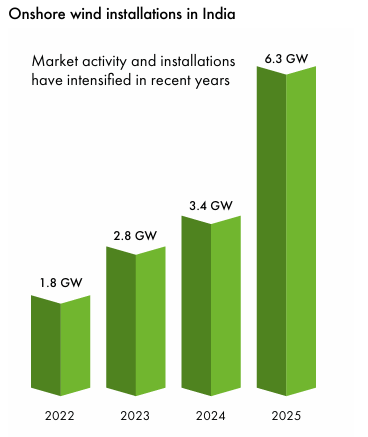
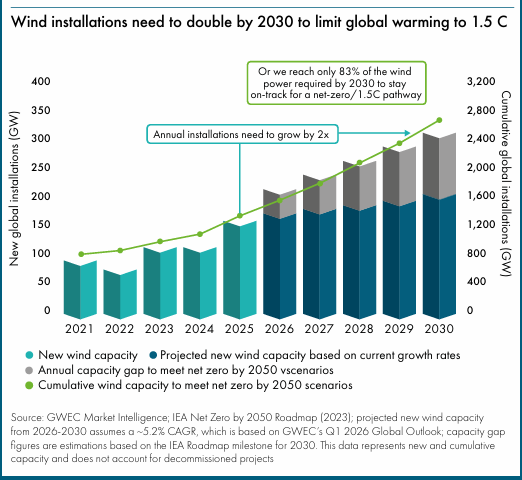
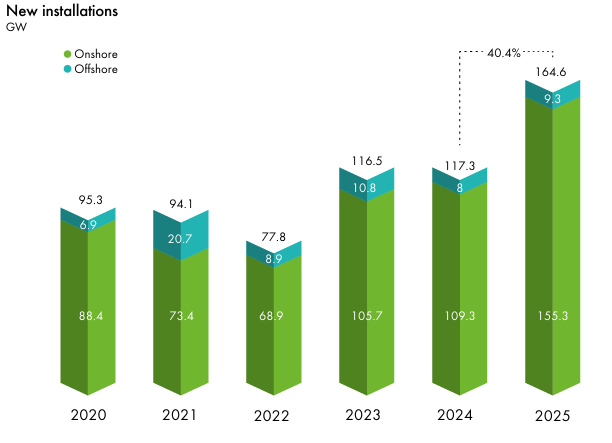
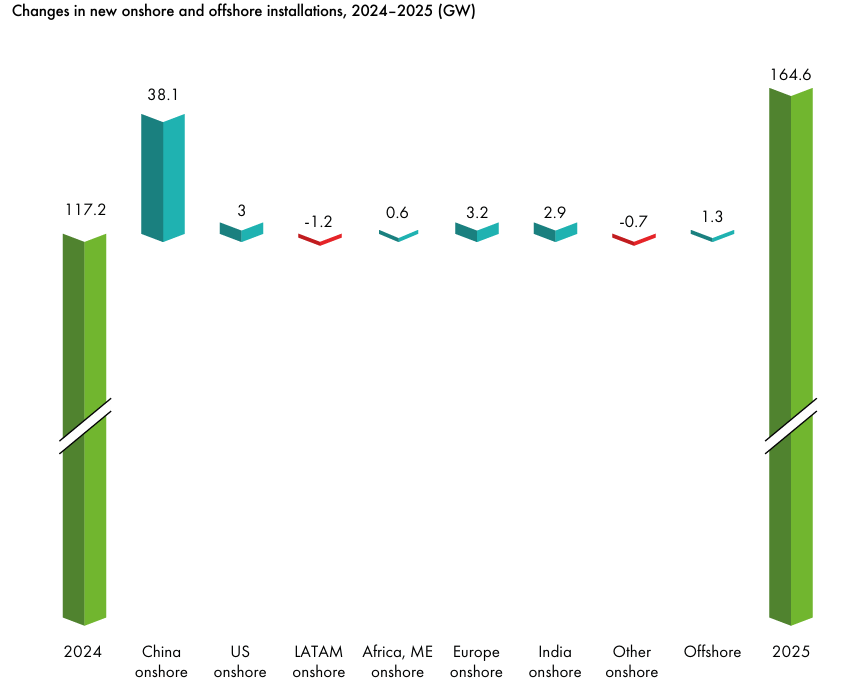
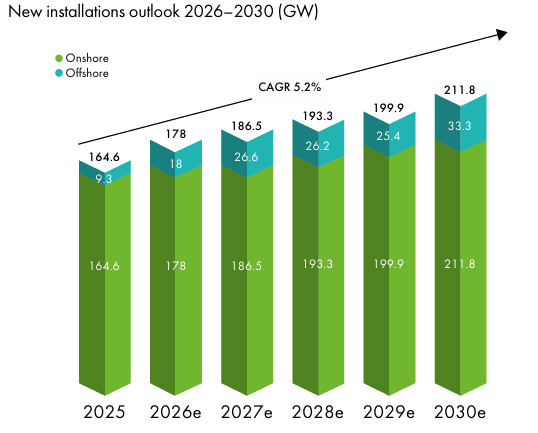
In the middle of this transformation, the Global Wind Report 2026 captures a critical moment. It highlights how wind energy has moved from the margins to the centre of the global energy system, with record capacity additions and expanding adoption across regions.
But more importantly, it reflects a deeper shift in thinking. The question is no longer whether wind energy can contribute to the energy mix. It is whether countries can afford not to embrace it.
The stakes are high. In a world increasingly defined by electrification, the ability to generate and manage electricity will shape economic trajectories, industrial competitiveness, and geopolitical influence.
The future: Electricity as power
The age of electricity is not a distant possibility—it is already unfolding.
From data centres to electric vehicles, from industrial processes to household consumption, electricity is becoming the backbone of modern economies.
Wind energy, with its scale, cost advantages, and strategic benefits, is emerging as one of its central pillars.
The implications extend far beyond energy policy. They touch on trade, industry, geopolitics, and even social structures.
Countries that recognise and act on this shift are likely to gain a decisive advantage. Those that delay risk being left behind in a rapidly changing global landscape.
The transition from fossil fuels to renewables is often framed as a climate imperative. But at a deeper level, it is a transformation of the global economic order.
And at the heart of that transformation lies a simple but powerful idea: In the 21st century, power will flow not from oil wells, but from the wind.
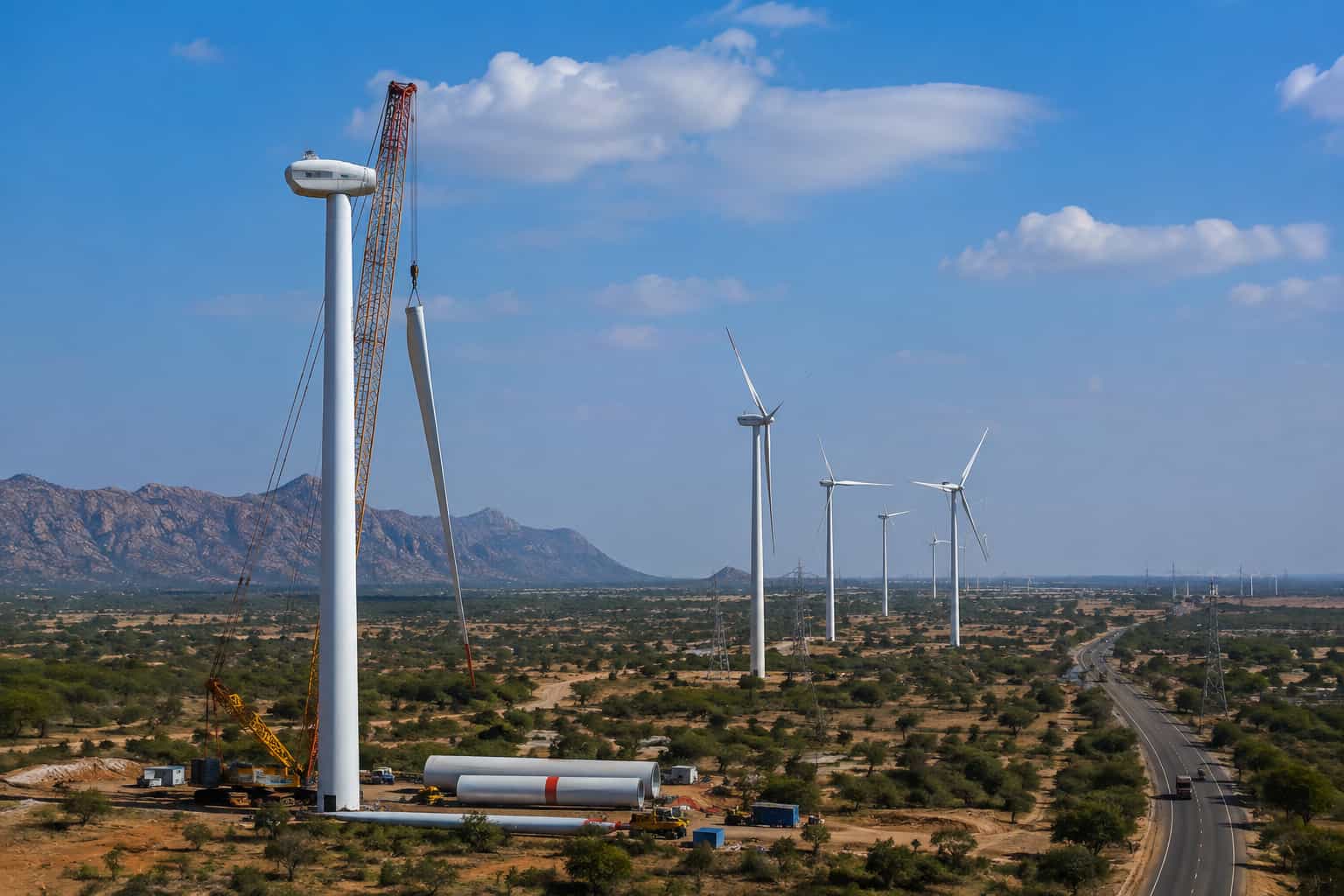
Cover image: AI-generated (representative)