
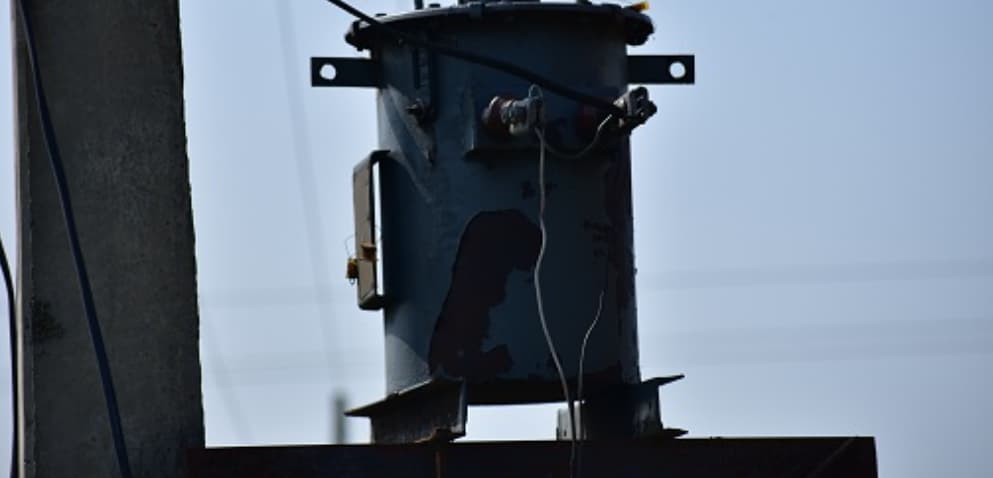
India’s power sector continued to stand tall despite the relentless coronavirus induced lockdowns imposed by the centre and state governments from time to time this year.
The union government’s ₹90,000 crore liquidity injection to the cash-starved sector, announced in May this year, was adrenaline for the state-owned discoms to clear off their dues as well as cover up the losses incurred due to the fall in demand from the lockdowns. Back then power industry analysts had said that there was some 30% reduction in demand and with delays in revenue collection discoms were staring at a shortfall of ₹30,000 to 40,000 crores, or even more.
Confederation of Indian Industry (CII) in its white paper Sustaining India’s Power and Renewable Energy Sector in the Wake of Covid-19 estimates the net revenue loss of ₹25,000 to 30,000 crores for discoms and increasing the liquidity crunch from ₹45,000 to 50,000 crores. As per government data of February 2020 discoms already owed ₹92,602 crores to generation companies. CII in its analysis presented many suggestions including easy credit facilities, the lower tariff for industrial and commercial consumers, and deferral of indirect taxes such as electricity duty, coal cess, to help discoms cope with this situation and remerge stronger.
During the unlock phase industries restarted their operations in a calibrated way and as economic activities began gathering steam the adverse impact from the fall in demand due to Covid-19 began diminishing. There was a big fall in demand when economic activities had stalled in the initial periods of lockdown in April and May months. This is now behind us and with industrial activities picking up further in the coming months the power demand is likely to go up.
However, the sector unflinchingly continued to generate and supply electricity to households and industries without fail, wrote Jaideep Mukherji in an article in the Financial Express.
Experts suggest that overhauling tariff structure with lower commercial and industrial tariffs is the need of the hour for a quick recovery to pre-Covid days. India needs to emulate countries such as Germany, Japan, the United Kingdom, and the United States of America where tariffs are lower. As India brings down its power tariff rates significantly the power sector recovery can be perhaps accelerated.
As per the Ministry of Power estimates, the electricity generation target of conventional sources for 2020-21 is 1330 billion units, a growth of more than 6% as against 2019-20. Power sector think-tanks should efficiently address flaws in distribution and ensure a reliable supply of power for consumers for more significant growth. Power consumption with India’s exploding population and increase in per capita usage is estimated to reach 1,894.7 TWh by 2022, as per Ministry of Commerce & Industry estimates. FDI inflow in power sector reached $14.98 billion from April 2000 to March 2020.
More often than not, consumers would buy new connections when they have access to uninterrupted power and this becomes one of the key factors in increasing per capita power consumption. Moreover, the power sector needs to augment and modernize its power grids to control outages and tripping problems. It also needs to address large-scale power theft, faulty billing, and inordinate delays in new connection procurement, besides ensuring the sector’s economic stability. These have been perennial problems that have beleaguered the power sector and it will need a more holistic approach to fix these glitches.
The Government of India should take a lead in bringing forth path-breaking reforms with full support from the various state governments. The government’s decision to privatize discoms in union territories is being seen as a step in the right direction and industry analysts say that reforms of such kind will bode well for the power sector. Increased participation in the distribution of power is expected to enhance quality services, provide healthy completion, and reduce financial stress.
The power sector has grown amicably in the previous decade and continued to do well during the Covid crisis. It now needs to reap the benefits of the prevailing positive sentiment through aggressive distribution reforms, indigenous R&D and technology development and creating an ecosystem for growth. The sector needs to tune itself to the expected rise in demand from industrial sectors with an efficient supply and delivery network.
(The author is a Delhi-based journalist. He can be reached at prasad.n@indoen.com)