
India's coal mining output slipped nearly 10% year-on-year in May 2026, even as Coal India weighs a ₹60,000-crore (≈ US$6.35 billion) gasification build-out and the International Energy Agency (IEA) records the highest global coal investment in 14 years, with India ranked second only to China.
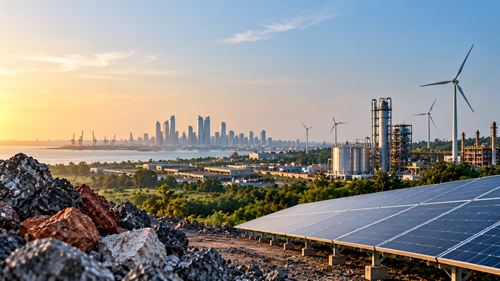
Set against a world where coal output growth is slowing almost everywhere else, the divergence suggests India's coal story is shifting from a contest over tonnage to one over capital, technology and strategic value.
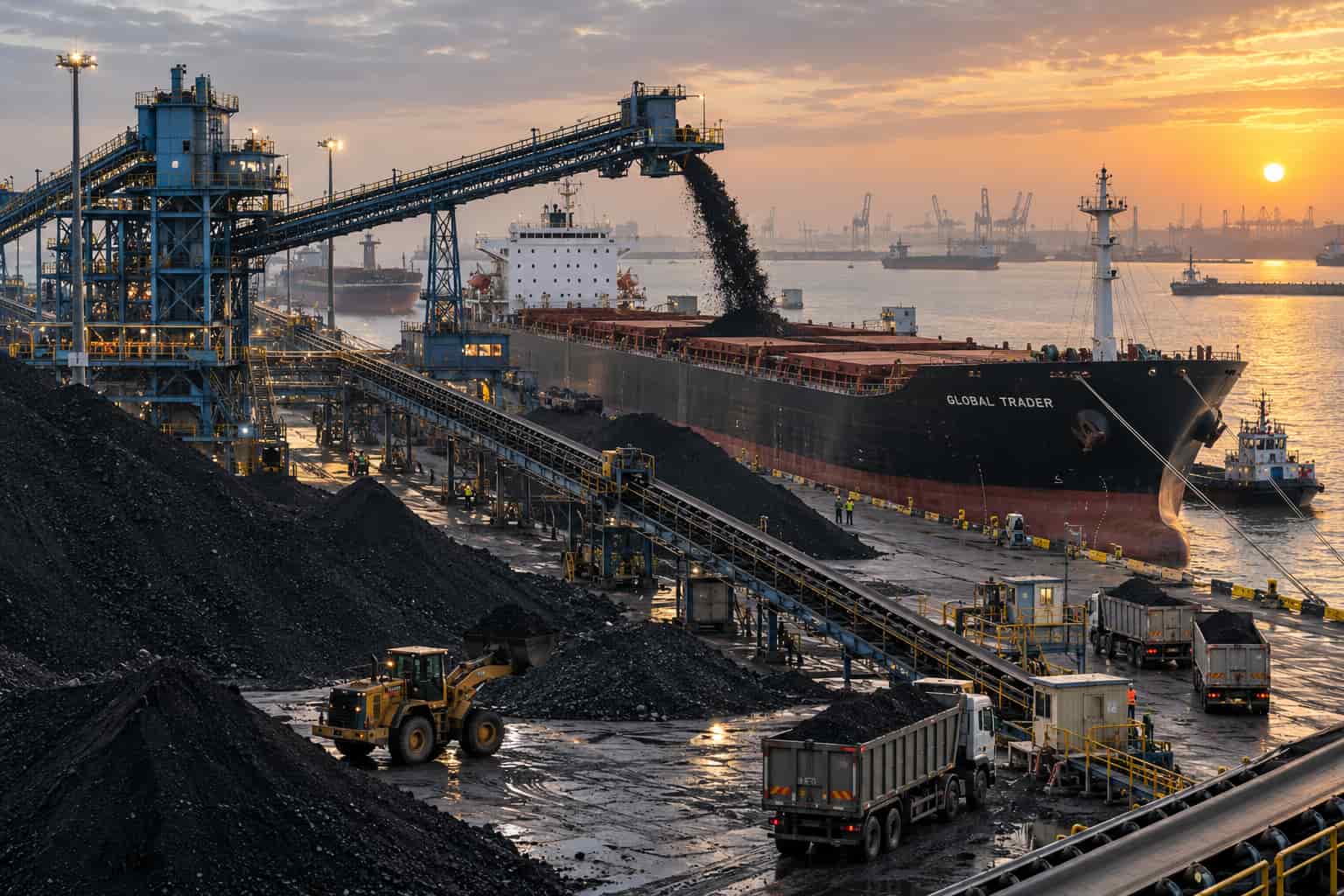
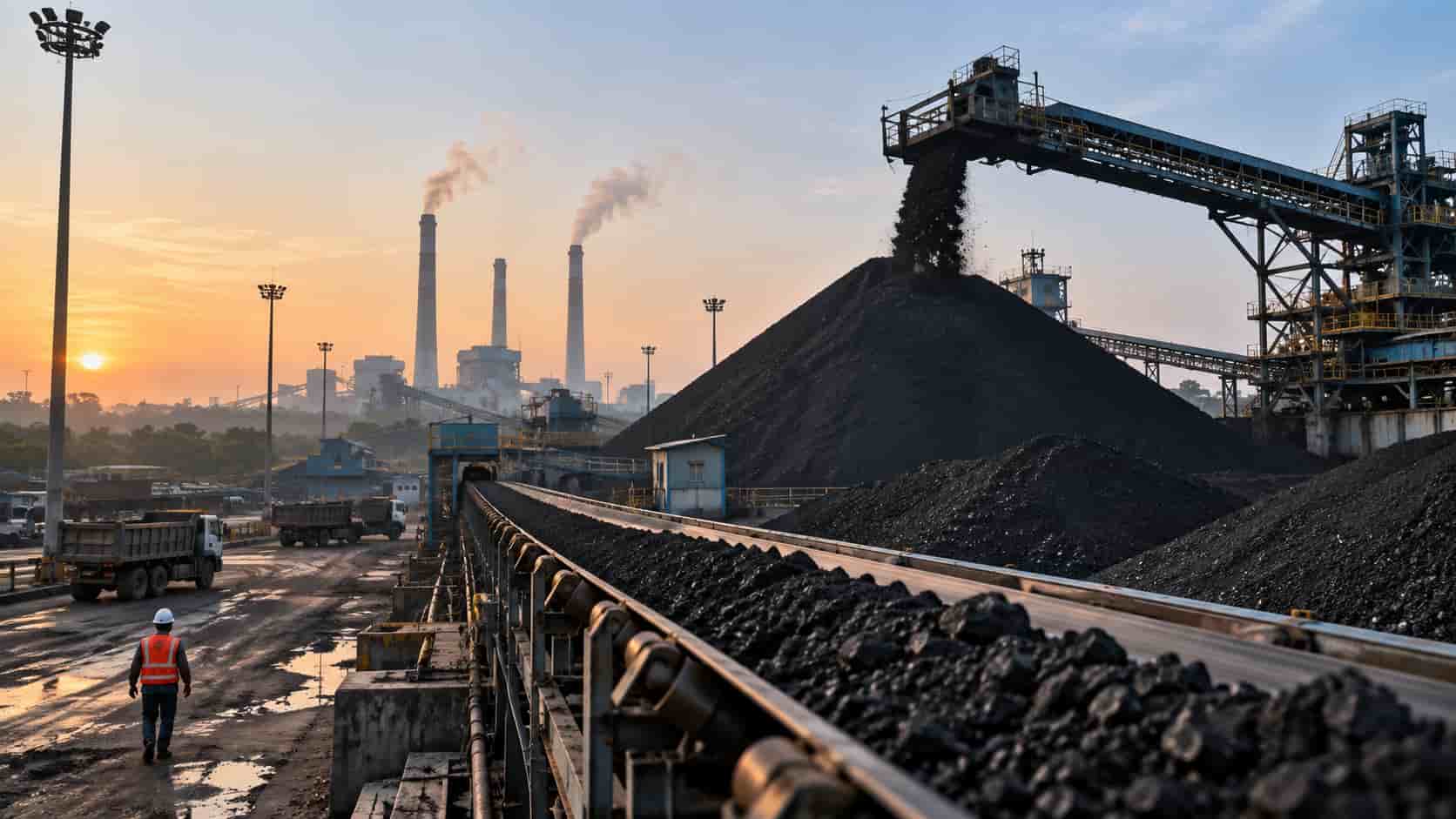
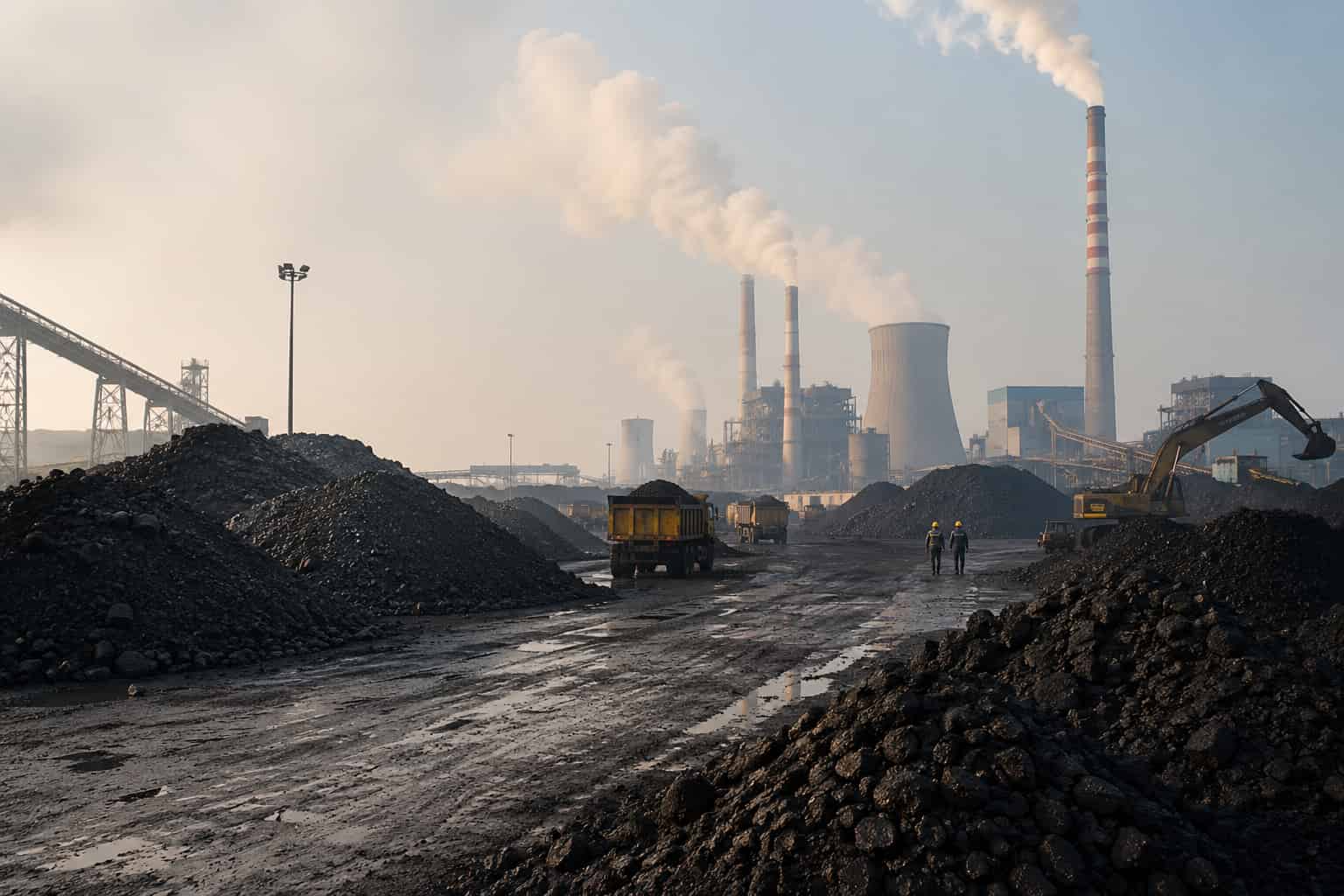
In the same month that Coal India priced out a possible expansion into gasification, the company's own mines produced markedly less coal than they had a year earlier. Preliminary data from the coal ministry show India's total coal output falling to 78.13 million tonnes in May 2026, down 9.51% from 86.34 million tonnes in May 2025, even as output recovered 5.13% from April's 74.31 million tonnes.
That dip would normally read as a routine seasonal wobble. What makes it worth a second look is the company it keeps. Within the same fortnight, the IEA reported that global coal investment is on course to reach roughly US$180 billion in 2026, the highest level since 2012, with China and India together accounting for the entire increase. Set the two data points side by side, and a more interesting story than either headline alone emerges: India's coal sector is mining less, while attracting more capital than it has in years.
A supply dip, not a demand dip
The breakdown matters. Coal India Limited, which supplies most of the country's thermal power stations, produced 56.13 million tonnes in May, down 11.59% year-on-year. Singareni Collieries fared worse, down 22.51%. The one bright spot was captive and commercial mines, increasingly run by private operators under coal-block auctions, which grew 2.7% year-on-year and a striking 23% over April.
Demand, notably, did not retreat. Coal sales rose 3.35% to 92.02 million tonnes, with the power sector, which absorbs four-fifths of all coal sold in India, actually growing 1.22%. Steel-sector purchases fell nearly 40%, hinting at a slowdown in that industry's appetite rather than a broader collapse in coal demand.
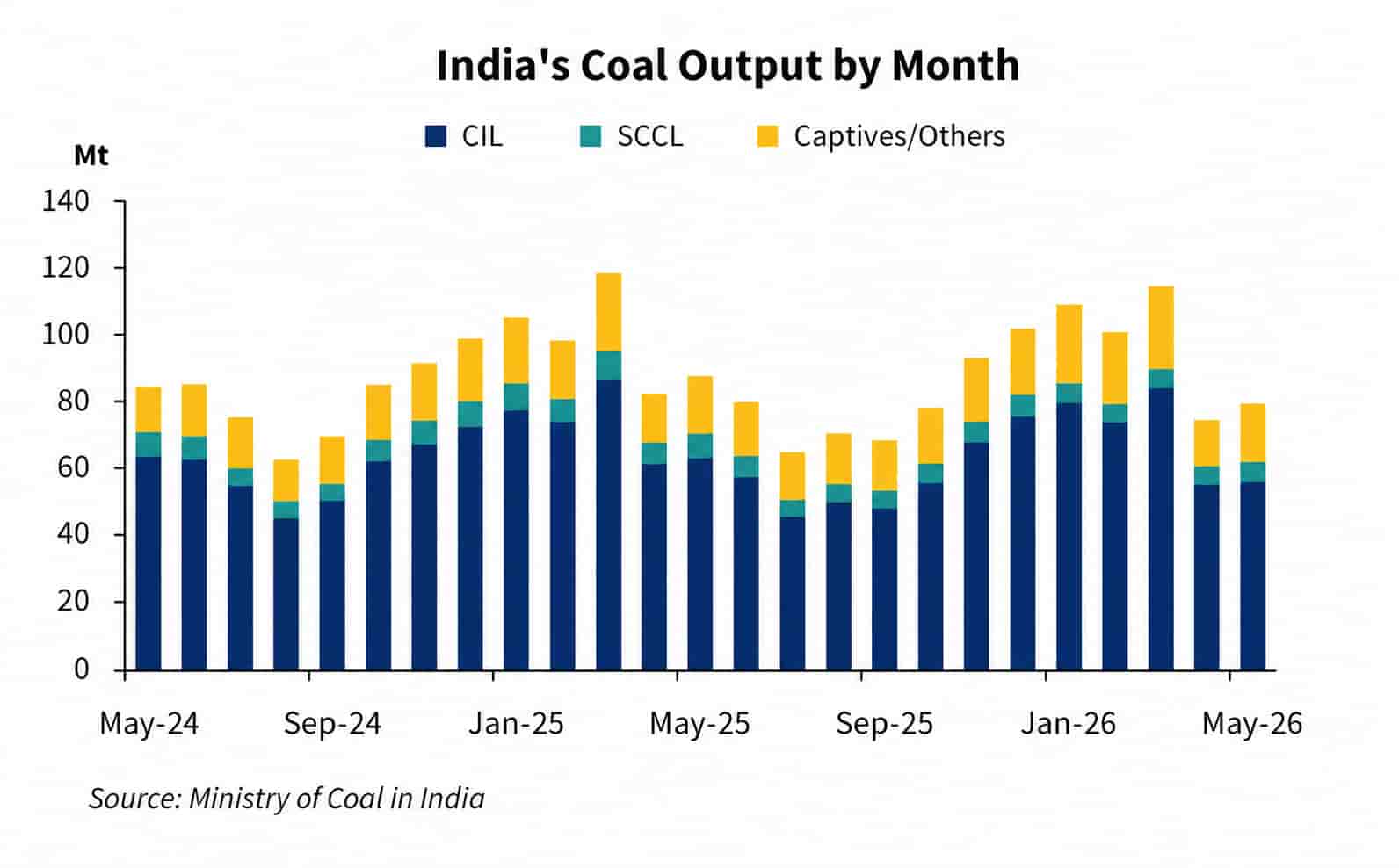 Cumulative output for the financial year to date is down 9.48% even as cumulative sales have edged up 0.91%, implying India met May's demand partly by drawing on stockpiles rather than fresh production.
Even so, May's slip should be read against a longer run of growth. Domestic coal production reached more than 1,047 million tonnes in the 2024-25 financial year, when coal still accounted for nearly 79% of India's domestic energy supply, according to the government's Energy Statistics India 2026 report.
Two soft months do not erase years of expansion, but sector analysts say they are a reminder that mining output, unlike capital commitments, stays exposed to logistics bottlenecks and the pace of new mine approvals, factors that can swing month to month even as the underlying investment case for coal strengthens.
Betting on molecules, not tonnes
That production softness sits awkwardly alongside Coal India's other big move this year: a push into gasification that, according to a senior company official cited by media reports, could draw cumulative investment of ₹60,000 crore (≈ US$6.35 billion) across three projects.
The trigger was a ₹37,500-crore (≈US$4.0 billion) central incentive scheme, approved on 13 May, aimed at gasifying around 75 million tonnes of coal and lignite as part of India's wider target of 100 million tonnes of coal gasification by 2030.
The flagship project, at Lakhanpur in Odisha, is expected to cost around ₹20,000 crore (≈ US$2.12 billion) on its own, largely because it runs on indigenous technology rather than imported processes. It will convert coal into ammonium nitrate, used in fertiliser and explosives, both import-dependent categories for India.
Two further projects, one with Western Coalfields and Bharat Petroleum in Chandrapur, Maharashtra, and another linked to GAIL in Bardhaman, West Bengal, remain at the tendering stage and are designed to produce synthetic natural gas, a direct substitute for imported LNG.
Coal India had already set out a ten-year roadmap to eliminate up to 243 million tonnes of coal imports, as Indoen Energy reported, and gasification reads as the next instalment of the same import-substitution doctrine, this time aimed at chemicals and gas rather than raw coal itself.
The world's coal map is splitting in two
Globally, the picture India sits inside is becoming more lopsided. The IEA estimates that about US$180 billion will be invested in coal this year, compared with roughly US$1.2 trillion in total fossil-fuel investment and nearly US$2 trillion in clean energy investment.
Most of this coal investment is driven by China, which accounts for more than 65% of global coal spending, and India, whose coal investment has tripled over the past decade and whose spending on coal transport infrastructure has increased from US$5 billion to US$7 billion. Outside these two countries, coal investment has fallen for a second consecutive year.
Production tells a similar story. Separate industry forecasts point to global coal output growth slowing to just 0.2% in 2026, with China's output set to fall for the first time since 2016, Indonesia deliberately cutting production after a 5.5% drop in 2025 to defend prices, and US output contracting by more than 5%.
Against that backdrop, India's own production slip looks less like decoupling from a booming global trade and more like a smaller, more contained version of a slowdown playing out almost everywhere except China.
Energy security, not economics, is the real driver
The IEA is explicit that the immediate trigger for renewed coal interest is geopolitical rather than purely commercial: with oil and gas supply routes through West Asia under strain since the escalation around the Strait of Hormuz, Asian buyers are leaning on coal as a fallback fuel.
Indoen Energy has tracked this anxiety building for weeks, from the attack on Fujairah's petroleum zone to the argument that a prolonged Hormuz disruption could eventually hasten, rather than delay, the shift away from fossil fuels altogether. Coal gasification fits this logic neatly: ammonium nitrate and synthetic gas both reduce reliance on imports that pass through the very chokepoints worrying Indian planners.
Analysts at S&P Global describe India's overall energy trajectory not as a transition in the strict sense but as an energy-addition cycle, with coal, oil, gas and renewables all expanding together rather than one cleanly displacing another. May's numbers complicate even that framing slightly: for one month at least, addition gave way to a genuine contraction in mined volumes, even as capital commitments kept climbing.
A self-reliance push that leans on China
The most awkward detail in Coal India's gasification plan may be the technology question. The company is weighing domestic, European and Chinese providers, with officials acknowledging that Chinese gasification technology has matured considerably and could prove cheaper than the indigenous route used at Lakhanpur.
The complication is procedural: foreign suppliers typically bundle their technology with full engineering and construction contracts, an arrangement that sits uneasily with the public-procurement rules a state-run enterprise like Coal India must follow.
That leaves an unresolved tension running through India's biggest coal-related capital programme in years: a self-reliance project that may end up depending, in part, on the very technological edge it is otherwise trying to reduce exposure to.
Sector analysts also caution that the economics of synthetic gas and ammonium nitrate are sensitive to global fertiliser and LNG prices, which have stayed volatile since the West Asia crisis began, raising the possibility that some of this capital commitment could face cost pressure well before the plants are commissioned.
What comes next
Technology tenders for the two pending projects are expected to close by June, with Lakhanpur targeted for commissioning in 2029-30 and the remaining two plants around 2030-31. Coal gasification is, in scale, still a fraction of the roughly US$170 billion in total energy investment the IEA expects India to attract in 2026, a figure Indoen Energy has examined separately, and of the US$433 billion clean-industrial pipeline it has previously reported on. But it captures something those broader figures can miss: capital is increasingly chasing what coal can be converted into, not simply how much of it can be dug up.
That dynamic is close to the argument running through recent industry commentary on India's energy transition, which frames the country's trajectory as a deliberately unconventional one, neither a clean break from coal nor a simple continuation of business as usual, but a recalibration of where coal-linked capital flows even as mined volumes plateau.
Whether May's production dip proves temporary or marks the start of a longer plateau will become clearer over the next two or three months. What is already clear is that India's coal story, often described loosely as a battle between fossil fuels and renewables, is acquiring a second, quieter fault line: one running between tonnes mined and capital deployed, and increasingly favouring the latter.
Follow us on : X | LinkedIn | Facebook | Bluesky