
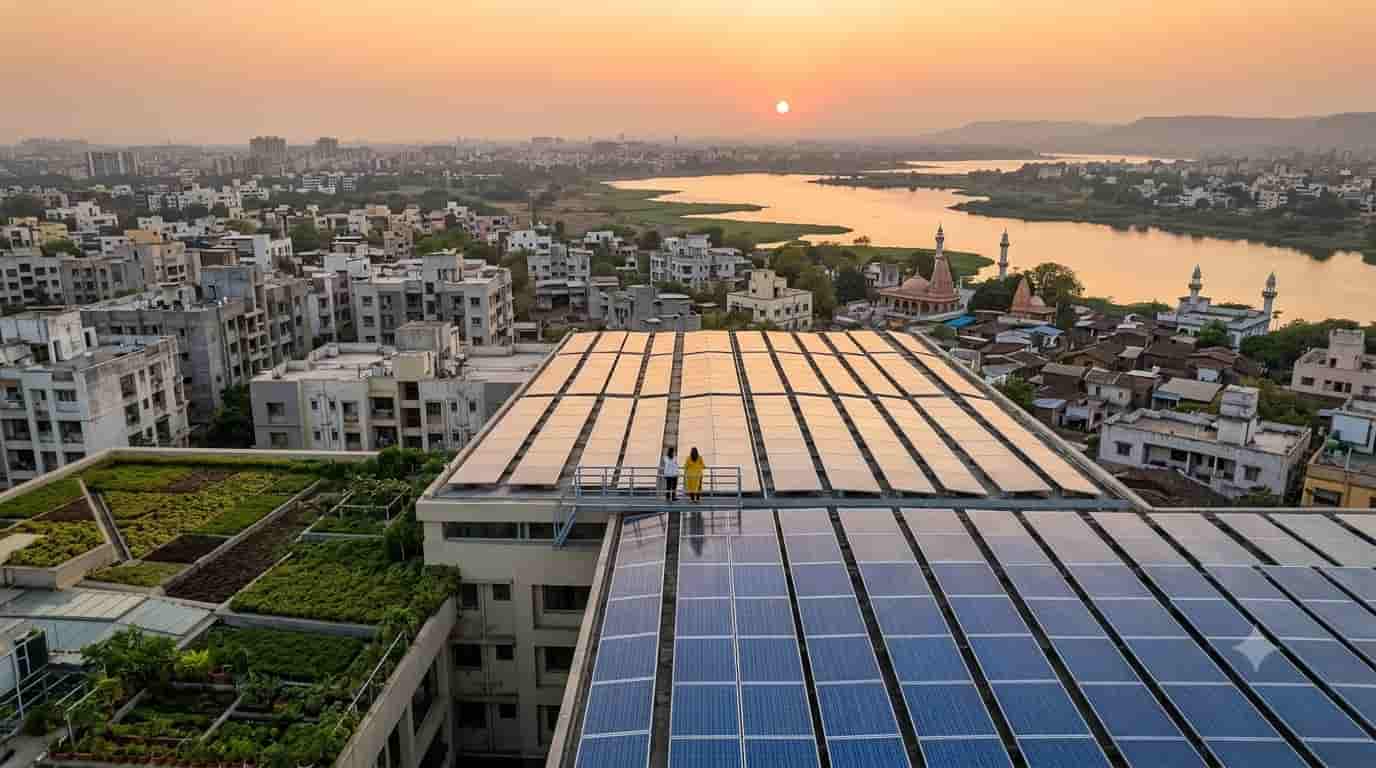
India's solar story has long been told as a triumph of falling costs, rising capacity and ambitious climate targets. Over the past decade, the country transformed itself from a relatively modest solar market into one of the world's fastest-growing renewable energy destinations.
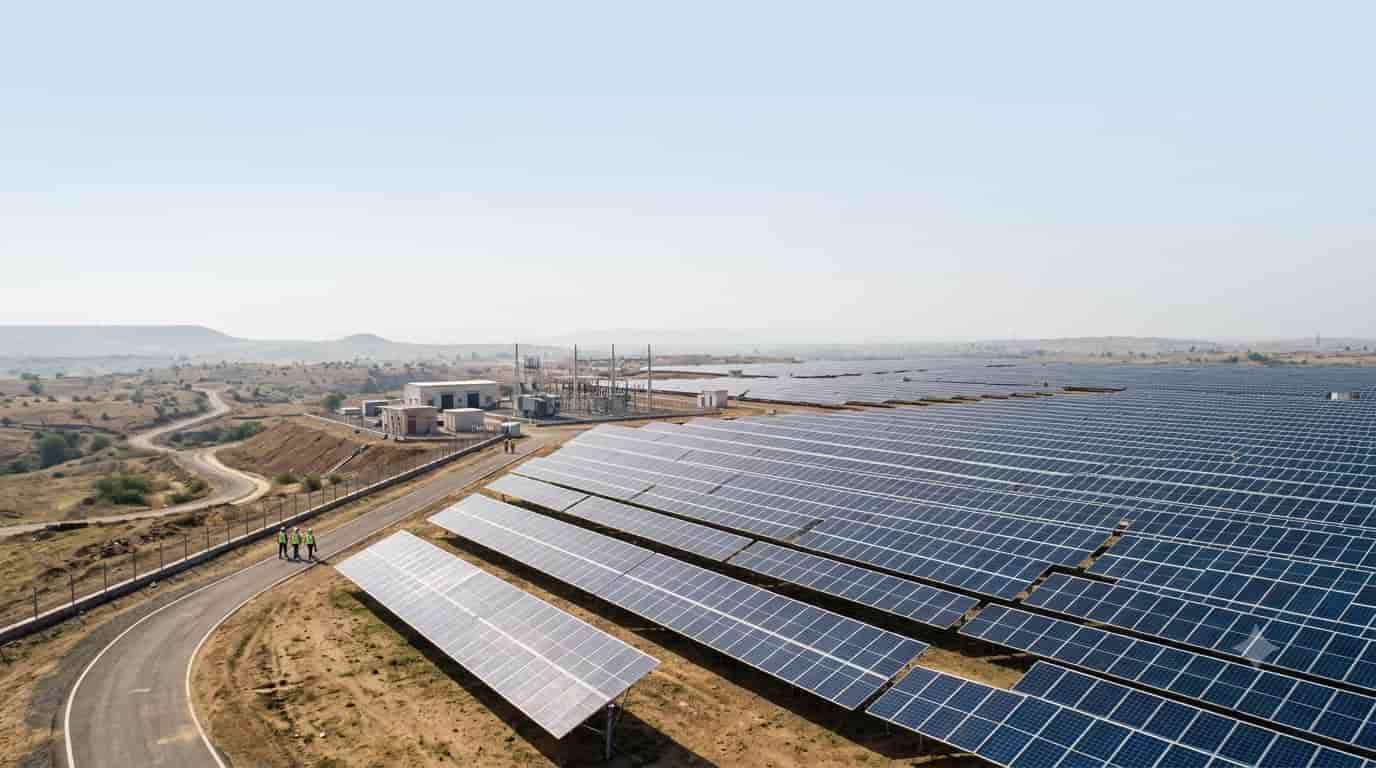
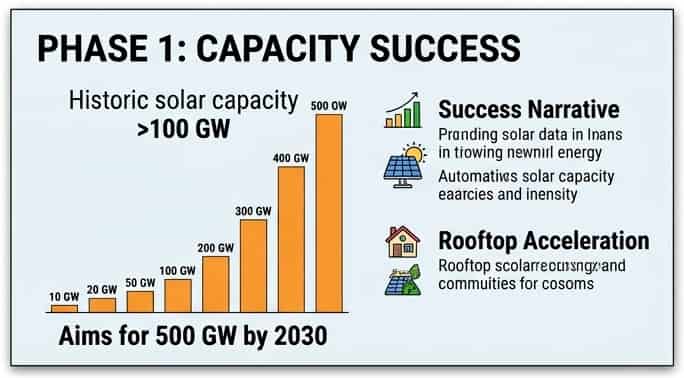
Installed solar capacity has crossed 100 GW, utility-scale projects continue to expand, rooftop adoption is accelerating, and policymakers remain committed to achieving 500 GW of non-fossil fuel capacity by 2030.
Yet beneath the success narrative, a more complicated debate is emerging.
The central question facing India's energy sector is no longer whether solar power can be deployed at scale. It is who should bear the growing costs of integrating, balancing, storing and eventually disposing of the enormous volume of solar infrastructure now entering the system.
In many ways, India's solar transition is entering a second phase. The first phase focused on adding capacity. The next phase will revolve around cost allocation, grid management and market design.
The outcome could shape not only the future economics of renewable energy but also the financial health of distribution companies, the viability of storage investments and the affordability of electricity for millions of consumers.
 The paradox of ultra-cheap solar
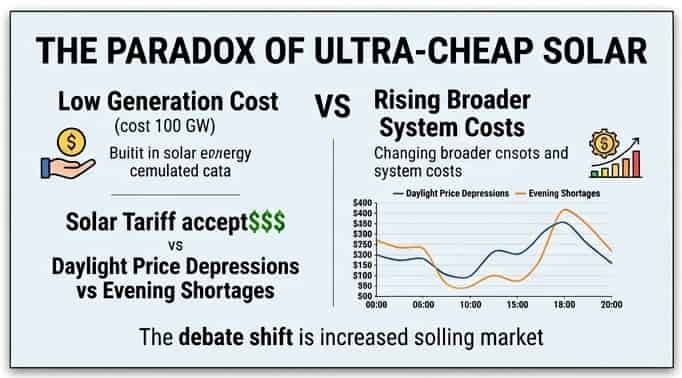
For years, record-low solar tariffs were celebrated as evidence of India's renewable energy success. Competitive auctions repeatedly produced some of the world's lowest solar prices. Falling module costs, abundant developer interest and supportive government policies helped make solar increasingly attractive relative to conventional generation.
However, a growing number of industry participants now argue that the sector may be confronting an unexpected consequence of its own success.
Developers are facing rising financing costs, increased pressure to integrate storage, transmission constraints and occasional curtailment risks. While solar generation costs have fallen dramatically, the broader system costs required to support renewable-heavy grids are beginning to rise.
The challenge is particularly evident as India moves towards round-the-clock renewable supply. Batteries, pumped hydro storage, transmission upgrades and grid-balancing services all require significant investment.
The result is an emerging debate over whether ultra-low tariffs accurately reflect the true cost of delivering reliable clean power.
This is not unique to India. Markets ranging from California to parts of Europe have witnessed periods where abundant solar generation depresses electricity prices during daylight hours while creating shortages and price spikes after sunset.
India is beginning to encounter similar questions, albeit within a different regulatory and market structure.
Rooftop solar and the emerging discom dilemma
The rooftop solar segment offers another glimpse into the changing economics of the transition. Government programmes and declining equipment costs have encouraged households and businesses to install solar systems across the country. Recent policy support has further accelerated adoption.
From the consumer's perspective, rooftop solar can significantly reduce electricity bills while providing a measure of energy independence.
For distribution companies, however, the picture is more complex.
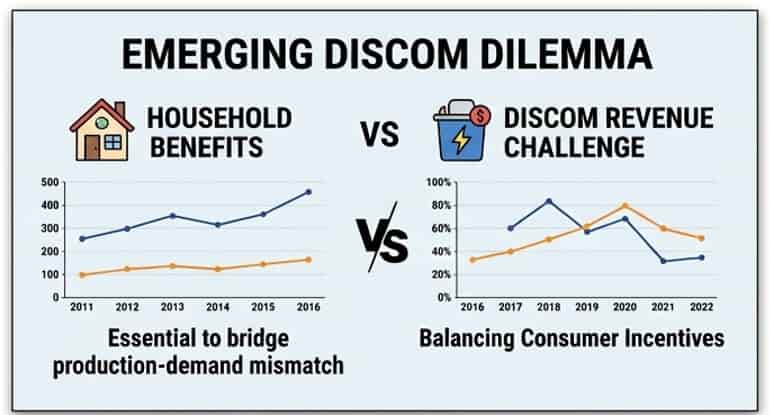
Traditionally, commercial and higher-income consumers have generated a substantial portion of discom revenues. As more of these consumers install rooftop systems, utilities face the prospect of declining electricity sales while remaining responsible for maintaining transmission networks, transformers and backup infrastructure.
Recent clarifications by Andhra Pradesh regarding net-metering rules highlight the growing importance of balancing consumer incentives with utility finances.
The debate is gradually shifting from how to promote rooftop solar towards how to manage its long-term impact on the electricity system.
The issue is likely to become increasingly important as India targets millions of rooftop installations over the coming decade.
 Storage is becoming the new battleground
If solar panels were the defining infrastructure investment of the past decade, energy storage could become the defining investment opportunity of the next.
As solar generation expands, the mismatch between peak production and peak demand becomes more pronounced. Solar output is strongest during daylight hours, while electricity demand often rises during the evening.
Bridging that gap requires storage.
Industry estimates suggest India will require tens of gigawatts of battery energy storage systems and substantial pumped hydro capacity over the coming years to support renewable integration.
This is already influencing investment decisions. Developers increasingly view storage not as an optional add-on but as a core component of future projects.
The challenge is that somebody ultimately has to pay for these assets.
Consumers, developers, utilities and governments all have different views regarding how those costs should be distributed.
As a result, storage is emerging as both an infrastructure challenge and a policy challenge.
The hidden liability of India's solar success
Another debate receiving far less attention concerns the eventual fate of ageing solar panels.
Industry projections suggest India could generate millions of tonnes of solar panel waste over the coming decades. Some estimates presented at industry forums indicate cumulative waste could reach around 11 million tonnes by 2047.
At present, India lacks a mature solar recycling ecosystem comparable to those being developed in parts of Europe and East Asia.
The issue raises several unanswered questions.
Who will be responsible for collection and recycling? Will manufacturers be required to participate under extended producer responsibility frameworks? Can valuable materials such as silver, copper, aluminium and silicon be economically recovered?
The answers could determine whether solar waste becomes an environmental burden or a significant industrial opportunity.
Ironically, one of the largest future beneficiaries of India's solar boom may not be a solar developer at all, but a recycling company.
 A broader global shift
India is not alone in confronting these challenges.
Countries with high renewable penetration are increasingly discovering that generation is only one component of the transition.
The next stage involves investment in grids, storage, digital management systems, flexible demand, recycling infrastructure and market reforms.
In Europe, policymakers are redesigning electricity markets to better accommodate renewable variability.
China is investing heavily in energy storage and ultra-high-voltage transmission networks.
The United States is grappling with similar debates around grid expansion, interconnection queues and renewable integration costs.
India's experience therefore reflects a broader global reality.
The energy transition is evolving from a generation challenge into a system-management challenge.
The next trillion-rupee energy debate
The most important solar-related question in India may no longer concern the number of panels being installed.
Instead, it concerns the economics of the system surrounding those panels.
As solar capacity continues to expand, conflicts are emerging over tariffs, storage investments, net-metering arrangements, transmission charges, balancing costs and future waste-management obligations.
These are not signs of failure. They are symptoms of success. India has largely demonstrated that solar power can scale.
The next challenge is determining how the costs and benefits of that success are distributed across consumers, developers, utilities and taxpayers.
The coming decade may therefore witness a profound shift in India's energy conversation.
The focus will move from generating clean electricity to managing an increasingly complex clean-energy system.
And in that transition lies what could become one of the country's most consequential infrastructure and policy debates.
Related Indoen Reading:
India’s solar energy revolution: A path to 500 GW by 2030 and beyond
India's solar revolution: Harnessing the sun for a sustainable future
Follow us on : X | LinkedIn | Facebook | Bluesky