

Hero MotoCorp deepens India's EV push with $102 million Ather bet
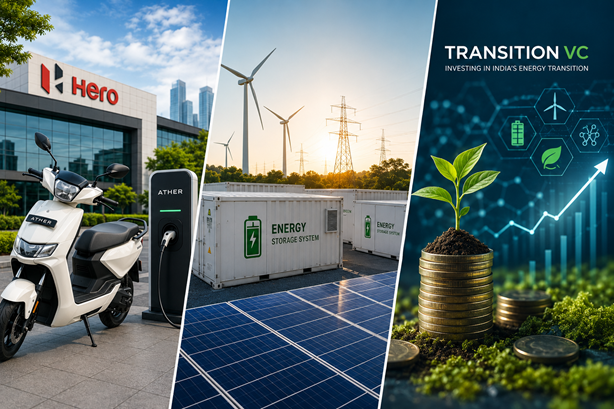
Hero MotoCorp's decision to deploy an additional ₹960 crore (US$102 million) in Ather Energy through a preferential issue of convertible warrants is more than an incremental capital injection into an associate company.
It is a strategic signal of where India's largest two-wheeler maker expects the domestic mobility market's centre of gravity to shift over the coming decade.
Hero already held a 29.48% stake in Ather on a fully diluted basis as of June 2026 — making it the Bengaluru-based company's largest shareholder — and the fresh investment, pending regulatory and shareholder approvals, is expected to nudge that position to approximately 30.68% once the warrants are fully converted.
Ather reported revenues of approximately ₹3,672 crore (~$389 million) for FY2026, underscoring that it has moved well beyond startup scale.
The investment comes at a critical competitive juncture. Ather was an early mover in India's premium electric scooter segment but has faced mounting pressure from better-capitalised rivals, including TVS Motor and Bajaj Auto, both of which have used stronger distribution networks and broader product portfolios to gain ground.
For Hero, deepening its financial and strategic commitment to Ather serves a dual purpose: it reinforces Hero's position in a segment of the two-wheeler market where its own internal EV development has progressed more cautiously, while also providing Ather with the capital and institutional backing to sustain investment in product development, charging infrastructure and battery technology during what remains a critical phase of platform maturation.
The broader significance of the transaction lies in what it reveals about the structure of India's emerging EV ecosystem. Rather than clean competitive boundaries between incumbents and challengers, the market is consolidating around hybrid corporate relationships, in which legacy manufacturers provide capital, distribution credibility and manufacturing depth, while EV-native companies supply technology, software and brand positioning.
The Hero-Ather axis is one of the clearest examples of this pattern. How effectively the partnership navigates the tension between Ather's need for operational independence and Hero's strategic oversight will, to a considerable extent, determine whether integrated models of this kind can outpace vertically unified rivals in India's rapidly evolving two-wheeler market.
(Source: Reuters)
Transition VC's $155 million Fund II backs India's energy transition
India-based venture capital firm Transition VC's launch of Fund II — targeting ₹15 billion ($155 million), more than double the capital raised in its inaugural fund — marks a meaningful development in the maturation of India's clean-energy investment ecosystem.
Whereas most capital flowing into India's energy transition has been directed at project finance for utility-scale assets, Fund II is explicitly positioned to address what Transition VC identifies as the "missing middle" of the venture landscape: engineering-led companies that have demonstrated technical feasibility and early commercial traction but have not yet achieved product-market fit at scale.
This is precisely the stage at which promising deep-tech businesses most frequently fail for want of patient, informed capital.
Fund I’s performance — which closed at ₹7.2 billion, well ahead of its original ₹4 billion target, and delivered a reported 57% IRR with more than 3x return on invested capital — provides a credible basis for institutional interest in the successor fund.
More importantly, Fund II’s expanded scope reflects a maturing understanding of where structural value is being created in the energy transition. Rather than focusing narrowly on energy technology startups, Fund II will invest across the broader value chain, including advanced manufacturing and application engineering, and will selectively evaluate emerging opportunities in nuclear, geothermal and next-generation energy infrastructure.
This reflects the growing convergence between energy systems and industrial production, reshaping investment theses globally.
From a structural standpoint, the launch of funds of this kind matters far beyond individual portfolio outcomes. India's clean-energy transition requires not only utility-scale project finance — which is increasingly available — but also the commercialisation of technologies that reduce costs and improve the performance of the entire energy system.
Battery chemistry, power electronics, grid management software, electrolyser components, and advanced manufacturing processes — all of these require sustained, technically sophisticated venture investment over long development cycles.
The emergence of specialised investors with both the capital base and the technical judgement to back such companies at the right stage is a precondition for India becoming a genuine hub of energy-transition innovation rather than primarily a large deployment market.
(Source: ESG Today)
Juniper Green Energy's $191 million IPO tests renewable market appetite
Juniper Green Energy's decision to open an initial public offering of ₹1,800 crore ($191 million) on 30 July 2026 — structured entirely as a fresh issue with no offer-for-sale component — comes at a time when India's public markets are being asked to absorb a growing wave of renewable energy listings.
The company, backed by Singapore-based AT Capital Group and operating a portfolio of approximately 1.1 GW of solar and wind assets, has priced the offering at ₹214–₹225 per share.
A substantial proportion of the proceeds is earmarked for debt reduction — approximately ₹683 crore for direct repayment at the company level and a further ₹729 crore to be channelled into three subsidiaries to service their own loan obligations — making the IPO as much a balance-sheet restructuring exercise as a growth capital raise.
The transaction's debt-heavy profile reflects a structural reality common across India's mid-scale renewable developer segment. Companies that aggressively expanded their project portfolios during the early 2020s deployment surge often carry leverage that constrains their ability to pursue new opportunities, manage refinancing risk and maintain financial flexibility throughout a project cycle.
Accessing public equity markets to reduce this burden is a rational response, but it places the onus on prospective investors to assess whether the underlying operational assets — and management's ability to grow them post-deleveraging — justify the valuation implied by the price band.
For India's broader renewable energy capital market, the Juniper IPO is one of several signals that the sector's financing architecture is evolving.
As large utility-scale developers such as ReNew and Greenko have accessed international capital markets through various structures, the question of how mid-scale, domestically anchored developers access long-term equity capital has become increasingly pressing.
A successful listing would validate the public-market route for a category of companies that have historically relied on private equity and project-level debt. The outcome will be closely watched as a gauge of retail and institutional appetite for the second tier of India's renewable energy developer universe.
(Source: Economic Times)