
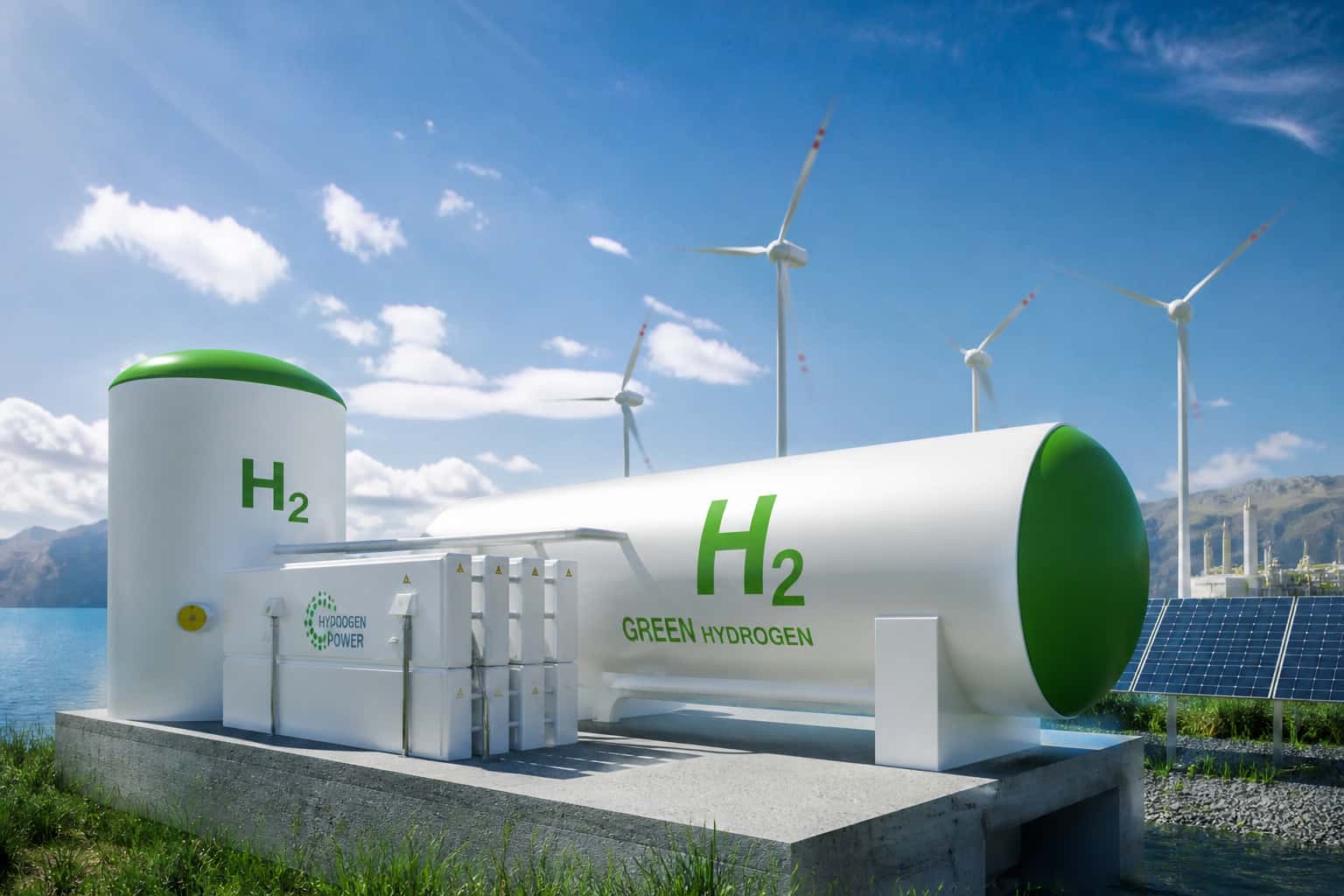
In the silent alchemy of water, split by sunlight, a new energy dimension is taking shape, one that could define India’s energy future. Hydrogen, long confined to the margins of industrial chemistry, is re-emerging as a central pillar of the global energy transition.
In its green form, produced using renewable electricity, it holds the promise of decarbonising sectors that electricity alone cannot easily reach.
For India, this isn’t merely a technological evolution; rather, it is a strategic inflection point where energy security, economic aspirations, and climate responsibility converge.
Across the globe, hydrogen has moved decisively from a laboratory curiosity to a policy priority. For example, the European Commission has launched mechanisms such as the Hydrogen Bank to accelerate investment. The U.S. Department of Energy is supporting production through incentives under the Inflation Reduction Act. Japan has deeply embedded hydrogen in its long-term energy vision.
Developments such as these are buttressed by the International Energy Agency (IEA) statement in its Global Hydrogen Review, which states, “Hydrogen could account for a significant share of final energy demand by mid-century if current momentum is sustained.”
India’s journey, however, has been distinct from that of advanced economies retrofitting mature systems. India is building and greening its infrastructure simultaneously, making hydrogen not only an environmental solution but also a development necessity. To support this argument, industry participants note, “India is not transitioning from one energy system to another, but it is building the next system, from the ground up.”
Green hydrogen blueprint, scale meets strategy
India’s response has been both ambitious and structured.
The Ministry of New and Renewable Energy has anchored this transformation through the National Green Hydrogen Mission, formally approved in 2023. With an initial outlay of Rs 19,744 crore (USD 2 billion), the mission outlines a comprehensive roadmap to position India as a global hub for the production, utilisation and export of green hydrogen.
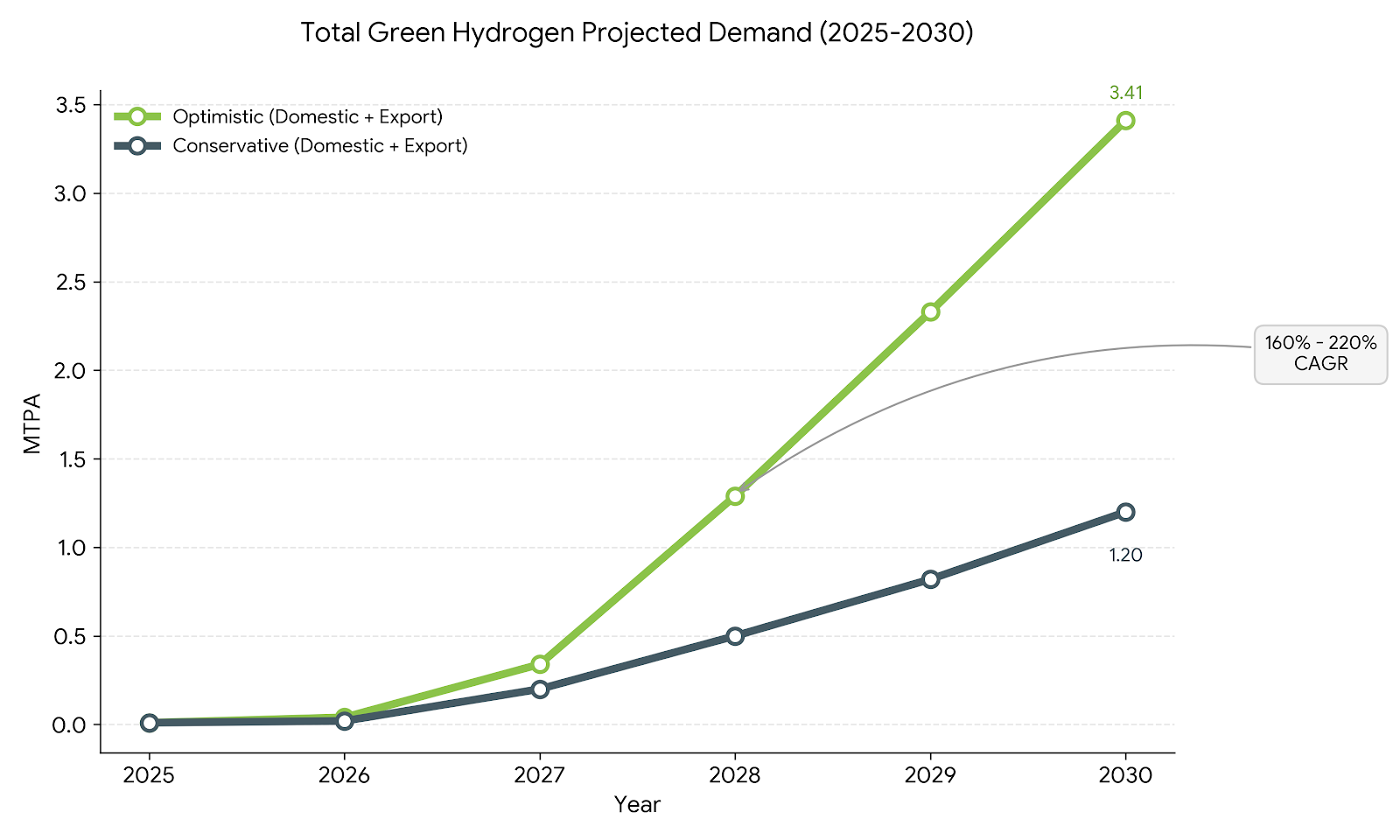
At the heart of this vision is a bold production target: 5 million metric tonnes (MMT) of green hydrogen annually by 2030, supported by nearly 125 GW of additional renewable energy capacity. These figures are not speculative; they are grounded in official government projections.
According to the Press Information Bureau, the mission could unlock over Rs 8 lakh crore (USD 84 billion) in investment, reduce fossil fuel imports by more than Rs 1 lakh crore (USD 10.5 billion), cut nearly 50 million metric tonnes of carbon dioxide (CO₂) emissions annually, and generate over 6 lakh jobs.
The policy thrust has also resonated at the highest levels of leadership. Speaking at global forums, Prime Minister Narendra Modi has emphasised that “green hydrogen has the potential to make India a global hub for clean energy and export.”
The architecture underpinning this ambition is equally significant. The Strategic Interventions for Green Hydrogen Transition (SIGHT) programme aims to incentivise domestic electrolyser manufacturing and scale up production capacity.
Parallel state-level policies are beginning to build a layered ecosystem, signalling that hydrogen is not a standalone initiative but a coordinated national effort. As noted in policy discussions by NITI Aayog, “green hydrogen presents a unique opportunity to decarbonise industry while enhancing energy independence.”
Yet beneath this expansive vision lies an important reality: India’s hydrogen economy is still in its formative phase. Commercial-scale deployment remains limited, and cost competitiveness remains a challenge.
This gap between ambition and execution is not unusual, as it mirrors the early trajectory of solar energy, which India scaled successfully over the past decade. As one project developer involved in early hydrogen pilots remarked, “the economics will follow scale, just as they did in solar; the question is not if, but how fast.”
Why is hydrogen India’s strategic advantage?
Viewing hydrogen solely through the lens of decarbonisation underestimates its significance for India, as its real value lies in the structural transformation it enables. India remains heavily dependent on fossil fuels, including coal, whereas green hydrogen offers a pathway to eventually replace them by converting renewable energy into a storable, transportable fuel.
In doing so, it strengthens energy sovereignty and insulates the economy from global price volatility. As highlighted by the International Renewable Energy Agency, “countries with abundant renewable resources are best positioned to become leaders in green hydrogen production.”
Equally important is hydrogen’s role in decarbonising the manufacturing industry. Sectors such as steel, refining, and fertilisers, which are pillars of India’s industrial economy, are also among the toughest to electrify. Hydrogen provides a viable alternative feedstock, allowing these industries to transition without sacrificing scale or competitiveness.
Sector experts from India’s steel sector note that “green hydrogen could fundamentally alter the cost and carbon structure of steelmaking in the coming years.”
There is also a forward-looking economic opportunity embedded in this transition. With some of the world’s lowest renewable energy costs, India is well-positioned to become a competitive producer of green hydrogen and its derivatives, such as green ammonia. As the World Bank has observed, “emerging economies have a critical role to play in scaling global hydrogen markets.”
Hydrogen thus plays an enabling role in stabilising India's renewable energy ecosystem, as solar and wind power, although abundant, are inherently intermittent.
Hydrogen serves as a storage vector, absorbing excess generation and releasing it when needed, thereby enhancing grid reliability and enabling deeper penetration of renewables. As one grid integration specialist speaking to Indoen said, “Hydrogen isn’t just a fuel; it is an enabler of a fully renewable power system,” which aptly summarises this.
A global race and a distinct Indian path
Countries in Europe, America, and parts of Asia, as stated earlier, have demonstrated early leadership in hydrogen adoption, particularly in mobility and industrial applications. Australia has leveraged its resource base to position itself as a future export powerhouse. Yet these models operate within relatively constrained domestic demand.
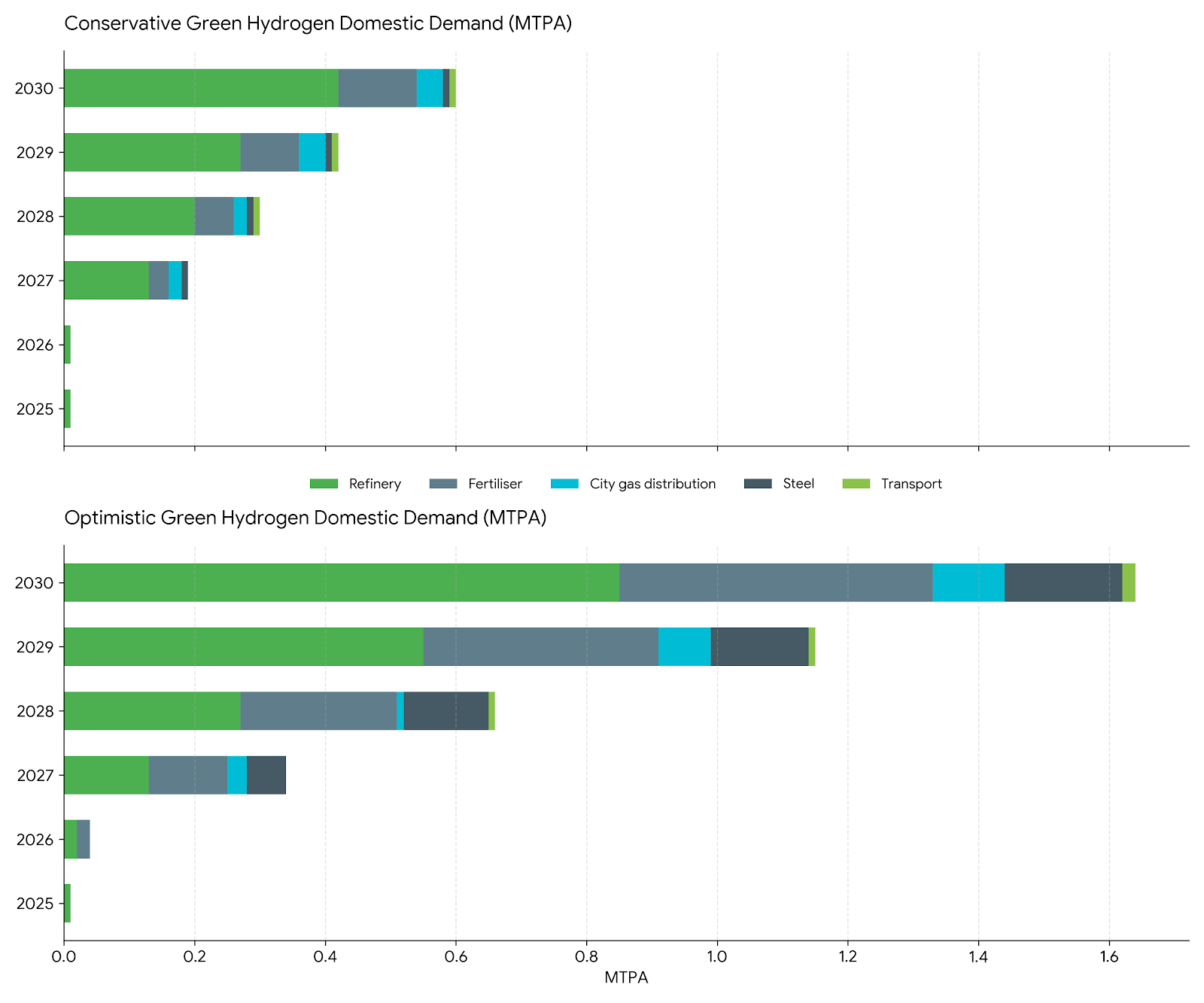
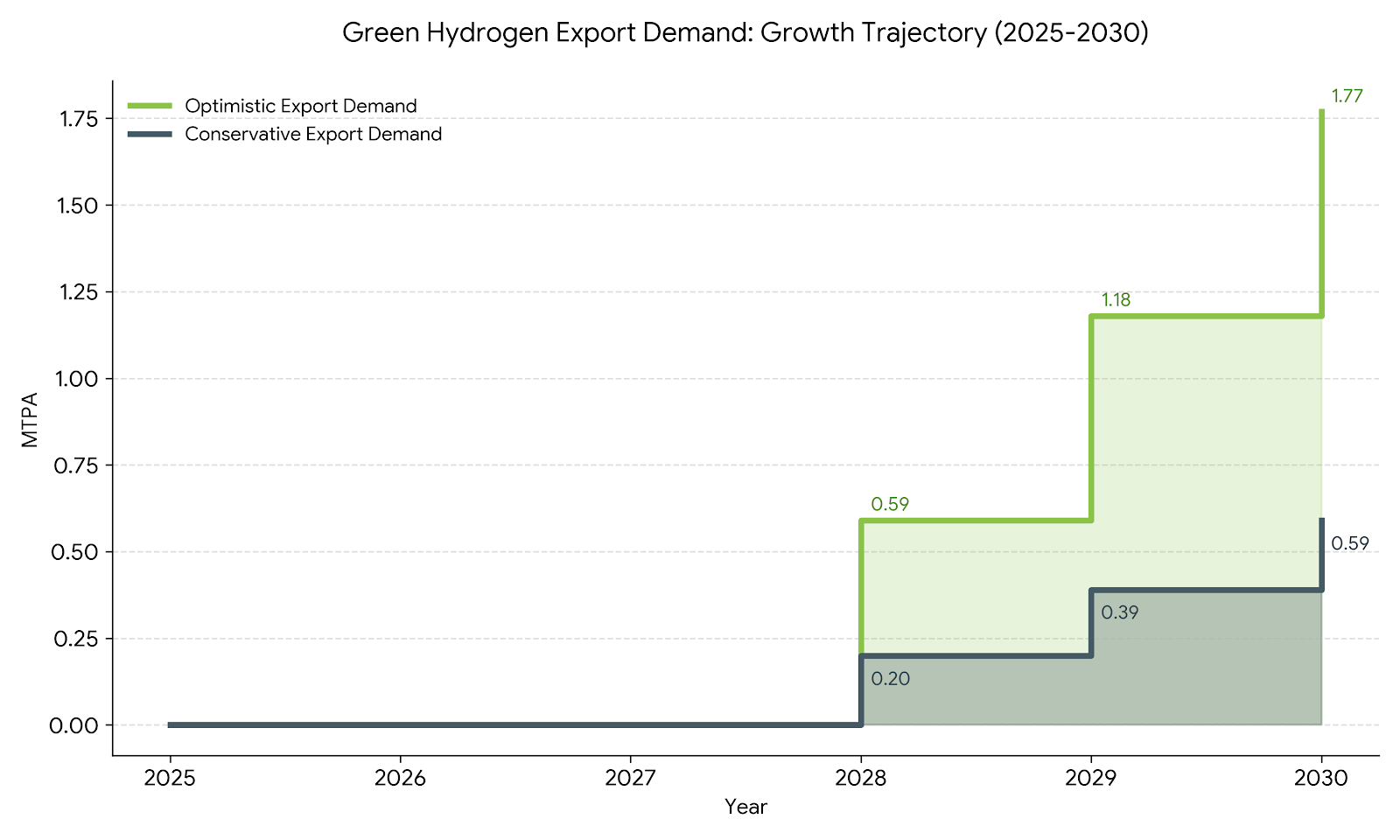
India’s distinguishing feature is scale, reflected in its potential hydrogen demand, which is driven by industrial consumption, mobility and energy storage. This creates a robust domestic market that can sustain long-term growth.
This internal demand, together with policy support and cost advantages in renewables, places India in a uniquely balanced position in the global hydrogen landscape. As analysts tracking the sector often note, “India’s hydrogen story will be written not just in exports, but in the transformation of its domestic economy.”
However, this path will require careful calibration. Infrastructure for storage, transport and distribution must evolve in tandem with production capacity. Financial mechanisms will need to de-risk early-stage investments. Importantly, demand creation through mandates, procurement policies and industrial integration will determine whether hydrogen transitions from promise to practice.
An element that could define an era
There is a quiet elegance to hydrogen’s potential, reflected in the interplay of sun and water. It begins with water, is powered by sunlight, and returns to water after use, completing a near-perfect cycle in a world seeking sustainable solutions.
Yet its significance for India goes far beyond this poetic symmetry.
Green hydrogen represents a convergence of opportunity: a chance to reduce import dependence, to future-proof industry, to lead in emerging energy markets, and to align economic growth with environmental stewardship. It is not without challenges, nor is it an immediate solution. But it is, unmistakably, a direction.
As India advances along this path, the success of its hydrogen ambitions will depend not only on policy intent but also on execution at scale. This transition is set to redefine the country’s energy narrative, turning it into a story of resilience, innovation and global leadership. In the decades to come, as the contours of the global energy landscape are redrawn, it may well be this simplest of elements that bears the weight of the most complex transformation: hydrogen.
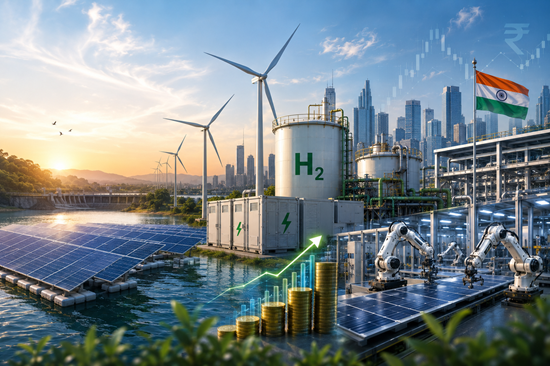
Cover image: AI-generated (representative)