
India’s green hydrogen ambitions are increasingly being shaped not just by scale targets, but by the technologies that will determine cost and efficiency.
While alkaline and PEM electrolysers dominate current deployments, a new class of technology—anion exchange membrane (AEM) electrolysers—is beginning to draw attention as a potential bridge between performance and affordability.
The recent partnership between Versogen and Insolare Energy to advance AEM electrolyser deployment in India signals early movement in this direction. The collaboration aims to localise and scale a technology that promises to combine the lower cost characteristics of alkaline systems with the operational flexibility typically associated with PEM electrolysers.
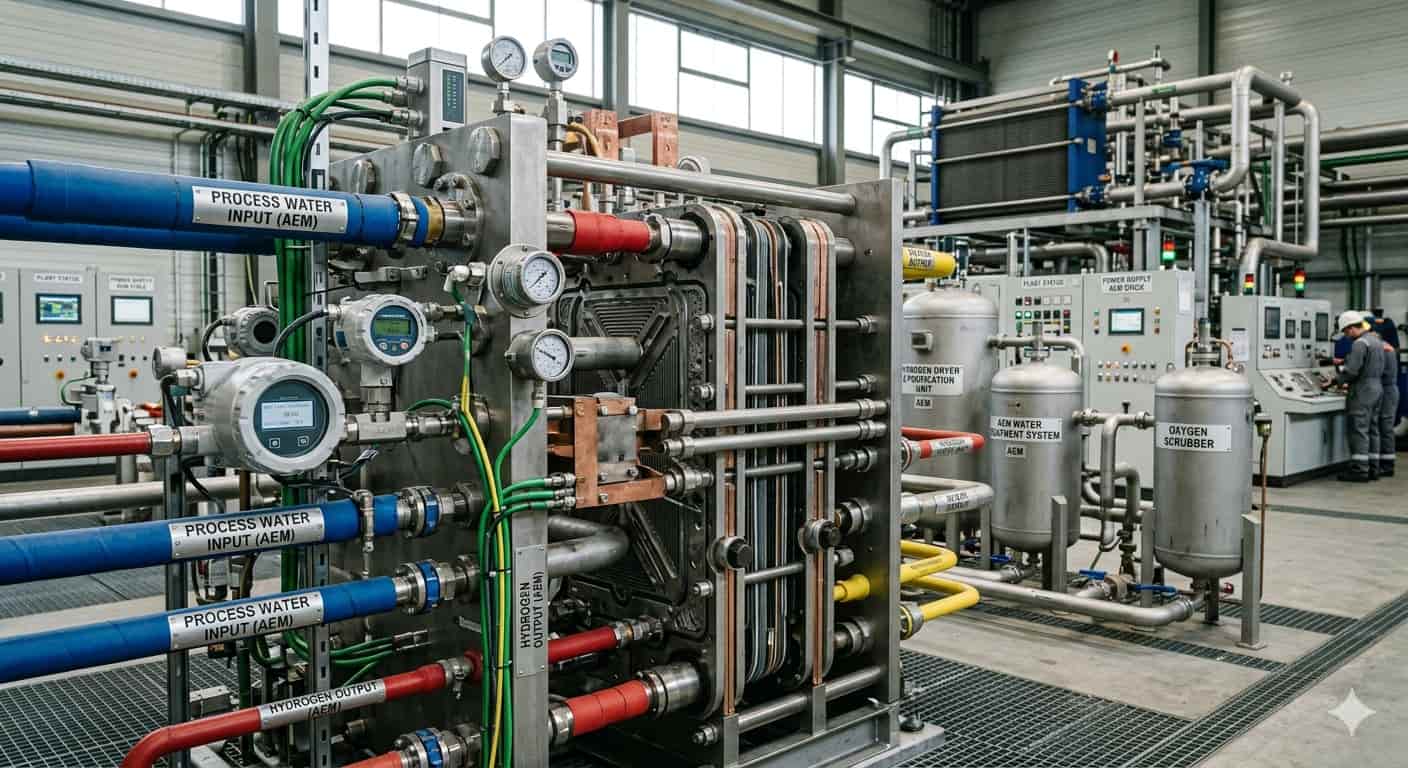
What makes AEM electrolysers technologically significant is their design architecture.
Unlike PEM systems, which rely on expensive precious metals such as platinum and iridium, AEM technology uses more abundant and lower-cost materials. At the same time, it operates with a membrane-based structure that allows for higher efficiency and responsiveness compared to traditional alkaline systems.
This hybrid positioning could prove critical for India.
One of the biggest barriers to scaling green hydrogen remains cost, particularly the capital expenditure associated with electrolysers. By reducing dependence on scarce materials and improving efficiency, AEM technology offers a pathway to lower production costs—an essential requirement for large-scale adoption.
The technology also aligns well with India’s renewable energy profile. As solar and wind generation fluctuate, electrolysers must be able to operate flexibly. AEM systems, with their ability to handle variable loads more effectively than conventional alkaline units, could support better integration with intermittent renewable sources.
However, the technology is still at an early stage of commercialisation. While pilot deployments are expanding globally, large-scale industrial use remains limited. Questions around durability, long-term performance and manufacturing scalability will need to be addressed before AEM electrolysers can compete with more established technologies.
Even so, the timing of this development is significant.
India is actively pushing for domestic manufacturing under its hydrogen mission, and emerging technologies such as AEM could become part of that ecosystem. If successfully localised, they could reduce import dependence and strengthen the country’s position in the global hydrogen value chain.
The broader implication is that India’s hydrogen strategy is beginning to diversify technologically. Rather than relying solely on existing solutions, the sector is opening up to next-generation innovations that could reshape the cost curve over time.
In that sense, AEM electrolysers represent more than just a new technology—they reflect a shift in approach. The focus is moving from deploying what is available to exploring what could become viable at scale. And in a sector where economics will ultimately determine success, that shift could prove decisive.
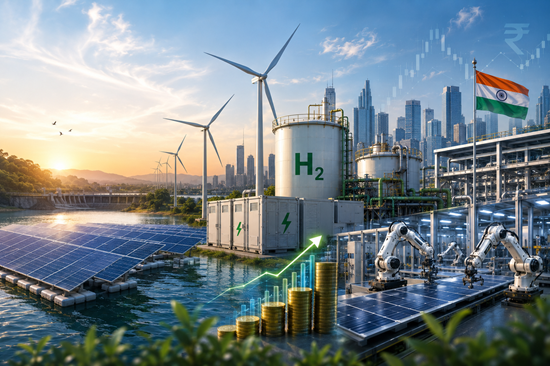
Cover image: AI-generated (representative)