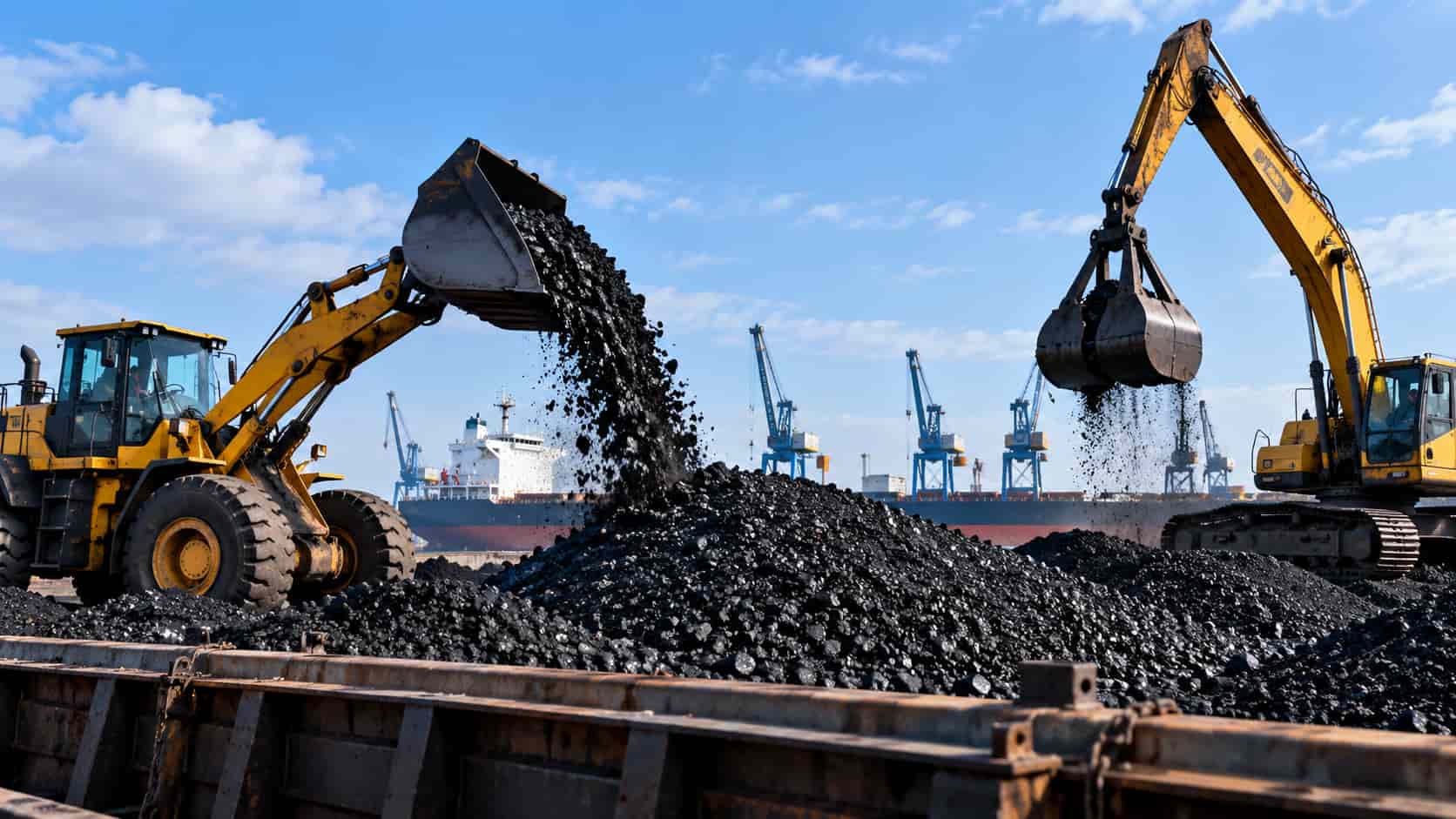

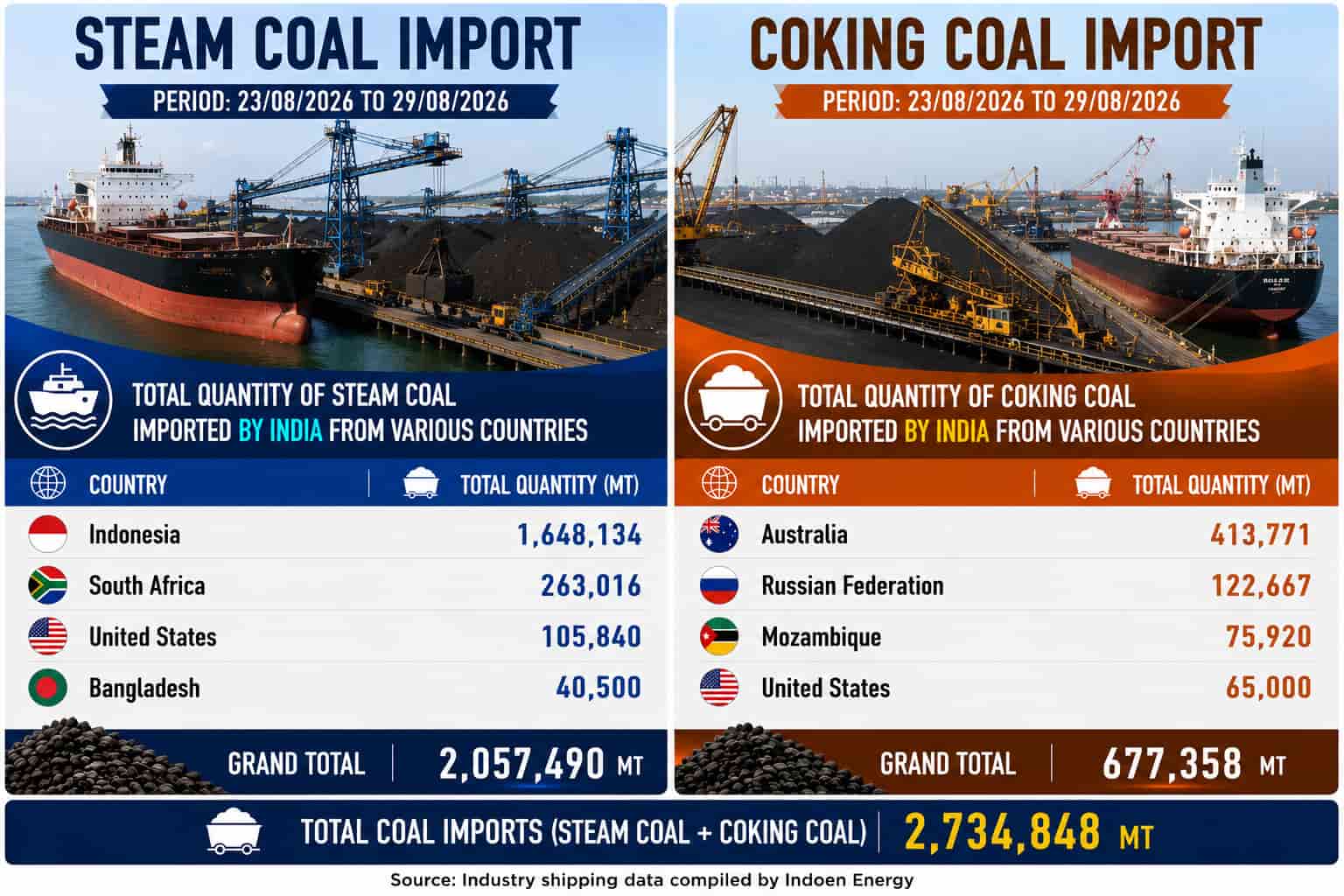
India’s coal imports fell sharply during 23–29 August 2026, with total arrivals declining to 2.73 million tonnes (MT) from 3.42 MT in the previous week — a fall of about 20.1%. Both segments weakened, although the decline was more pronounced in steam coal.
Steam coal imports fell 21.6% to 2.06 MT, from 2.62 MT, while coking coal shipments dropped 15.4% to 0.68 MT, from 0.80 MT.
Indonesia remained the dominant thermal-coal supplier at 1.65 MT, followed by South Africa at 0.26 MT. Australia supplied 0.41 MT of coking coal, ahead of Russia at 0.12 MT and Mozambique at 0.08 MT.
The lower import volumes came against a backdrop of strong domestic production but growing supply-chain pressure. July coal production rose 7.51% year-on-year to 69.75 MT, while dispatches increased 18.03% to 86.85 MT.
Yet by August 25, 45 coal-fired power plants had critically low inventories, up from 31 at the end of July. Heavy monsoon rainfall in Odisha, Jharkhand and Chhattisgarh disrupted mining and transport, while coal stocks at power plants fell 19% from July. NTPC was reportedly receiving only about half the coal rakes it required.
The week also highlighted a significant policy shift on coal utilisation.
The Centre allowed imported coal to be used in projects under its ₹37,500-crore coal gasification scheme, which aims to gasify about 75 MT of coal and lignite.
The decision effectively acknowledges that domestic coal availability and quality may not always match the requirements of emerging gasification projects. At the same time, industry has sought assured offtake commitments to make these capital-intensive projects bankable.
For steelmakers, the outlook remains more challenging. Global coking-coal prices have risen sharply this year, squeezing Indian mills that depend heavily on imports.
India’s coking-coal purchases are therefore likely to remain sensitive to international prices, freight and supply disruptions. The latest weekly figures suggest that India’s coal import requirement remains substantial, but increasingly selective — shaped by domestic availability, monsoon logistics and international coal economics rather than demand alone.
Follow us on : X | LinkedIn | Facebook | Bluesky