
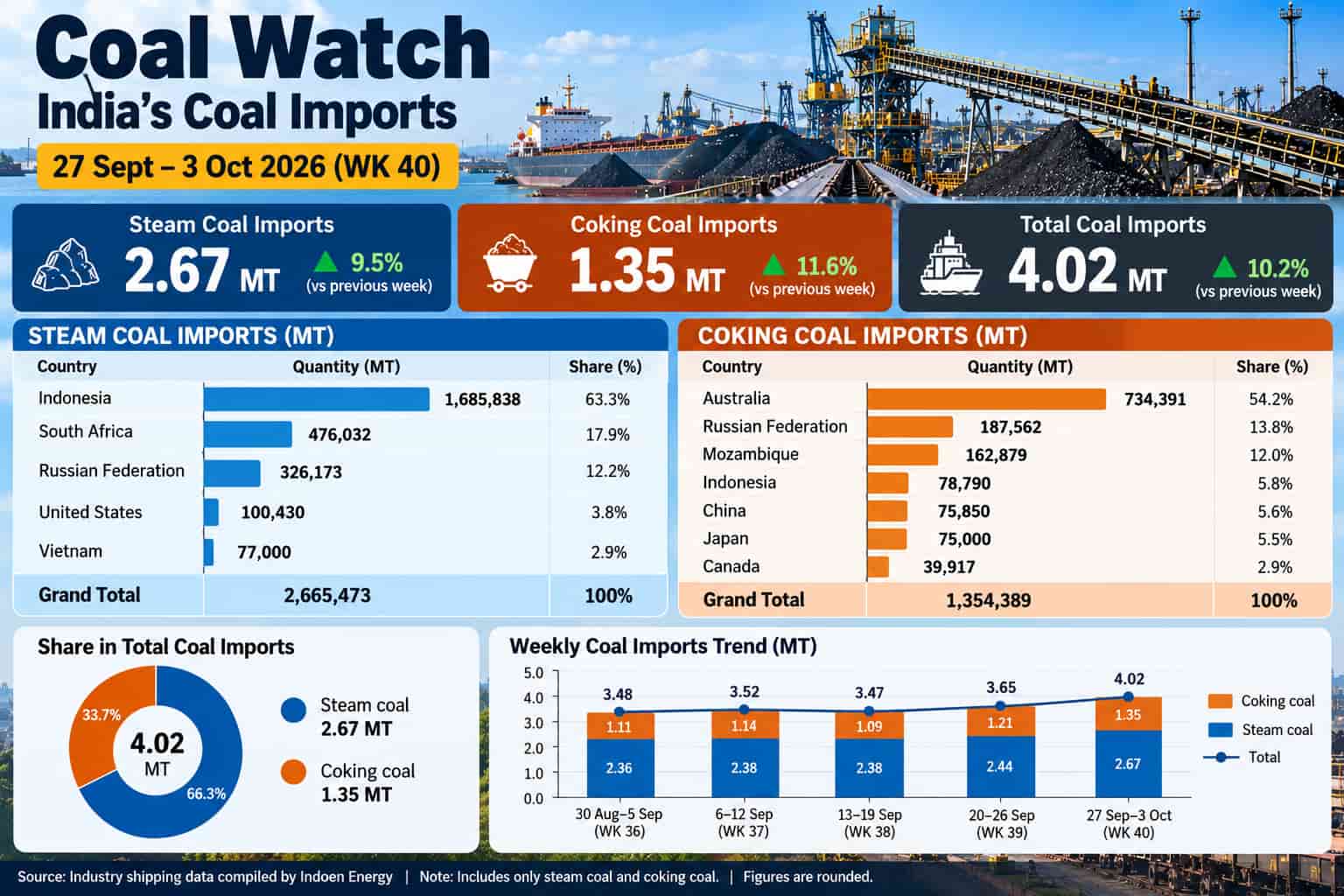
India’s combined steam and coking coal imports rose 10.2% week-on-week to 4.02 million tonnes (MT) during 27 September–3 October 2026, from 3.65 MT in the previous week.
Steam coal arrivals increased 9.5% to 2.67 MT, while coking coal imports rose 11.6% to 1.35 MT. Indonesia remained the dominant thermal supplier, accounting for 1.69 MT, while Australia supplied 0.73 MT of coking coal.
The increase comes as India enters the fourth quarter with tight power-sector coal inventories. In late September, the government was considering requiring thermal power plants to blend up to 5% imported coal with domestic supplies as stocks had fallen sharply amid high electricity demand, weak hydropower generation and logistical constraints. Around 40% of power plants reportedly had less than three days of coal reserves.
Power demand has remained unusually strong. Actual electricity demand during April–August exceeded the Central Electricity Authority’s projections by 3.3%, with inadequate rainfall and high temperatures among the main factors.
The government subsequently directed 112 captive coal-based power plants to operate at full capacity from October through December.
Domestic coal supply is nevertheless improving. Coal India’s supplies during the first half of FY27 reached 384.2 MT, up 7.6% year-on-year, while September supplies increased 12.5% to 61.2 MT. Power-sector deliveries rose 10.6% during the month.
This improvement could eventually moderate import requirements, but depleted inventories leave little room for supply disruptions.
The international market also remains supportive of coal. The IEA expects global coal demand to rise 1.2% in 2026 to a record 8.94 billion tonnes, with India among the major sources of growth. Meanwhile, Reuters notes that Asia’s seaborne thermal-coal market is contracting only gradually, with India and China increasingly balancing higher domestic production and renewables against persistent power demand.
For India, therefore, the current rebound points to continued import dependence as the country moves into a period of elevated power demand and tight coal inventories, even as domestic production and evacuation improve.
Follow us on : X | LinkedIn | Facebook | Bluesky