
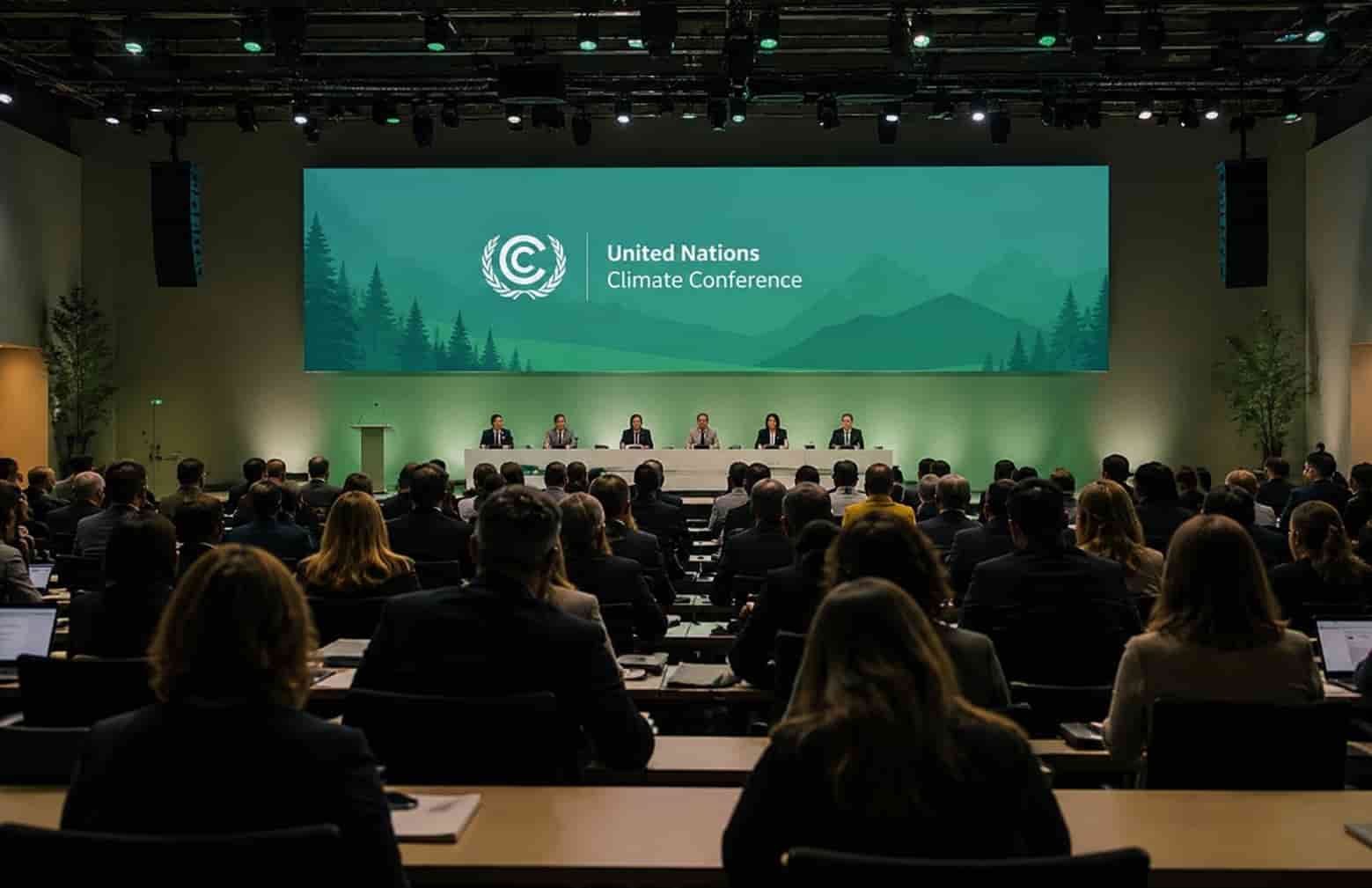

The official agenda in Bonn focused on familiar issues: climate finance, adaptation funding and preparations for COP31. Yet beneath the procedural disputes, a deeper contradiction emerged.
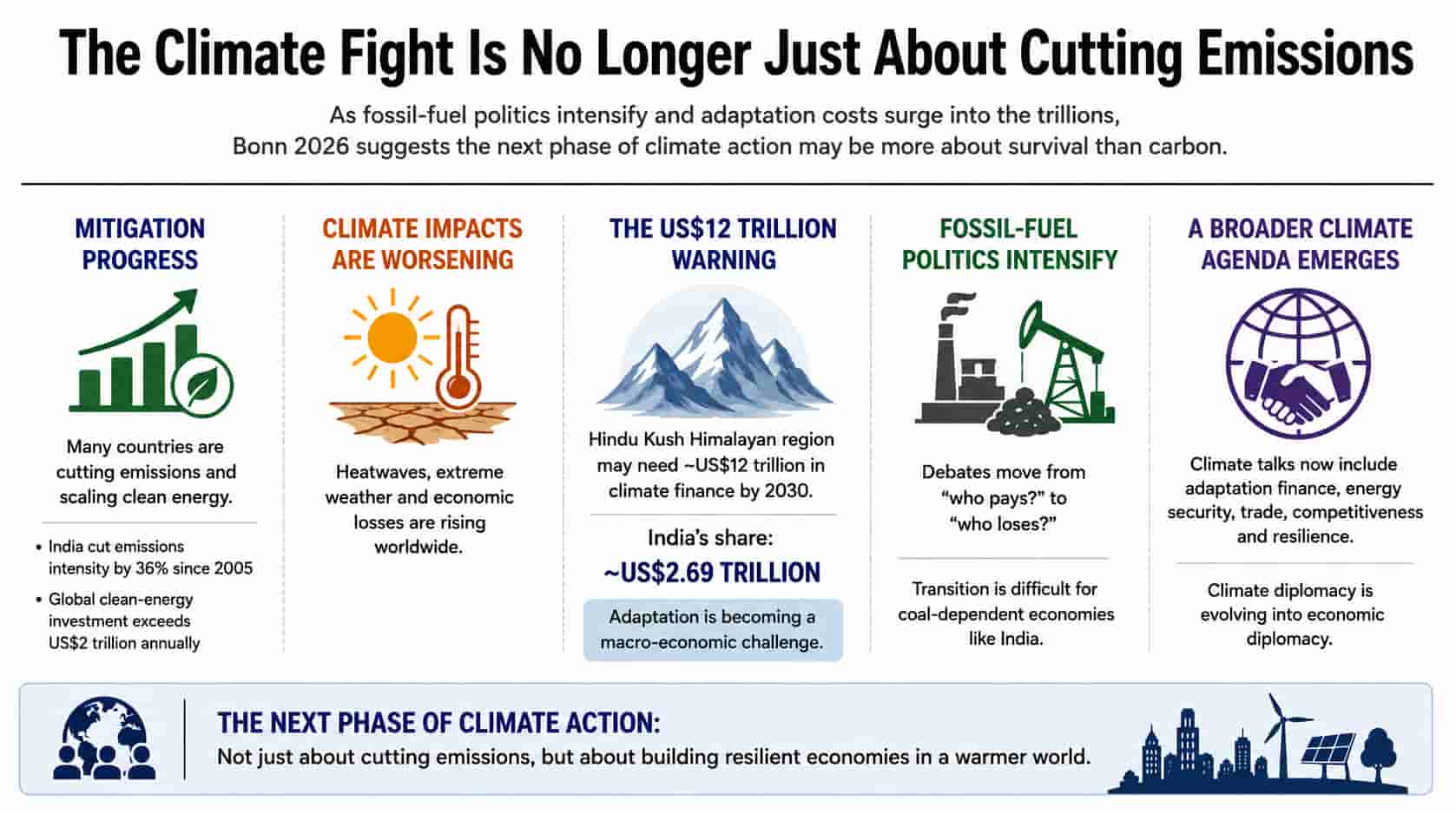
Many countries are making measurable progress on mitigation. India, for example, has reduced the emissions intensity of its GDP by about 36% since 2005 and achieved several climate commitments ahead of schedule. Renewable energy deployment continues at record pace, while global clean-energy investment now exceeds US$2 trillion annually.
Yet climate vulnerability is worsening almost everywhere.
Heatwaves are becoming more severe, adaptation costs are rising and economic losses linked to extreme weather continue to mount.
Bonn highlighted an uncomfortable truth that negotiators are increasingly struggling to address: emissions reductions and climate resilience are no longer moving in parallel.
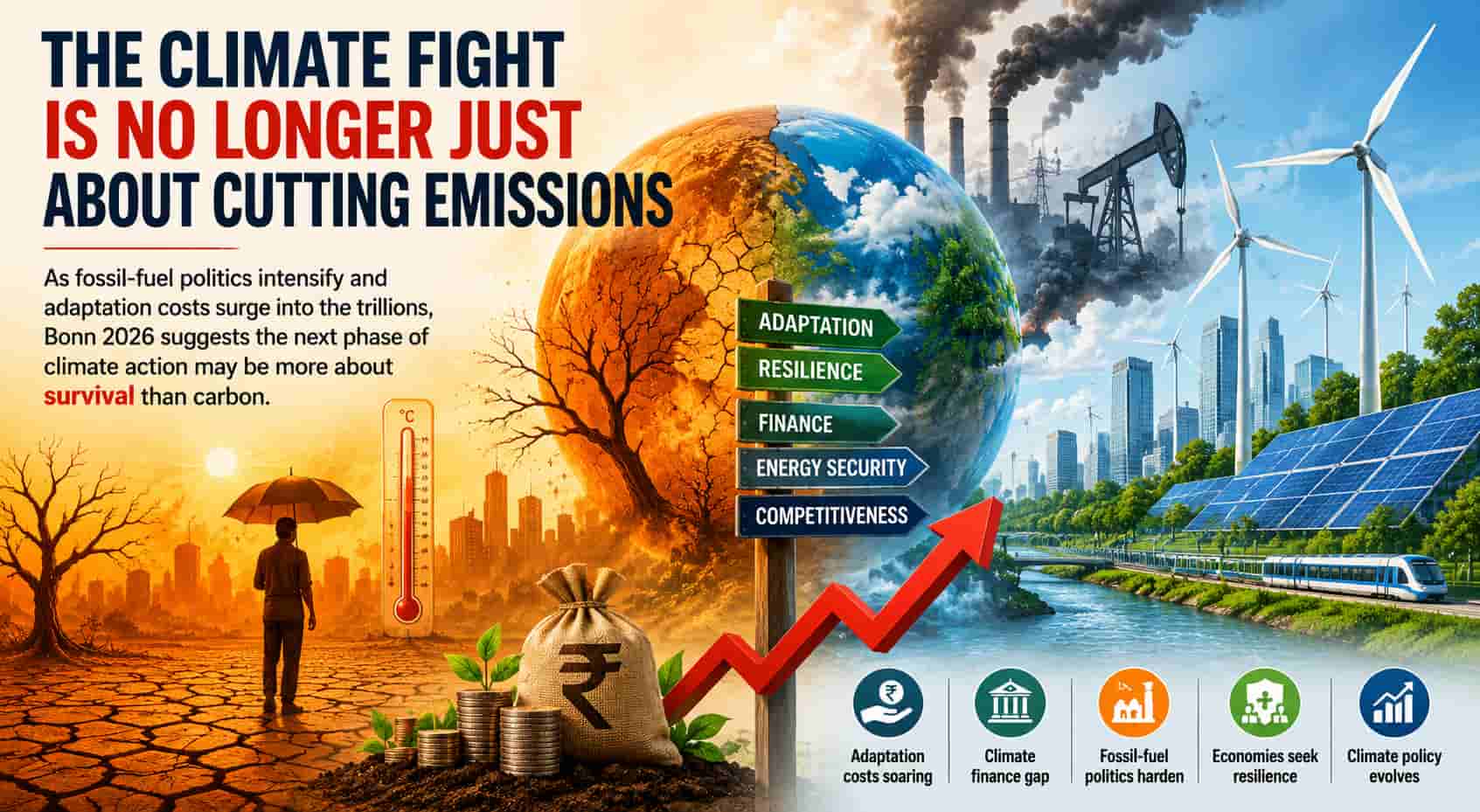
This disconnect is beginning to reshape climate diplomacy itself. Increasingly, negotiations are being driven not only by questions of emissions reduction but also by concerns over adaptation finance, energy security, public health, industrial competitiveness and economic resilience. Bonn suggested that climate policy is evolving from a narrow discussion about carbon into a broader debate about how societies function in a warmer world.
From climate finance to fossil fuels
The most visible disagreements in Bonn centred on what many observers see as the next frontier of climate diplomacy.
For much of the past decade, negotiations focused on climate finance. Developing countries demanded more support, while developed economies debated the scale and structure of commitments.
At Bonn, however, fossil fuels increasingly occupied centre stage.
Several countries and advocacy groups pushed for stronger language around fossil-fuel phase-out pathways. India and other developing economies resisted efforts they viewed as attempts to introduce new obligations beyond existing frameworks.
The significance of this debate extends far beyond diplomacy.
Climate finance asks a relatively straightforward question: who pays? Fossil-fuel politics asks a more difficult one: who loses?
The answer involves coal miners, oil exporters, gas producers, power utilities, industrial manufacturers and entire regional economies built around fossil-fuel value chains.
That makes the politics exponentially harder.
Advocates of stronger fossil-fuel phase-out commitments argue that delaying action could ultimately increase adaptation costs and lock economies into more expensive transition pathways. They contend that continued investment in fossil-fuel infrastructure risks creating stranded assets as climate policies tighten over time.
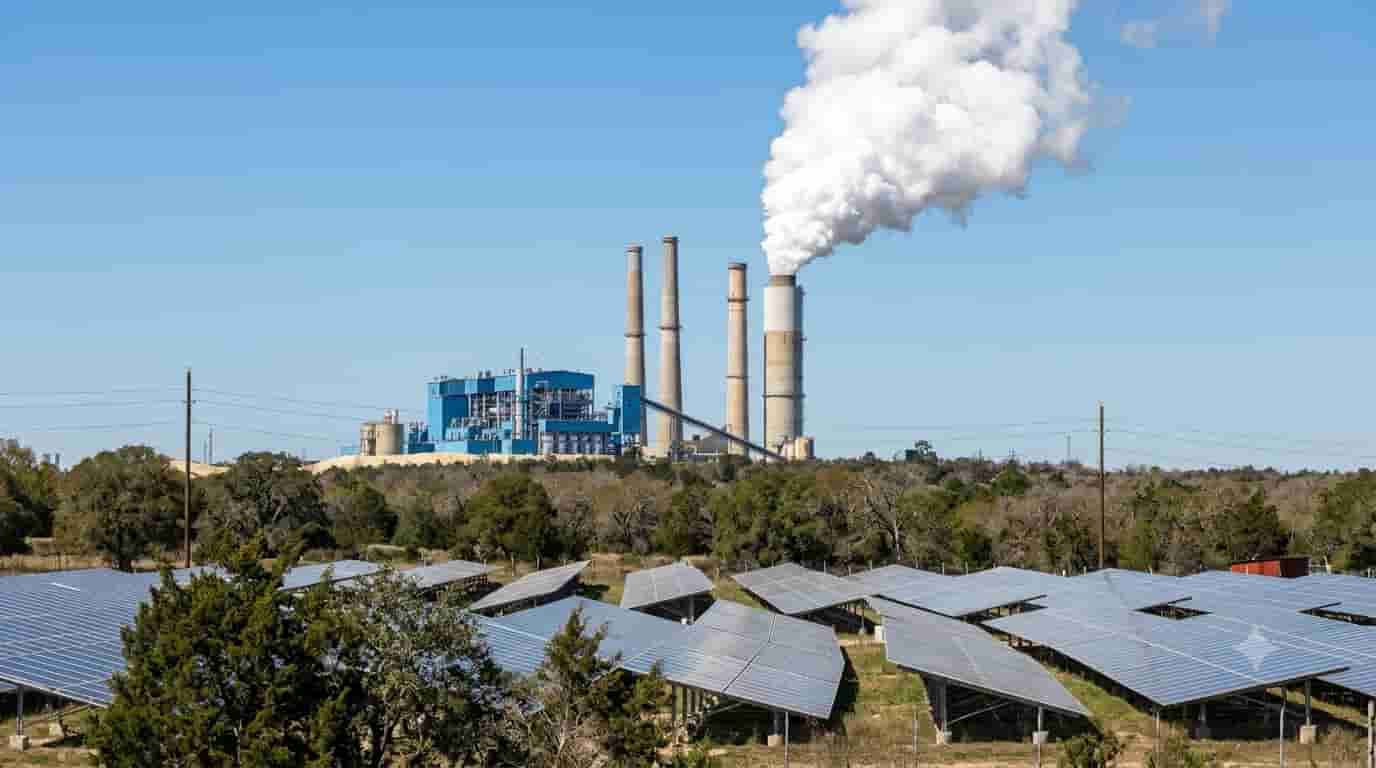
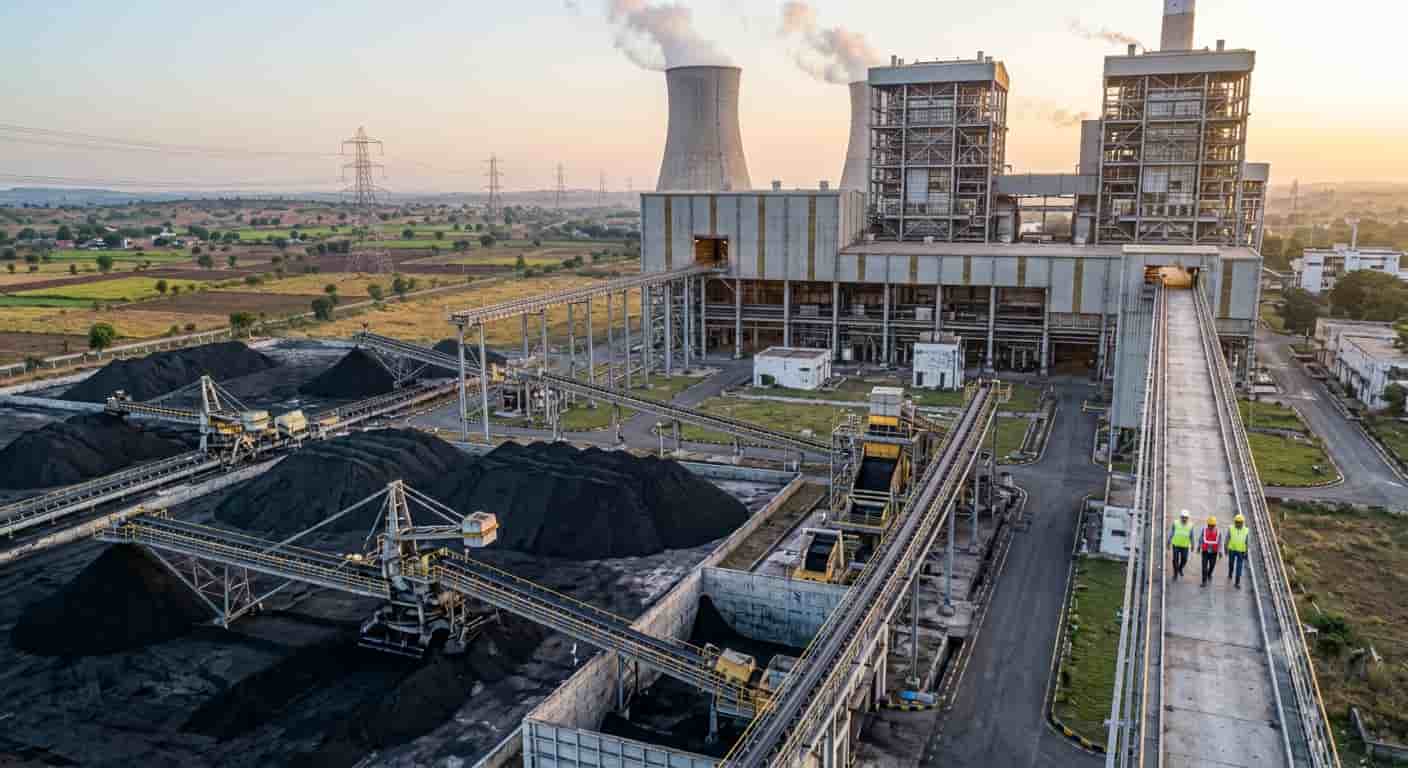
For coal-dependent economies such as India, China, Indonesia and South Africa, however, the transition presents a more immediate dilemma. Coal remains central to industrialisation, energy access and grid stability. Abrupt phase-out commitments could carry significant economic and social costs.
The US$12 trillion warning
Perhaps the most striking figure to emerge around Bonn did not concern emissions at all.
According to the International Centre for Integrated Mountain Development, countries in the Hindu Kush Himalayan region may require approximately US$12 trillion in climate finance by 2030. India's share alone is estimated at about US$2.69 trillion.
To put that figure in perspective, India's estimated requirement alone is equivalent to a substantial share of the country's annual economic output, illustrating how adaptation is rapidly becoming a macroeconomic challenge rather than simply an environmental one.
These numbers point to a shift that receives far less attention than renewable energy targets. The next climate economy may be driven as much by adaptation spending as by decarbonisation spending.
Over the past decade, climate investment largely meant solar parks, wind farms, batteries and electric vehicles.
The next decade may increasingly involve cooling systems, resilient infrastructure, urban redesign, healthcare adaptation, water management and climate-proof supply chains.
This could create entirely new investment themes across Asia.
Many climate scientists would caution against interpreting rising adaptation needs as evidence that mitigation has become less important.
They argue that every fraction of a degree of avoided warming reduces future adaptation costs and limits the risk of irreversible climate impacts. From this perspective, adaptation and mitigation are complementary rather than competing priorities.
Why India matters more than ever
India occupies a unique position in the emerging climate debate. Few countries better illustrate the contradictions that Bonn exposed.
India is one of the world's fastest-growing renewable energy markets. It has improved emissions efficiency significantly and continues to present itself as a leader among developing nations on climate issues.
Yet it is also one of the most climate-vulnerable major economies.
Extreme heat is affecting worker productivity, urban liveability and public health. Studies suggest India's rapidly expanding cities are becoming heat traps, increasing cooling requirements and raising electricity demand.
The result is a challenge that traditional climate metrics often overlook. Even successful decarbonisation does not eliminate adaptation needs.
For India, climate resilience is becoming an economic issue, an industrial issue and increasingly an energy issue. In many ways, India is becoming a test case for the next phase of climate policy: how to expand energy access, sustain economic growth and strengthen climate resilience simultaneously.
Geopolitics enters the climate equation
Another message from Bonn was the growing influence of geopolitical tensions. Climate negotiations no longer operate in isolation from broader economic and strategic rivalries.
Trade disputes, carbon border taxes, industrial subsidies, critical mineral competition and energy-security concerns are becoming intertwined with climate policy.
India's presentation at WTO Trade and Environment Week highlighted this reality. Climate action is increasingly linked to industrial competitiveness, trade access and supply-chain resilience.
In other words, climate diplomacy is gradually evolving into economic diplomacy.
None of these issues fit neatly into the traditional framework of emissions reduction. Yet they are increasingly shaping climate negotiations. The result is a broader climate agenda in which carbon remains central, but no longer stands alone.
That broader agenda—and the tensions it creates between climate ambition, economic development and energy security—could define the road to COP31.
The emerging climate economy
Perhaps the biggest takeaway from Bonn is that the climate conversation is becoming more expansive.
The first phase of climate politics focused on proving climate change exists. The second focused on reducing emissions. The third may increasingly focus on preserving economic resilience in a warming world while continuing efforts to cut emissions.
This shift could reshape investment priorities, government spending and energy strategies across both developed and developing economies.
The companies that benefit may not only be renewable energy developers.
They may increasingly be firms involved in cooling technologies, resilient infrastructure, climate-risk analytics, water systems, insurance and adaptation services.
That possibility remains largely absent from climate negotiations, yet it may become one of the most significant economic stories of the next decade.
Beyond COP31
Most headlines from Bonn focused on disagreements. But the conference's most important message may have been something else.
The world is entering a period in which climate action can no longer be measured solely through emissions reductions.
The challenge now extends far beyond reducing emissions.
It involves protecting economies from climate impacts, managing the politics of fossil-fuel dependence, financing adaptation, securing energy supplies and maintaining competitiveness in an increasingly fragmented global economy.
Bonn may ultimately be remembered not as the meeting that prepared the agenda for COP31, but as the moment climate politics began moving beyond carbon accounting and towards the far more difficult question of how societies adapt to a warmer future.
Related Indoen Energy reading: India’s climate finance blueprint: A snail’s pace or a fast gallop?
Follow us on : X | LinkedIn | Facebook | Bluesky