

India’s green ammonia push deepens as Yamna advances $1 billion export-oriented project in Odisha
UK-based Yamna has secured environmental approval for the first phase of a proposed US$1 billion green ammonia project in Odisha, signalling how India’s eastern coast is emerging as a strategic hub in the global green-fuels trade.
The initial phase reportedly targets 500,000 tonnes of annual green ammonia production, with the project designed primarily for export markets seeking low-carbon industrial feedstocks and maritime fuels. The development reflects how India’s renewable-energy expansion is increasingly being linked to export-oriented industrial policy rather than domestic electricity generation alone.
The project also highlights the accelerating convergence between renewable power, industrial decarbonisation and geopolitical energy realignment. Europe, Japan and parts of East Asia are searching for long-term green hydrogen and ammonia supply partnerships as decarbonisation pressures intensify and domestic renewable limitations persist.
India, with its solar expansion, coastal infrastructure and relatively lower renewable-power costs, is positioning itself as a future supplier in these emerging trade corridors. Odisha’s mineral base, port access and industrial infrastructure further strengthen its attractiveness for energy-intensive export industries.
At a broader level, projects such as Yamna’s indicate that the next phase of India’s energy transition may increasingly revolve around industrial molecules rather than electricity alone. Green hydrogen derivatives are becoming instruments of industrial strategy, export competitiveness and geopolitical positioning, particularly as countries race to secure future clean-energy supply chains.
However, the long-term economics will still depend heavily on renewable-power tariffs, electrolyser costs, transmission access and global carbon pricing mechanisms.
I Squared Capital’s US$1 billion transmission platform signals rising investor focus on India’s grid bottlenecks
Infrastructure investor I Squared Capital has launched a US$1 billion transmission-focused platform in India, underscoring how electricity-grid infrastructure is becoming one of the most critical investment themes in the country’s energy transition.
While renewable-energy capacity additions continue at a rapid pace, transmission expansion has increasingly emerged as the principal constraint affecting renewable integration, power evacuation and interstate electricity flows.
The move reflects a broader shift in capital allocation patterns within India’s energy sector. Earlier phases of renewable investment were dominated by solar and wind generation assets. However, investors are now moving toward enabling infrastructure — including transmission corridors, storage systems and grid-balancing assets — which are becoming indispensable for scaling variable renewable energy.
Transmission is also gaining importance because India’s renewable resources are concentrated geographically, requiring massive interregional electricity movement from western and southern renewable hubs to demand centres elsewhere.
The platform also illustrates how long-duration infrastructure capital is increasingly treating India’s grid expansion as a relatively stable and scalable investment opportunity amid policy support for renewable integration. As India targets large-scale renewable deployment alongside industrial electrification and green hydrogen production, transmission economics may become as strategically important as generation economics itself.
The sector is likely to witness rising participation from pension funds, sovereign capital and infrastructure investors seeking regulated long-term returns.
JSW Motors’ US$826 million financing tie-up reflects intensifying capital race in India’s EV manufacturing sector
JSW Motors has reportedly secured a US$826 million financing arrangement led by India’s largest lender, highlighting the scale of capital mobilisation now underway in the country’s electric-vehicle manufacturing ecosystem.
The funding comes at a time when Indian industrial groups are attempting to build vertically integrated EV supply chains spanning manufacturing, batteries, charging infrastructure and component ecosystems.
The development is strategically significant because India’s EV transition is increasingly becoming an industrial-policy and manufacturing-competitiveness issue rather than merely an environmental objective.
Domestic automakers face mounting pressure from global competition, evolving battery technologies and rapidly changing supply-chain dynamics dominated by China. Large-scale financing therefore becomes critical not only for vehicle production but also for localisation, technology partnerships and long-term market positioning.
The financing also reflects how Indian banks and financial institutions are gradually becoming more willing to underwrite energy-transition manufacturing projects despite uncertainties around technology evolution and market adoption.
As EV adoption accelerates across commercial fleets, two-wheelers and passenger mobility, access to low-cost capital could become a decisive differentiator determining which firms successfully scale production and secure supply-chain dominance.
SAEL’s US$310-m Andhra Pradesh solar expansion highlights rise of integrated renewable infrastructure players
SAEL has commissioned 600 MW of solar projects in Andhra Pradesh involving an investment of around ₹3,000 crore (US$310 million), reinforcing how India’s renewable sector is moving toward increasingly large-scale, capital-intensive infrastructure platforms.
The projects add to the company’s broader renewable and biomass portfolio and indicate how developers are scaling capacity rapidly to capture long-term power demand growth and policy support for clean-energy deployment.
The significance of the development lies not merely in additional solar capacity, but in the evolving structure of India’s renewable industry itself.
Developers are increasingly operating as integrated infrastructure entities spanning generation, financing, grid connectivity and long-term power contracting. This reflects the maturation of India’s renewable sector from subsidy-driven expansion into a more institutionalised infrastructure market attracting large pools of private capital.
At a broader level, utility-scale solar expansion continues to remain central to India’s industrial decarbonisation ambitions, particularly as electricity demand rises due to urbanisation, data centres, manufacturing expansion and electrification trends.
However, the pace of renewable deployment is simultaneously intensifying pressure on transmission systems, land acquisition frameworks and storage integration requirements — all of which are becoming increasingly central to India’s energy-transition economics.
IPX Power’s US$51-m financing underlines storage sector’s transition from pilot phase to infrastructure scale
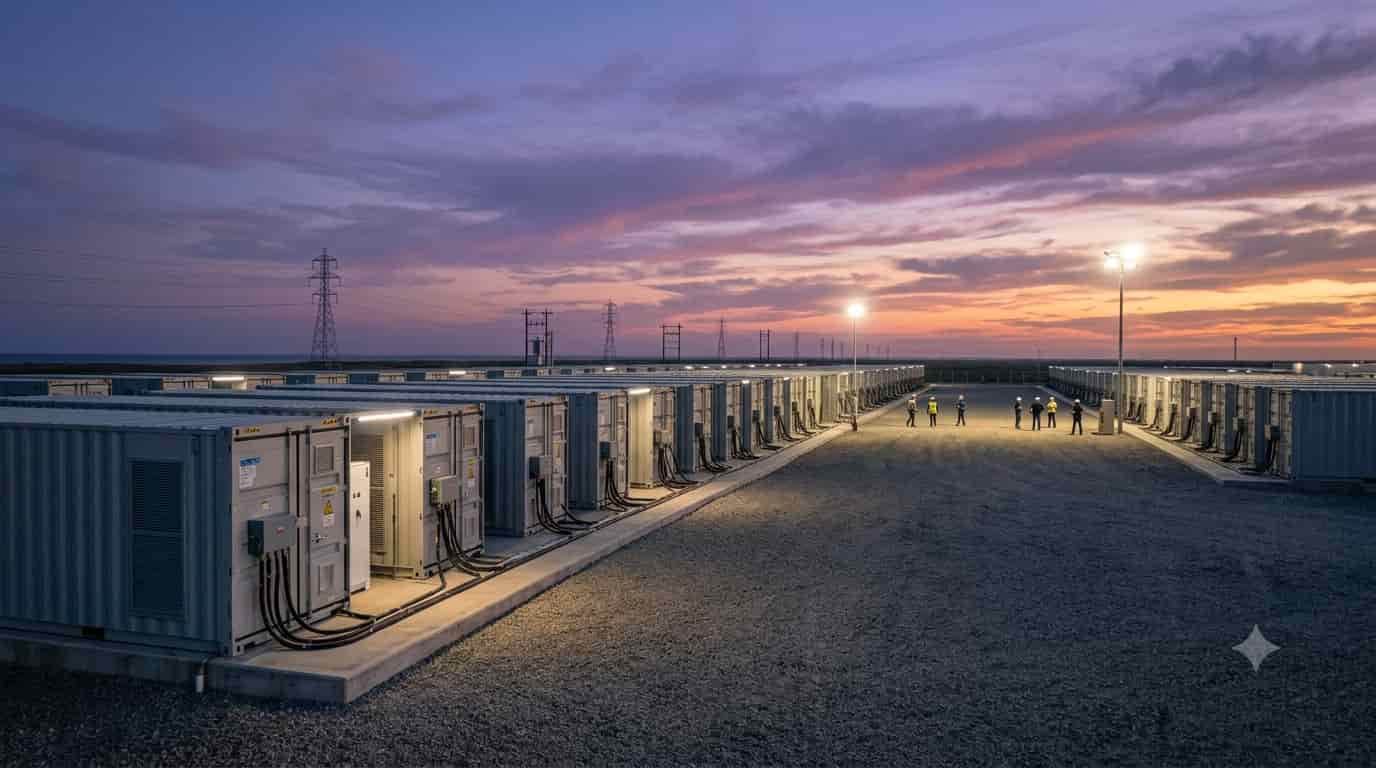
IPX Power has closed financing worth ₹4.95 billion (US$51-m) for solar-plus-storage projects, reflecting how battery-backed renewable infrastructure is gradually moving from experimental deployment toward mainstream infrastructure financing in India.
Storage economics are becoming increasingly important as renewable penetration rises and grid operators confront intermittency challenges linked to solar and wind variability.
The financing is significant because energy storage is now emerging as a critical enabler of India’s next-stage renewable expansion.
Earlier renewable growth relied heavily on conventional thermal generation for balancing support. However, as renewable capacity scales further, storage systems are becoming strategically important for grid stability, peak management, ancillary services and round-the-clock renewable supply models.
The project also illustrates changing lender perceptions around storage-related risks. Financing institutions are increasingly viewing battery-backed infrastructure as a commercially viable long-term asset class, particularly as battery costs continue to decline globally and policy frameworks become clearer.
Over time, the ability to finance storage infrastructure at scale may substantially shape India’s renewable competitiveness and electricity-market evolution.