
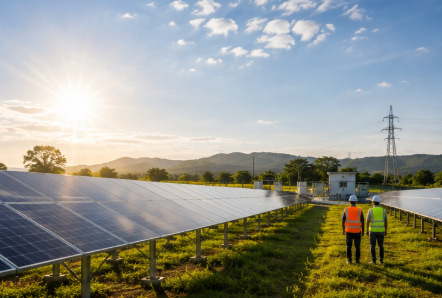

UK-backed US$300 million clean-energy platform signals deeper foreign capital push into India
A new US$300 million India-focused clean energy investment platform launched by Copenhagen Infrastructure Partners (CIP) and British International Investment (BII) reflects the growing internationalisation of India’s energy-transition financing ecosystem.
The platform aims to invest across renewable power, transmission, storage and emerging green infrastructure, at a time when India’s decarbonisation targets are demanding increasingly large pools of long-duration infrastructure capital. The partnership also highlights how sovereign-backed climate finance institutions are becoming central actors in shaping India’s next generation of energy assets.
The development is significant because India’s clean energy buildout is moving into a capital-intensive phase requiring not just project finance, but patient institutional capital capable of absorbing policy, execution and grid-integration risks.
Global infrastructure investors increasingly view India as one of the few large-scale growth markets where renewable demand, industrial electrification and power consumption are expected to rise simultaneously over the next two decades.
The entry of large international infrastructure funds also reflects broader geopolitical competition around green industrial influence. Western development-finance-backed investments are increasingly positioning themselves as alternatives to state-backed capital flows from China and Gulf economies in strategic energy sectors.
For India, such platforms may help reduce financing costs while accelerating deployment in transmission-linked and storage-heavy renewable systems that conventional lenders remain cautious about.
India’s renewable investment pipeline could cross US$15 billion by 2030 as storage reshapes capital flows
India’s renewable energy sector may attract between US$10 billion and US$15 billion in investment by 2030, according to industry estimates, underlining the scale of capital mobilisation required to sustain the country’s energy transition ambitions.
The projected investment wave is increasingly shifting beyond utility-scale solar generation towards storage systems, transmission upgrades, hybrid renewable assets and grid-balancing infrastructure.
The financing pattern is important because India’s transition is entering a structurally different phase from the first solar expansion cycle of the 2010s. Earlier growth was largely driven by falling module costs and tariff competition.
The next stage, however, depends on solving intermittency, transmission congestion and industrial power reliability — challenges that require significantly larger infrastructure spending and more sophisticated financing structures.
Institutional investors, pension funds, sovereign wealth capital and infrastructure-focused private equity firms are gradually increasing exposure to Indian energy assets as long-term electricity demand growth remains among the strongest globally.
Rising electricity consumption from manufacturing expansion, data centres, electric mobility and digital infrastructure is strengthening the investment case for round-the-clock renewable systems integrated with storage.
At the same time, financing risks remain substantial. Land acquisition bottlenecks, grid delays, discom stress and policy uncertainty continue to affect project economics. The future trajectory of renewable investment will therefore depend not only on capital availability, but also on India’s ability to improve transmission planning, market reforms and power-sector financial stability.
Energy storage firms raise US$2.3 billion as battery infrastructure gains strategic importance
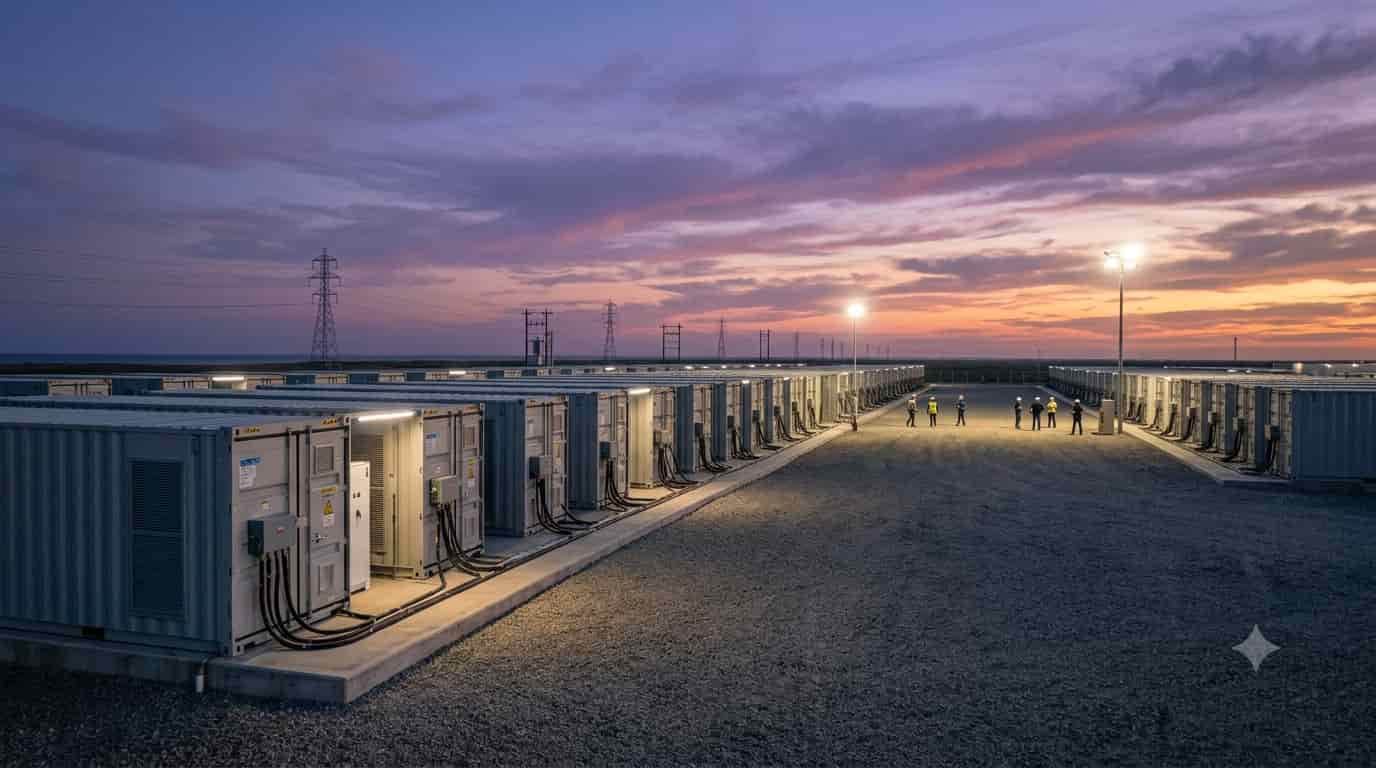
Global energy storage companies raised around US$2.3 billion during the first quarter of 2026, reflecting accelerating investor confidence in battery-linked infrastructure amid rising renewable penetration and power-system volatility.
The funding surge highlights how storage is rapidly evolving from a supplementary technology into a foundational component of future electricity systems.
For India, the development has strategic implications because battery storage is increasingly becoming critical to managing renewable intermittency, evening peak demand and grid stability. As solar and wind capacity additions continue to expand, storage infrastructure is expected to become central to electricity market design, ancillary services and industrial energy reliability.
The financing momentum also signals a broader shift in energy-transition economics. Capital markets are now moving beyond pure generation assets towards integrated energy systems that combine renewables, storage, digital grid management and flexible power delivery. This transition could reshape power pricing structures, transmission planning and investment patterns across India’s electricity sector over the coming decade.
The rapid expansion of storage investment may additionally accelerate domestic battery manufacturing ambitions under India’s industrial policy framework. Policymakers increasingly view battery ecosystems not merely as climate infrastructure, but as strategic industrial capabilities linked to supply-chain resilience, mobility electrification and future manufacturing competitiveness.
Norway-linked fuel-cell manufacturing pact highlights India’s hydrogen localisation ambitions
Advait Energy Transitions has signed an agreement with Norway-based partners to localise hydrogen fuel-cell manufacturing in India, signalling growing efforts to build domestic capabilities in emerging clean-energy technologies rather than remaining dependent on imported systems.
While the project remains at an early stage, it reflects the broader industrial-policy direction underpinning India’s green hydrogen ambitions.
The significance lies less in the immediate scale of the agreement and more in what it reveals about India’s long-term manufacturing strategy. Policymakers increasingly see hydrogen technologies as part of a wider industrial transition involving electrolyser production, fuel-cell systems, storage infrastructure and heavy-industry decarbonisation.
Local manufacturing is expected to become critical if India aims to reduce import dependence in future clean-energy supply chains.
The partnership also reflects Europe’s growing interest in collaborating with India on hydrogen-linked industrial ecosystems. As global competition intensifies around low-carbon manufacturing and future energy technologies, cross-border technology partnerships may become increasingly important in determining which countries emerge as manufacturing hubs within the green industrial economy.
However, commercial viability remains uncertain across much of the hydrogen sector globally. High production costs, infrastructure gaps and limited end-use demand continue to constrain large-scale adoption.
India’s hydrogen ambitions will therefore depend not only on manufacturing partnerships, but also on policy support, industrial demand creation and the economics of renewable electricity supply.