

Tata Motors charts FY31 roadmap with 10 new passenger vehicles, including four EVs
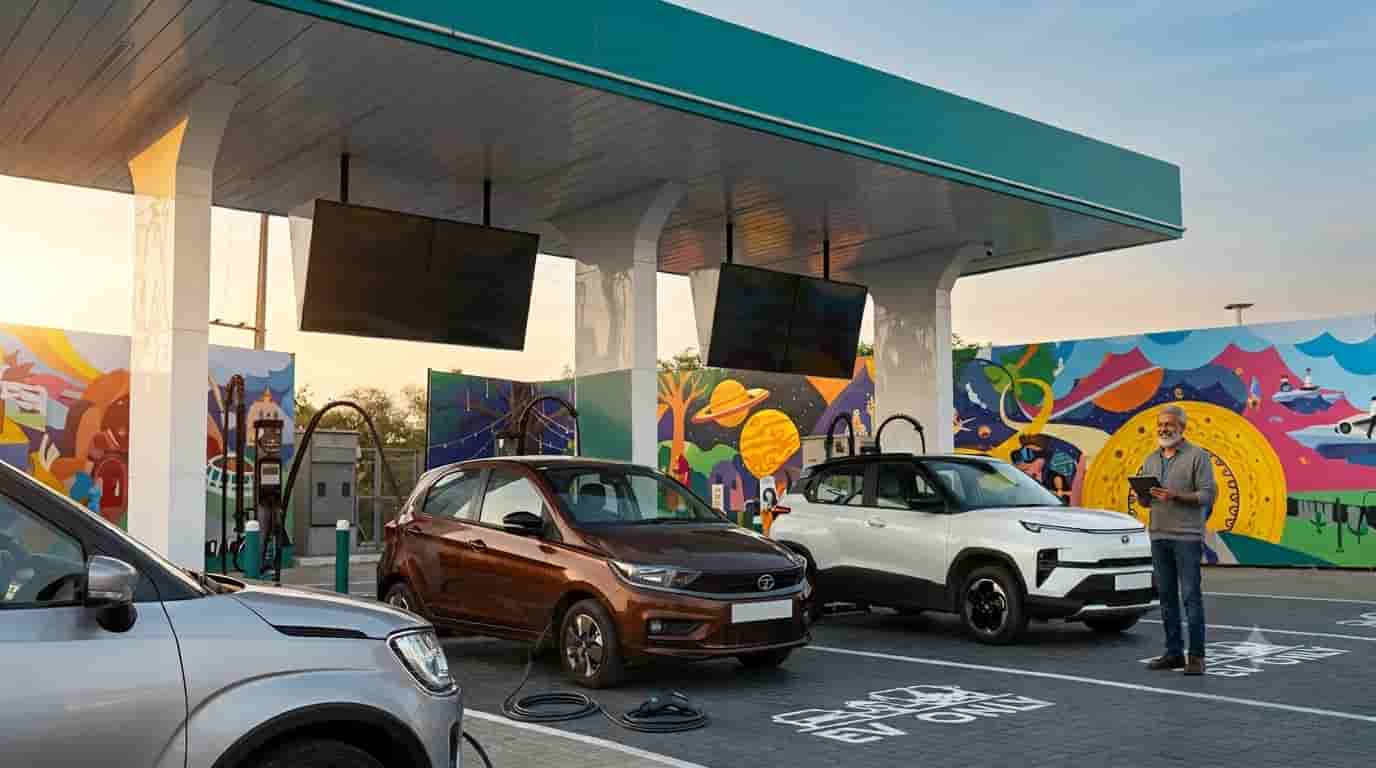
Tata Motors has unveiled an ambitious product strategy to launch 10 new passenger vehicle nameplates by FY31, comprising four electric vehicles and six internal combustion models, along with multiple model refreshes.
The roadmap reinforces the company's long-term commitment to maintaining leadership in India's evolving mobility market while balancing conventional and electric powertrains.
The expansion reflects growing confidence in India's electric mobility ecosystem, with investments expected to strengthen domestic manufacturing, localise components and bolster battery supply chains. As consumer adoption accelerates, Tata's strategy positions the company to capitalise on the country's transition to cleaner transportation.
(Source: The Economic Times)
Delhi's $1.6-b crore EV policy targets 95% electric vehicle registrations by 2027
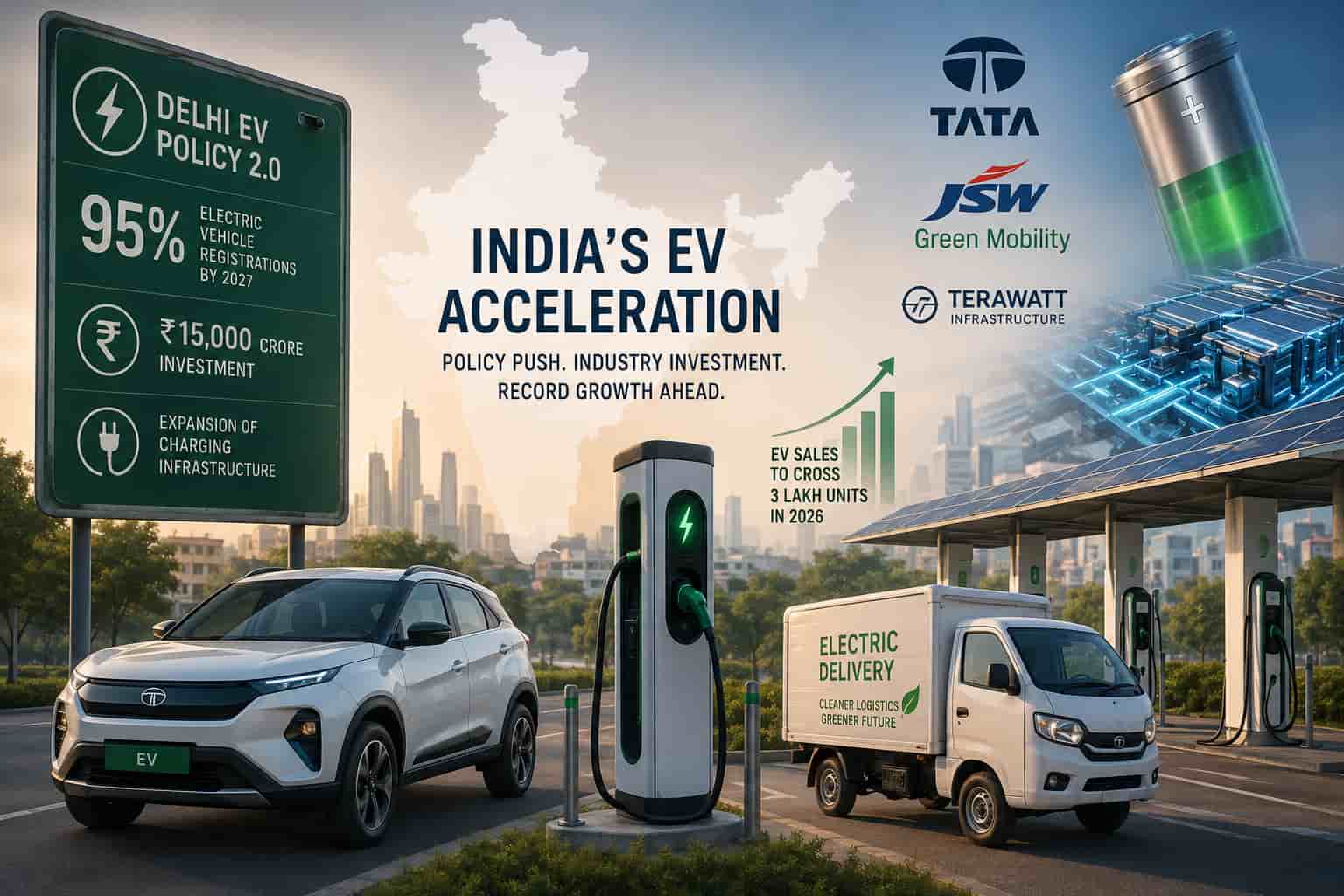
Delhi has approved one of India's most ambitious electric mobility policies, targeting 95% of new vehicle registrations to be electric by 2027 and earmarking around ₹15,000 (US$1.6 billion) crore to expand charging infrastructure and accelerate EV adoption.
The policy also proposes a phased transition to electric public transport, commercial vehicles and auto-rickshaws.
Beyond reducing urban emissions, the policy is expected to stimulate investment in charging infrastructure, battery manufacturing, fleet electrification and supporting supply chains. If implemented effectively, Delhi's roadmap could serve as a benchmark for large-scale urban mobility transformation across India.
(Source: Fortune India)
India's electric car sales expected to cross three lakh units for the first time in 2026
India's electric passenger vehicle market is projected to exceed 300,000 units in annual sales for the first time in 2026, driven by expanding model availability, supportive government policies, and growing consumer acceptance of electric mobility.
The milestone signals that India's EV market is moving beyond its early adoption phase towards broader mainstream acceptance. Continued investment in charging infrastructure, battery localisation and manufacturing capacity will be crucial to sustaining this momentum over the coming decade.
(Source: The Economic Times)
JSW Green Mobility acquires Lithium Urban to expand commercial EV ecosystem
JSW Green Mobility has acquired Lithium Urban Technologies, an electric fleet operator, thereby strengthening its presence in commercial electric mobility and expanding its charging infrastructure footprint. The acquisition complements JSW Group's broader ambitions across electric vehicles, batteries and sustainable transportation.
The deal reflects growing consolidation in India's commercial EV sector, as industrial groups seek integrated capabilities across vehicle manufacturing, fleet operations and charging infrastructure to enable large-scale electrification.
(Source: Moneycontrol)
TeraWatt secures up to US$300 million to accelerate EV charging infrastructure
Charging infrastructure developer TeraWatt Infrastructure has secured up to $300 million in debt financing to accelerate the rollout of charging networks for commercial electric vehicles across key markets.
The financing highlights continued investor confidence in charging infrastructure as a critical enabler of large-scale transport electrification. As commercial EV adoption accelerates globally, access to long-term capital is expected to play an increasingly important role in expanding charging networks.
(Source: Mercom Capital)
Green Drive Mobility expands electric delivery fleet through Furlenco partnership
Green Drive Mobility has partnered with furniture rental company Furlenco to deploy electric delivery vehicles for last-mile logistics operations, replacing conventional fuel-powered vehicles with zero-emission alternatives.
Although modest in scale, the initiative reflects a broader trend towards commercial fleet electrification, driven by lower operating costs, corporate sustainability targets and improving charging infrastructure. These deployments are expected to play an increasingly important role in reducing emissions from urban logistics.
(Source: Charged EV Fleet & Infrastructure News)