CleanMax signs $5.34 bn MoU to power a 2 GW compute factory in Andhra Pradesh
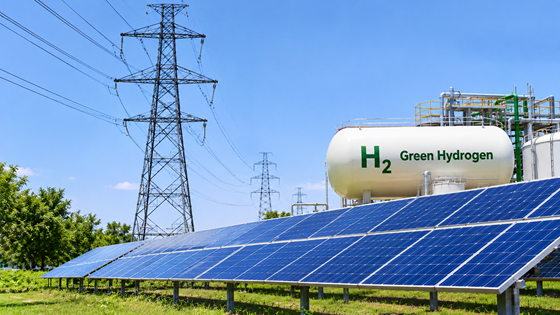
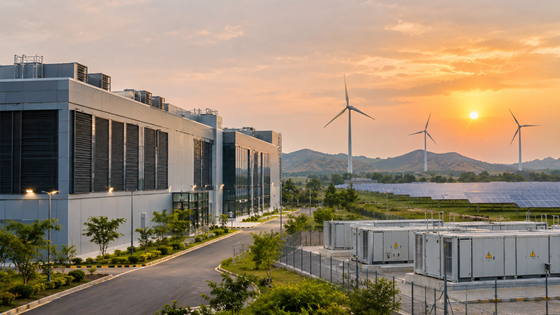
CleanMax Enviro Energy Solutions signed a memorandum of understanding with the Andhra Pradesh Economic Development Board on 12 November to invest ₹50,000 crore ($5.34 billion) in a clean energy complex in Kurnool district. The complex would have 3 GW of generation, made up of wind, solar and 1 GW of pumped hydro. It would supply a 2 GW “Green Compute Factory”, with AI cloud provider Neysa anchoring 1 GW of the IT load.
The structure is as notable as the amount. A CleanMax-owned special purpose vehicle will apply to the Andhra Pradesh Electricity Regulatory Commission for a licence to run the park’s internal distribution network. That makes CleanMax the supplier of round-the-clock power to the compute tenants, not just a generator selling into the grid. Pumped storage and batteries are meant to balance supply, which matters because a data-centre load that large cannot tolerate intermittent supply.
The ₹50,000 crore is a pledge, not committed capital, and the company has given no timeline. The company does not split the spend by generation, storage and network. Dividing the total by 3 GW gives about ₹16.7 crore per MW, but that figure also covers storage and distribution, so it is not a generation cost. CleanMax says it has 6.3 GW of contracted renewable energy sales across 606 customers. The park would be a large step up from that base, and the distribution licence is the next regulatory hurdle.
Reliance draws up $4.59 bn underground coal-to-gas plan in Andhra Pradesh
Reliance Industries has formulated an agreement with the state’s Economic Development Board to invest roughly ₹430 billion ($4.59 billion) in converting underground coal to gas, as reported by Reuters on 12 November.
The initiative encompasses the Chintalpudi Sector A1 and Recherla coal blocks located in Eluru district. In April, Reliance secured both blocks in India’s inaugural commercial coal auctions that permitted underground conversion. If the project proceeds as envisioned, it is anticipated to generate approximately 5,000 direct jobs and 35,000 indirect jobs. Reliance has not replied to a request for comments.
The investment will occur in two phases. Phase 1 involves about ₹30 billion ($320 million) allocated for exploration, geological assessments, and pilot demonstrations. Phase 2 entails an initial ₹400 billion ($4.27 billion) and will commence only after successful trials and necessary regulatory approvals.
The policy environment is conducive. In May, India introduced a ₹375 billion initiative that covers up to 20% of costs for plant and machinery. The coal ministry aims for an annual gasification capacity of 100 million tonnes by 2030, in part to reduce gas imports for fertilisers.
Earlier this year, both NTPC and Adani Enterprises expressed interest in similar projects through the incentive scheme. Reliance is already operating a petroleum-coke gasification facility at its Jamnagar refinery. Underground conversion is a different, less established method, and the draft MoU does not specify the final terms.
KP Group lines up $534 million for 10 GWh battery cell plant
The KP Group, based in Gujarat, intends to invest over ₹5,000 crore ($534 million) to produce 10 GWh of battery cells, marking its inaugural foray into cell manufacturing. The company expects the initial phase to begin operations by March 2028. The company has not disclosed the plant's location, the battery chemistry, or how capacity will be distributed across phases. Progress will depend on factors such as incentives, project financing, and the manufacturing timeline.
The plan builds on a growing storage business. KP has about 1.5 GWh of cumulative battery storage orders from GUVNL, though power purchase agreements are still being worked out. It also reports a 5 GWh pipeline in Botswana and is eyeing Zambia, Tanzania, Saudi Arabia and the UAE. Its independent power producer portfolio is about 3.2 GW and its renewable EPC portfolio about 6.2 GW. It targets 10 GW for each by 2032.
The company’s order book is 1.5 GWh, so the planned cell plant is more than six times larger than what KP has contracted at home. Overseas pipeline and merchant demand would have to fill the gap. A Mercom India report from October shows the sector risk: Gujarat holds 51% of India’s battery storage manufacturing capacity under construction, but only 21.6% of combined operational and planned capacity is actually running.
Essar Renewables signs $481 million PPA with NHPC for 300 MW hybrid project in Andhra Pradesh
Essar Power’s renewable arm, Essar Renewables, has signed a power purchase agreement with state-run NHPC for a 300 MW solar and wind project with battery storage in Andhra Pradesh. The investment is about ₹45 billion ($481 million). The project is pitched as “firm and dispatchable electricity”, supplied on contracted schedules, with storage smoothing out renewable output.
The ₹45 billion on 300 MW works out to about ₹15 crore per MW. That is a rough guide only, because the report does not give the battery size. Neither the commissioning timeline nor the tariff has been disclosed. Essar Power’s broader plan covers a portfolio of about 5 GW across renewable, thermal and gas-based generation.
NHPC is a Navratna public-sector company under the Ministry of Power. It has historically focused on hydropower and has been expanding into solar and wind. The PPA matters to the project’s financing: a signed contract with a state-owned counterparty gives lenders a revenue base. It also fits India’s target of 500 GW of non-fossil capacity by 2030, which increasingly rewards storage-backed supply over plain solar.