

The introduction of the new rooftop solar scheme, 'PM Surya Ghar Muft Bijliee Yojana,' represents another stride towards achieving the target of 500 GW of renewable energy capacity by 2030. This initiative that aims to enhance solar installations is one of several such initiatives the current dispensation has taken ever since it came to power in 2014.
The government has been very active in terms of the implementation of policies and reforms to develop and expand solar rooftop installations with a target of 40 GW by 2022. However, despite all the efforts, the country has not been able to meet the objectives set out by the government. The installed capacity figure reveals a sorry tale, with the 2023 report seeing only 10 GW installed, just 3 GW of which are residential rooftop units.
The government's objective with the new scheme is to tackle the challenges associated with adding rooftop solar capacity, particularly the high costs involved. By increasing the subsidy for modules to 60% from the previous 40% and offering household loans at a minimum interest rate of 7%, it is anticipated that there will be a significant enhancement in households' capacity to adopt rooftop solar units.
 According to media reports, the government is relaxing regulations concerning approval from discoms for selling surplus energy. Additionally, it has enhanced financing options and intends to raise awareness among households.
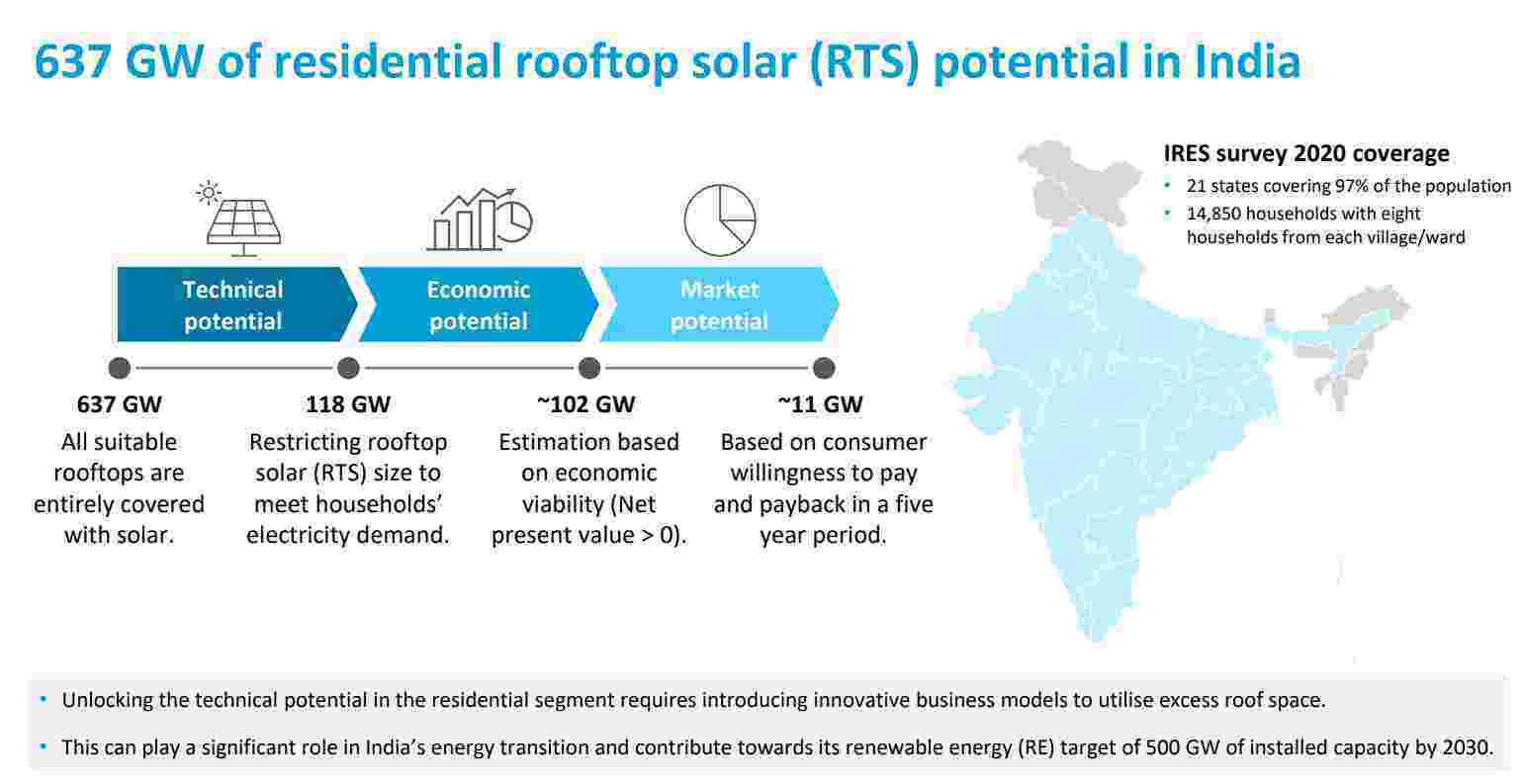
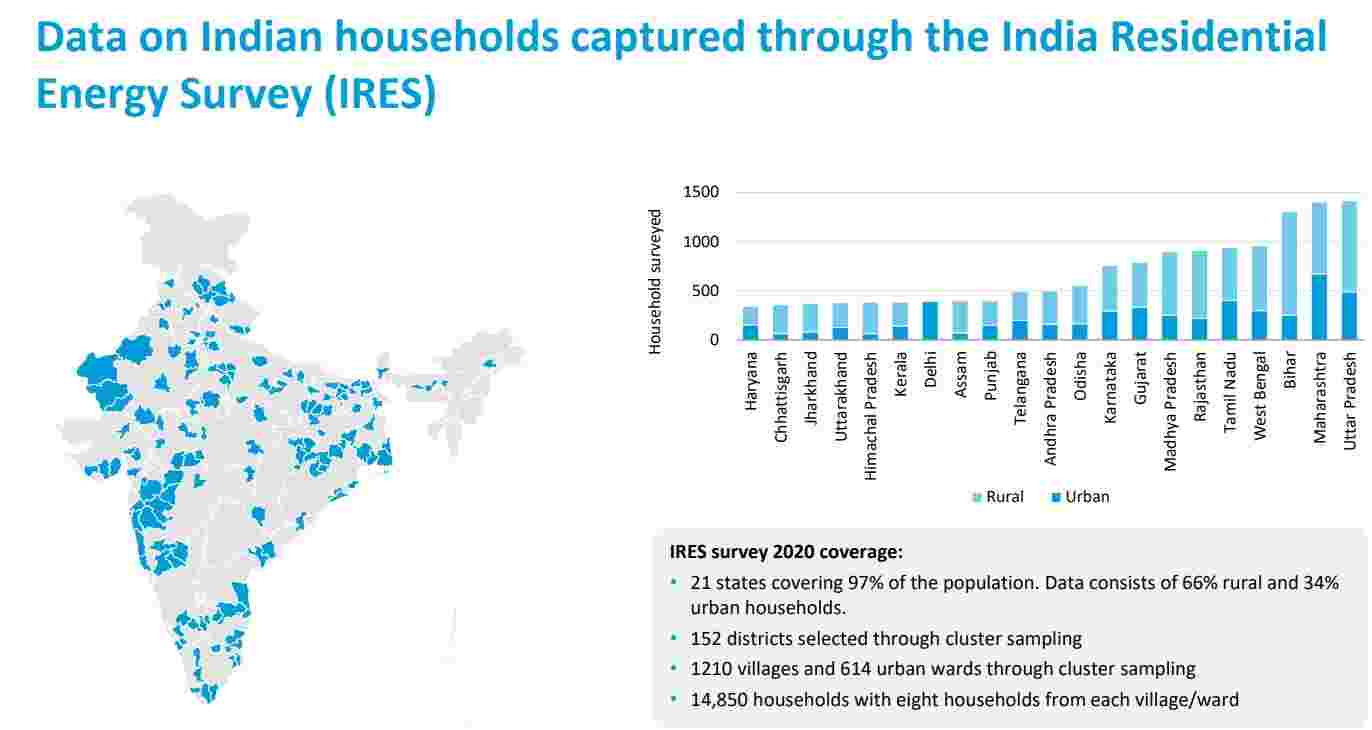
A study conducted by CEEW (Council on Energy, Environment and Water) indicates that there is a capacity of installing 637 GW of Solar Photovoltaic (PV) on the roofs of buildings. Tapping one-third of this potential could meet the total electricity demand of the Indian residential sector which is almost equal to 310 TWh.
However, lower electric power use in most residential houses lowers the magnitude of this technical potential to a level of 118 GW. Without any capital subsidy, the volume goes down to 11 GW, the report says. Nevertheless, with the government subsidy, there is a much higher possibility that it can lift the potential to 32 GW, implying that more consumers have opportunities to get involved using this alternative energy source.
 In 2015, the government adopted the Grid Connected Rooftop and Small Solar Power Plants Programme to establish India's 4,200 MW rooftop solar plants by 2019-20.
In 2017 the government launched the program with a budget of Rs.50,000 crore that was directed towards rooftop solar projects to be completed by next fiscal year. Since the deficiencies of the program were evident, the Ministry of New and Renewable Energy (MNRE) issued a fresh notification, choosing the distribution companies and their local offices as the most important agents of the process of execution and implementation.
Presently, the latest scheme encompasses all necessary components, with analysts asserting that the primary remaining challenge lies in bolstering consumer awareness, ensuring the availability of reputable vendors, and effectively implementing the initiative at the state level.
According to the CEEW report, the process of solarizing residential households provides significant economic advantages to power distribution companies. These benefits include alleviating the cross-subsidy burden, mitigating transmission and distribution losses, and ultimately lowering the average cost of serving consumers.
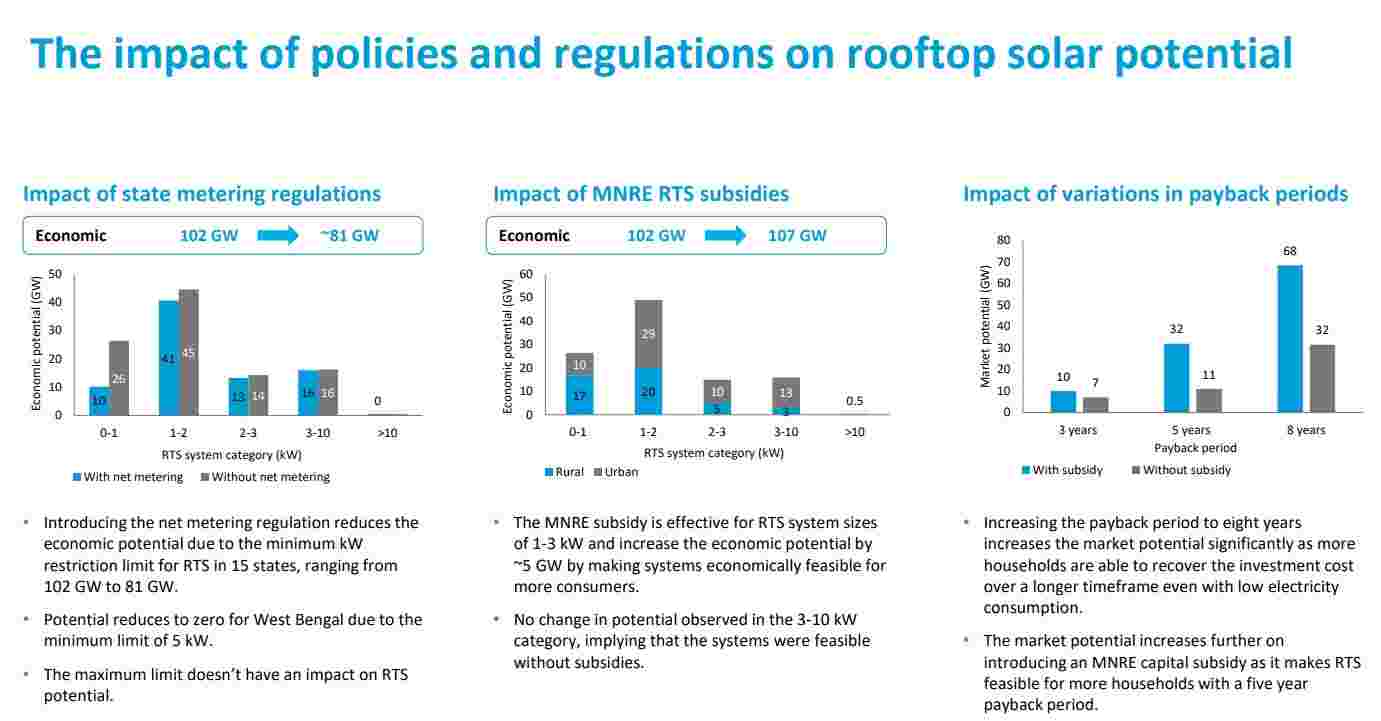 As stipulated by MNRE, the benchmark cost of a rooftop solar system ranging from 1-2 kW is Rs 43,140 per kW, applicable to general category states and Union Territories. The repayment period for loans obtained for rooftop solar installations typically spans 5-6 years. With a module lifespan of 25 years, analysts suggest that for systems falling within the 2-3 kW category, it is feasible to settle the loan within the same timeframe.
The the government under 'PM Surya Ghar Muft Bijliee Yojana,' has set an ambitious target of installing rooftop solar panels in 10 million households within a span of two years. Government data indicates that the country presently possesses a cumulative residential rooftop solar capacity of 2.7 GW, with approximately 0.67 million households already equipped with rooftop solar systems. The ministry believes that the envisioned target of 10 million households adopting rooftop solar installations will witness further augmentation.
According to government projections, manufacturing capacities totaling 7,400 MW are anticipated to be operational by October 2024, followed by an increase to 16,800 MW by April 2025, and further expansion to 15,400 MW by April 2026 under the scheme.
Image courtsey: Council on Energy, Environment and Water (CEEW)
Kindly follow us on: