
India’s EV industry may ultimately be shaped less by flashy vehicle launches and more by battery quality, supply chains, and manufacturing efficiency.
While the sector’s early growth was driven by subsidies, aggressive pricing, new product rollouts, and rising consumer curiosity, the next phase could depend on whether companies can crack battery economics and scale affordable production.
Over the past few years, EV makers competed for market visibility through scooters, bikes, e-rickshaws, charging partnerships, and dealership expansion. But as competition intensifies and subsidies gradually recede, the focus is shifting towards deeper structural questions: battery localisation, raw material access, manufacturing scale, charging reliability, and long-term cost competitiveness.
If companies can build reliable batteries at lower costs while strengthening domestic supply chains, India’s electric mobility transition could move from cautious momentum to a far more decisive mass-market shift.
As these developments unfold, analysts increasingly believe that decisive contests will occur not inside showrooms or on the roads but in battery manufacturing facilities. Ola Electric’s decision to invest ₹2,000 crore (US$208 million) in battery cells and EV operations signals a broader structural transition.
The move reflects a growing understanding across India’s EV ecosystem that long-term competitiveness may ultimately depend less on vehicle assembly and more on control over battery technology, localisation, and manufacturing efficiency. This matters because batteries aren’t a single component but the economic core of the EV ecosystem.
Batteries become the strategic core
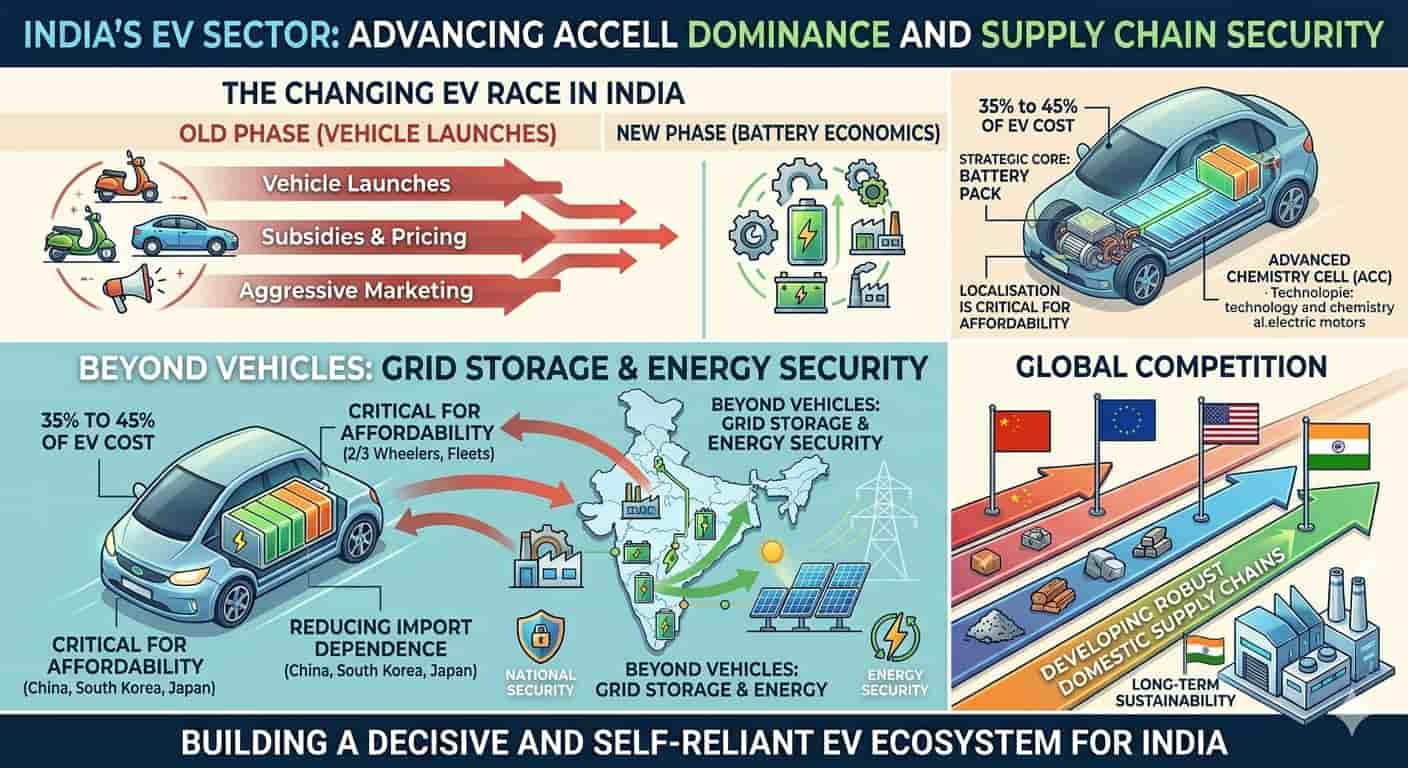
Globally, batteries account for 35% to 45% of an EV’s cost, depending on the vehicle category and battery chemistry. The economics of electric mobility are closely tied to battery sourcing, access to raw materials, manufacturing scale, and improvements in energy density. For Indian EV manufacturers operating in a price-sensitive market, these factors have significant implications.
Unlike premium Western EV markets, India’s mobility transition is expected to be driven largely by affordability. Two- and three-wheelers, fleet and logistics vehicles, and compact passenger EVs will likely dominate in terms of volume. In such a market, even marginal reductions in battery costs can significantly influence adoption rates.
Industry analysts increasingly believe that companies capable of reducing dependence on imported batteries, lowering production costs, and improving manufacturing integration may gain a long-term strategic advantage.
“India’s EV sector is steadily shifting from a vehicle-assembly story to a battery economics story,” said an industry analyst tracking mobility manufacturing trends. “The next phase will likely be defined by which companies can localise more deeply and achieve manufacturing scale faster.”
This explains why battery localisation is now emerging as a central theme across India’s electric mobility sector.
Why localisation is becoming critical
India imports battery cells from East Asian supply chains, dominated by China, South Korea, and Japan. Although India has made progress in battery pack assembly and EV integration, large-scale domestic cell manufacturing remains in its early stages. However, this dependence on imports has created strategic vulnerabilities.
Supply chain disruptions, currency volatility, geopolitical risks, and global competition in mineral mining highlight the risks of relying heavily on imported battery ecosystems. Policymakers have begun to realise that local manufacturing and consumption in India will pick up once it develops the necessary capabilities.
The Government of India’s production-linked incentive (PLI) scheme for Advanced Chemistry Cells (ACC), with an outlay of ₹18,100 crore (US$1.9 billion), is supporting domestic battery manufacturing capacity and reducing dependence on imports.
According to the Ministry of Heavy Industries, the initiative aims to achieve a cumulative ACC battery manufacturing capacity of 50 GWh alongside niche technologies. The initiative forms part of India’s broader industrial strategy linking clean energy, mobility, manufacturing, and energy security.
The importance of these schemes extends beyond automobiles alone. Battery manufacturing sits at the intersection of multiple strategic sectors, including renewable energy storage, grid management, industrial electronics, defence systems, and future clean-energy infrastructure.
As a result, India’s battery ambitions increasingly resemble a broader industrial policy project rather than merely an automotive initiative.
Ola Electric reflects a larger industry shift
Against this backdrop, Ola Electric’s latest investment push is viewed as part of a broader race to gain greater control over manufacturing. The company has been aggressively positioning itself not only as an EV manufacturer but also as a vertically integrated energy and mobility player. Its investments in battery cell manufacturing, gigafactory ambitions, and localisation efforts aim to reduce dependence on imported components and improve cost structures over the long term.
Industry observers note that India’s EV market is now entering a phase where manufacturing depth may become more important than marketing visibility.
In the early years of India’s EV transition, companies focused more on product announcements, dealership expansion, software features, and customer acquisition. With rising competition, subsidy rationalisation, and tighter pricing pressure, market priorities are structurally shifting.
“The market is becoming less forgiving,” noted a mobility-sector consultant involved in EV supply chain projects. “Companies can no longer rely solely on aggressive launches or discount-led growth. Sustainable economics and manufacturing efficiency are becoming important.”
This shift is particularly important because India’s EV ecosystem is simultaneously facing margin pressure and growing competition.
India’s EV future depends on cost compression
India’s EV adoption story ultimately depends on affordability. While premium EVs generate visibility and investor attention, the real scale of India’s mobility transition will likely emerge through lower-cost mass-market vehicles. This includes electric scooters, delivery fleets, e-rickshaws, small commercial vehicles, and compact urban EVs, and in these categories, cost sensitivity remains extremely high.
Industry estimates suggest that, worldwide, battery prices have already declined substantially over the last decade. However, for India to achieve deep EV penetration, costs may need to fall further while charging infrastructure and access to financing continue to improve.
This is where domestic manufacturing becomes strategically important. Local battery production can potentially reduce logistics costs, currency exposure, import dependence, and supply chain uncertainties. It may also improve production flexibility and accelerate innovation tailored to Indian conditions.
At the same time, localisation could support job creation and the expansion of the industrial ecosystem.
Battery manufacturing facilities require extensive supplier networks spanning chemicals, cathode materials, electronics, thermal systems, precision engineering, and recycling infrastructure. As a result, the EV ecosystem is increasingly becoming a broader manufacturing multiplier rather than merely an automotive segment.
The global battery race is intensifying
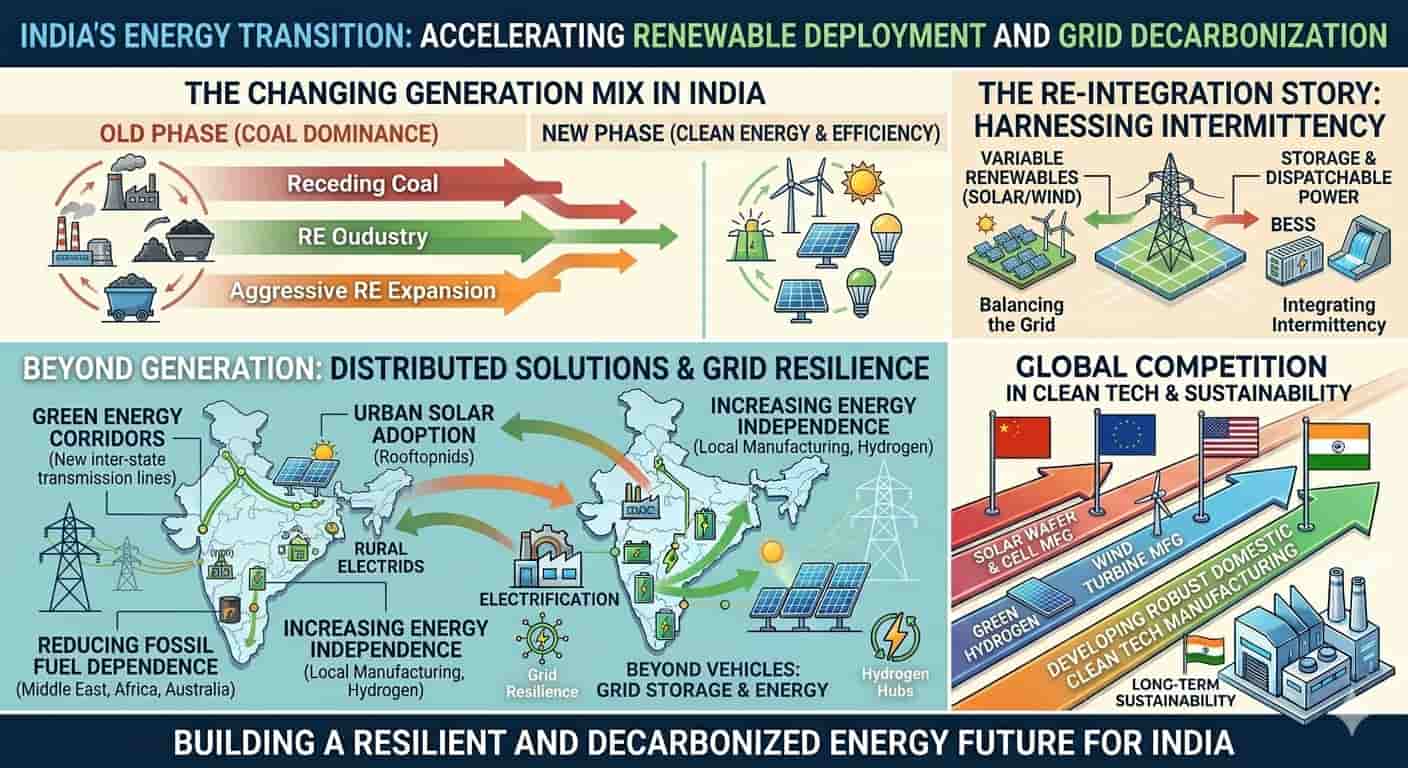
India’s localisation push is also unfolding within a rapidly changing global landscape. Countries across North America, Europe, and Asia are aggressively investing in battery manufacturing capacity as governments seek greater control over clean-energy supply chains.
The global race for lithium, cobalt, nickel, graphite, and rare-earth materials has intensified alongside rising EV growth projections.
China currently dominates much of the global battery supply chain, including refining capacity and cell manufacturing. This dominance has created strategic concerns for multiple countries attempting to strengthen domestic manufacturing resilience.
India faces a complex challenge in this environment. The country has a large future market for EV adoption but remains relatively dependent on imported critical minerals and battery technologies. This suggests India’s long-term competitiveness may depend not only on manufacturing plants but also on securing strategic supply chains and developing domestic technological capabilities.
Analysts increasingly believe recycling and alternative battery chemistries may eventually become important components of India’s strategy.
“Battery security is becoming as important as energy security,” said an analyst tracking industrial transition trends. “Countries are beginning to realise that competitiveness in future mobility will depend on who controls storage technologies and supply chains.”
Beyond vehicles: Batteries and the energy transition
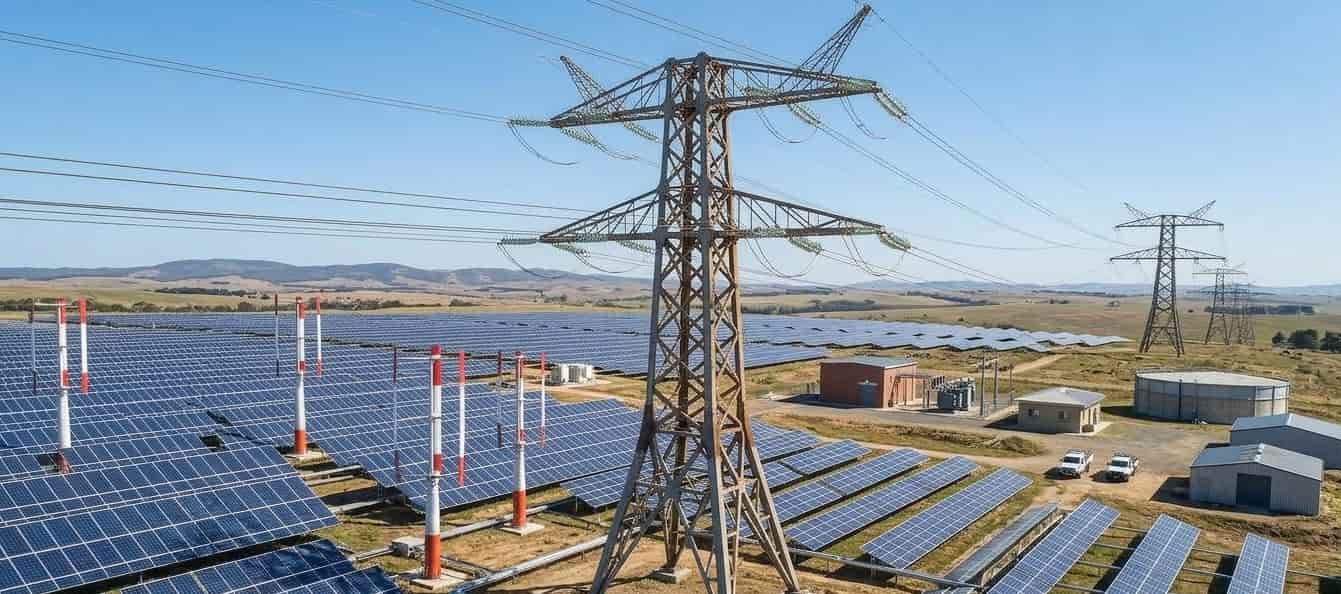
The importance of batteries extends far beyond transport. As India expands renewable energy capacity, energy storage is becoming increasingly critical for grid stability and power management. Solar and wind generation are inherently variable, creating a growing need for storage systems that can balance electricity supply and demand.
This means the same battery ecosystems that support EVs could eventually support broader energy infrastructure. The convergence between electric mobility and renewable energy storage is therefore becoming more visible.
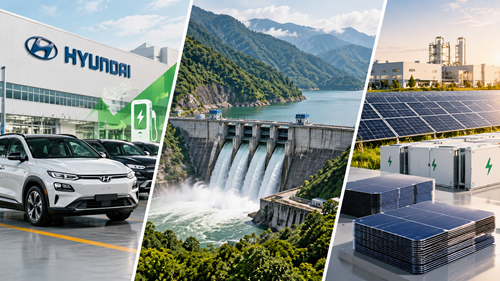
Battery manufacturing capacity developed for mobility applications may later support grid storage projects, distributed energy systems, and industrial backup solutions. In this sense, India’s EV manufacturing ambitions are gradually becoming part of a much broader clean-energy transition strategy.
The government’s larger push towards domestic clean-tech manufacturing also reflects this convergence. Policies linked to EVs, solar manufacturing, green hydrogen, semiconductor production, and advanced batteries increasingly appear interconnected within India’s emerging industrial transition framework.
The next phase of India’s EV story
India’s EV sector is no longer operating solely in the early excitement phase. The market is now entering a more demanding phase in which operational sustainability, manufacturing economics, depth of localisation, and industrial scale may determine long-term winners.
Vehicle launches will continue. Consumer demand will remain important. Charging infrastructure will still shape adoption patterns. But beneath the visible consumer market, a quieter industrial contest is beginning to take shape.
The companies that can build efficient battery ecosystems, control supply chains, reduce production costs, and deeply integrate manufacturing into India’s industrial base may ultimately shape the future of affordable electric mobility.
The next EV battle in India may therefore not be fought through advertising campaigns or showroom launches. It may increasingly unfold inside battery factories, supply-chain corridors, and manufacturing clusters that could define the future economics of India’s clean mobility transition.