

India’s electric mobility transition is entering a more contested phase, where on-ground realities are beginning to challenge policy ambition. While the push towards full electrification continues, recent developments suggest that the pathway may be more complex—and slower—than initially expected.
A growing view within the auto ecosystem is that hybrid vehicles may be better aligned with current Indian conditions. For long-distance drivers and highway-heavy usage, hybrids offer a practical balance—delivering fuel efficiency without the range anxiety associated with electric vehicles. This reflects a broader consumer hesitation, where convenience and reliability still outweigh environmental considerations in purchase decisions.
At the same time, infrastructure constraints are becoming more visible—not just in terms of availability, but also in governance. A recent dispute in Gurugram over EV charging in residential basements highlights how adoption is being shaped by local-level frictions.
Concerns around safety, lack of regulatory clarity, and resistance from housing societies are creating barriers that go beyond technology or cost.
These challenges point to a deeper issue: EV adoption in India is not merely a technological shift but a systems transition, requiring alignment across urban planning, electricity infrastructure and social acceptance. Even as governments push for charging infrastructure expansion—including proposals to mandate chargers in buildings—the gap between policy intent and implementation remains significant.
Meanwhile, at the industrial level, India is attempting to build a domestic EV ecosystem, particularly in battery manufacturing. Policy efforts are focused on reducing import dependence and creating local value chains, recognising that batteries account for a significant share of EV costs. However, scaling this ecosystem will take time, and cost competitiveness remains a challenge.
This creates a three-way tension within India’s EV narrative. On one side, policy continues to push for rapid electrification. On the other hand, consumers are gravitating towards hybrids as a transitional solution. And in between, infrastructure and institutional constraints are slowing the pace of adoption.
There is also a broader market implication. If hybrids continue to gain traction, they could reshape the trajectory of India’s mobility transition—potentially delaying full electrification while still delivering incremental emissions reductions. This would align with global trends in some markets, where hybrid adoption has outpaced EV growth in the short term.
However, this is not necessarily a setback. It may instead represent a more pragmatic transition pathway, where multiple technologies coexist before a full shift to electric mobility becomes viable. For policymakers, the challenge will be to balance long-term goals with near-term realities—ensuring that interim solutions do not dilute the overall direction of the transition.
Ultimately, India’s EV story is moving from ambition to execution. And in that shift, the constraints are becoming clearer. Infrastructure gaps, regulatory friction, and consumer behaviour are shaping outcomes as much as technology and policy.
The transition, in other words, is no longer just about building EVs—it is about building the system around them.
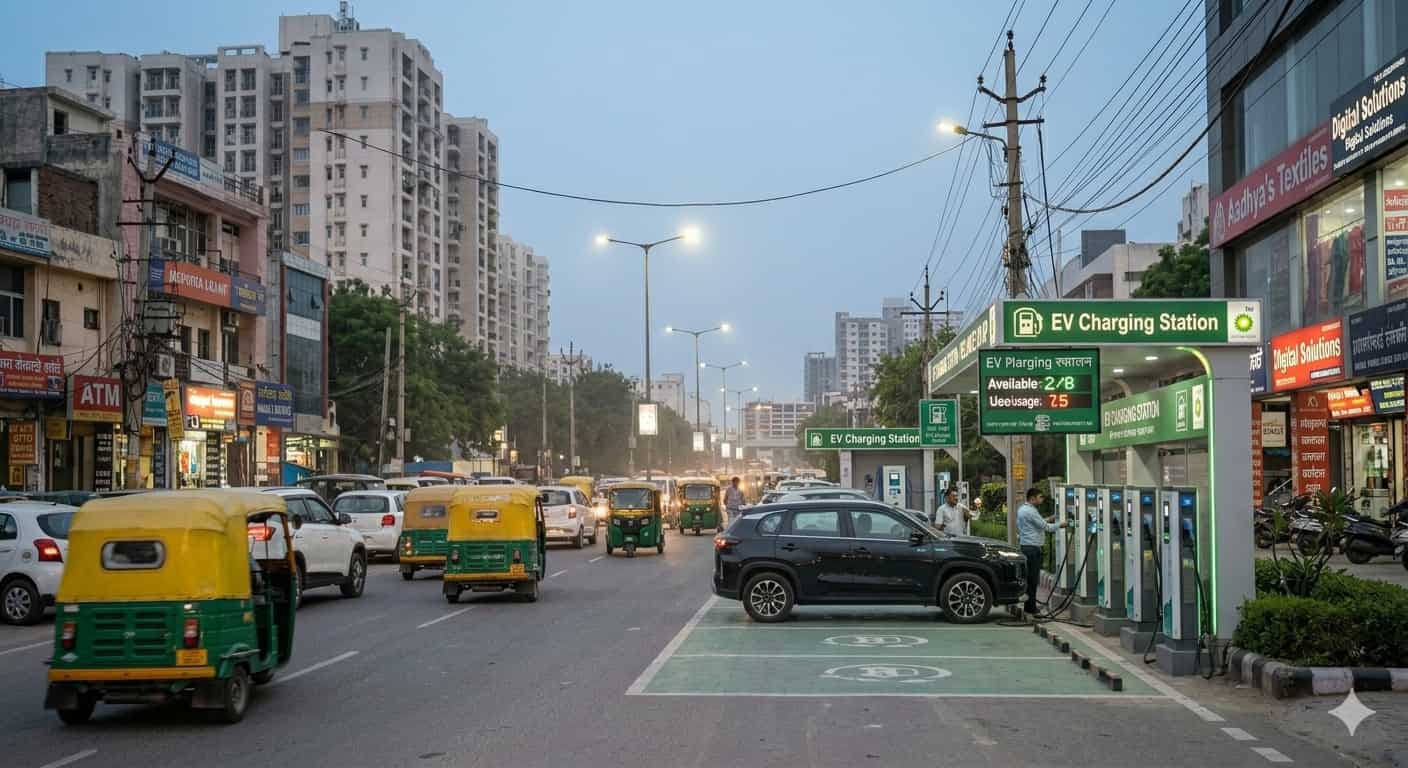
Cover image: AI-generated (representative)