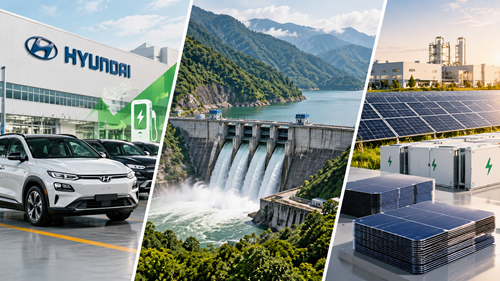


India’s US$433-billion clean-industry pipeline signals the emergence of a manufacturing-led energy transition
India’s pipeline of announced clean-industry projects has expanded by roughly 30% over the past year to reach US$433 billion, making it the world’s third-largest clean industrial investment pipeline after China and the United States.
The projects span solar manufacturing, battery production, green hydrogen, electrolyser manufacturing, renewable energy infrastructure and associated industrial ecosystems. The scale of the pipeline reflects how India’s energy transition is increasingly becoming an industrial-development strategy rather than simply a decarbonisation exercise.
More importantly, the figure represents potential capital allocation into future manufacturing capacity, supply chains and infrastructure networks.
India’s policymakers have increasingly linked industrial incentives, production-linked schemes, energy security objectives and climate commitments into a common framework designed to attract both domestic and international capital.
The growth of the project pipeline suggests investors continue to view India as one of the few markets capable of supporting large-scale clean-energy demand growth over multiple decades.
However, announced projects are not equivalent to realised investments. The next phase will depend on financing availability, transmission infrastructure expansion, domestic demand creation, trade policy stability and access to critical minerals.
The significance of the US$433-billion pipeline therefore lies less in headline investment numbers and more in the signal it sends about India’s ambition to position itself as a major clean-industrial hub in an increasingly fragmented global energy economy.
A 722-MWh battery deployment highlights how storage is moving from pilot scale to critical infrastructure
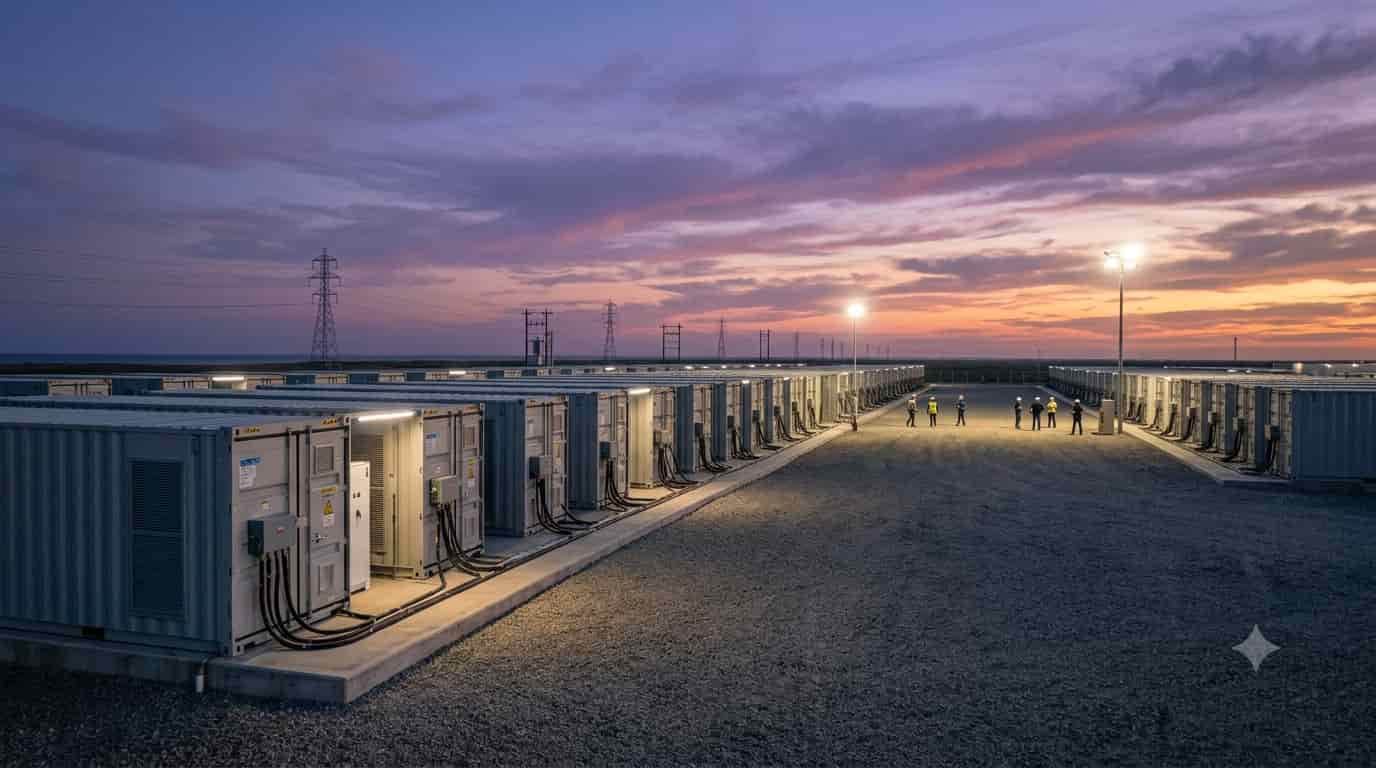
Jinko ESS has completed delivery of a 722-MWh battery energy storage project, underscoring the rapid scaling of storage systems globally as grids absorb growing volumes of variable renewable power.
While large battery projects were once considered demonstration assets, deployments of this magnitude increasingly resemble mainstream infrastructure investments designed to support grid reliability, flexibility and renewable-energy integration.
The significance extends beyond a single project. Global battery-storage deployment is entering a phase where economies of scale, manufacturing expansion and falling technology costs are enabling increasingly larger installations.
This shift is altering investment priorities across power systems, with storage emerging as a strategic asset class rather than merely an auxiliary technology attached to renewable projects.
For India, the development reinforces the direction of travel for its own power sector. As solar and wind capacity continue to expand, storage will become essential for managing grid stability, reducing renewable curtailment and supporting round-the-clock clean-power ambitions.
The global trend towards utility-scale battery infrastructure also strengthens the economic rationale behind India’s efforts to build domestic battery manufacturing and storage ecosystems.