

India’s $37 billion EV-led automobile investment cycle could reshape industrial electricity demand
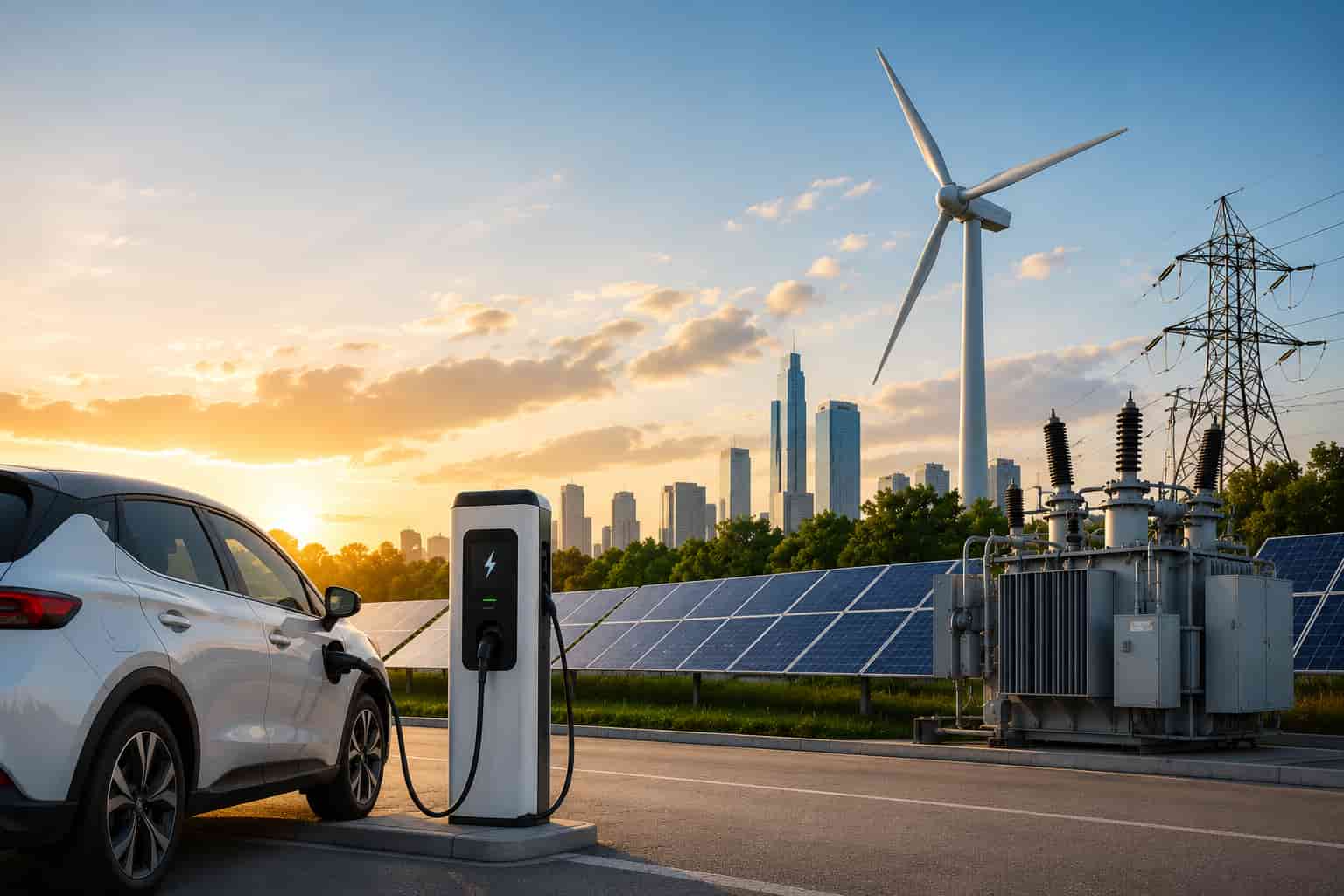
India’s passenger-vehicle sector preparing for nearly Rs 3.5 lakh crore (US$36.6 billion) in investments, largely driven by electric-vehicle transition strategies, highlights how transport electrification is evolving into a major industrial-policy and infrastructure story rather than merely an automotive trend.
The investment wave spans vehicle manufacturing, battery ecosystems, charging infrastructure, semiconductor integration and supply-chain localisation.
The scale of planned capital expenditure could significantly alter India’s future electricity-demand profile. EV manufacturing clusters, battery production facilities and charging networks are expected to create new industrial power-demand centres while simultaneously intensifying pressure on transmission networks and renewable-energy integration. This could further strengthen the link between mobility policy and electricity-market reforms.
The transition also has geopolitical and trade implications. India is attempting to reduce dependence on imported fossil fuels while simultaneously avoiding excessive strategic reliance on imported battery minerals and foreign EV supply chains.
The investment cycle therefore intersects with industrial incentives, trade policy and emerging competition over battery manufacturing dominance.
CleanMax’s $575-m raise highlights rising capital flows into India’s clean-energy market
India-focused renewable power developer CleanMax raising around US$575 million signals how commercial and industrial (C&I) renewable energy is increasingly becoming one of the most capital-intensive and globally attractive segments within India’s energy transition.
The funding, involving a mix of equity and debt, comes at a time when international investors are searching for stable long-duration infrastructure assets linked to India’s decarbonisation story. Unlike utility-scale renewable projects dependent on state discoms, C&I renewable portfolios are being viewed as relatively lower-risk cash-flow businesses because they are tied to large corporate consumers seeking energy-cost stability and sustainability compliance.
The development also reflects a broader structural shift in Indian renewable financing.
As grid-scale solar margins tighten and transmission bottlenecks rise, investors are moving towards distributed renewable assets, open-access projects and hybrid systems supplying industries directly.
This trend is becoming increasingly important as India’s manufacturing expansion, data-centre growth and electrification push industrial power demand sharply upward. The transaction further demonstrates how climate-linked infrastructure capital is steadily moving beyond generation assets into integrated energy-service platforms.
Suzlon’s $331-m FY26 profit surge and 195 MW order pipeline signal wind energy’s strategic return
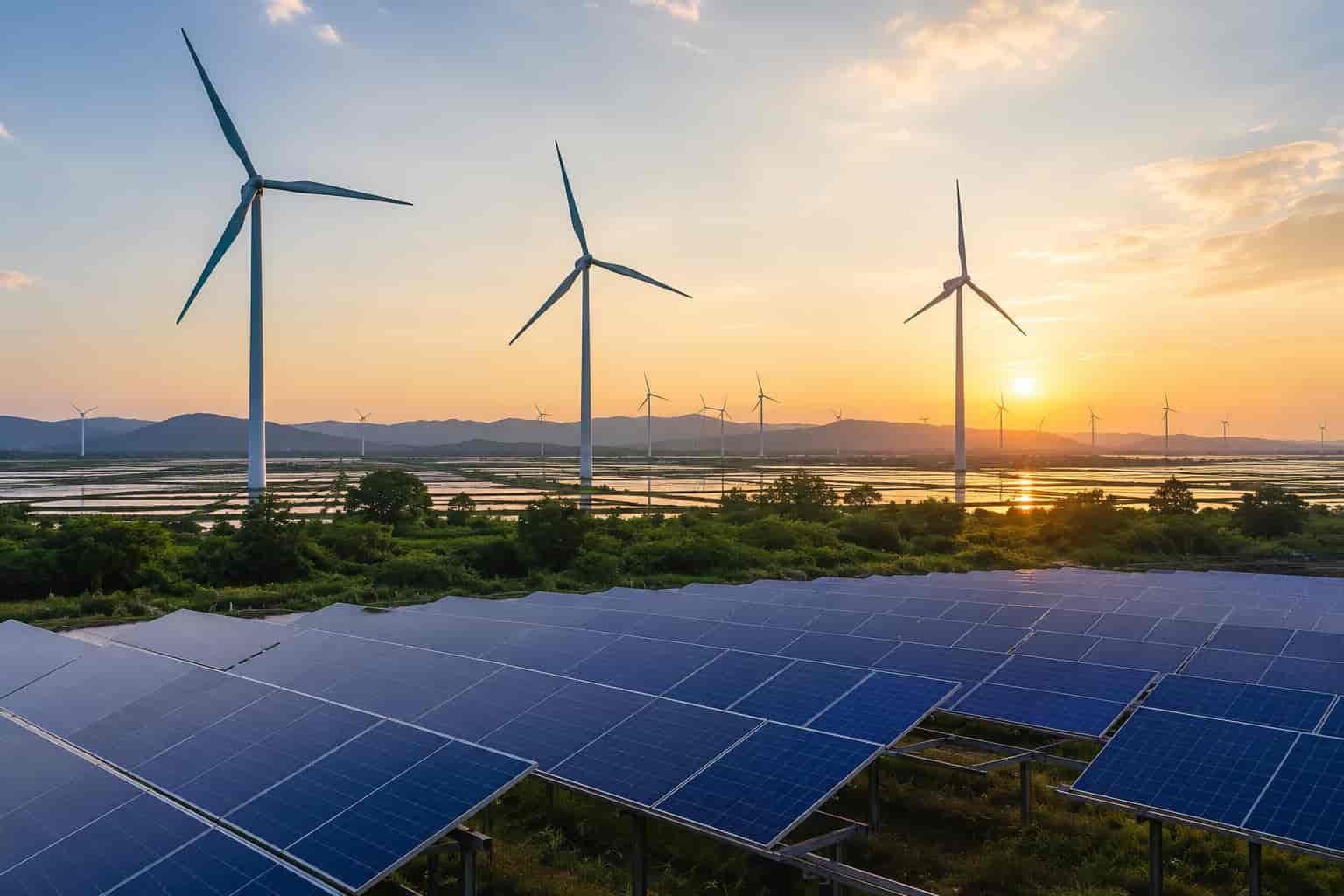
Suzlon Energy securing a 195 MW wind turbine order from Sunsure Energy, alongside reporting a 53% rise in FY26 profit to Rs 3,163 crore(US$331 million), indicates how India’s wind sector is re-emerging after years of stagnation caused by tariff disruptions, land-acquisition constraints and transmission uncertainties.
The company’s improving profitability and execution pipeline suggest that wind manufacturing and project development are regaining strategic relevance within India’s broader renewable-energy architecture.
The renewed momentum is significant because India’s next phase of renewable expansion increasingly depends on round-the-clock and hybrid renewable systems rather than standalone solar capacity.
Wind power is becoming essential for balancing evening demand peaks, supporting green hydrogen ambitions and improving grid stability amid rising renewable penetration. The recovery of domestic turbine manufacturing also has industrial-policy implications, as India seeks to reduce dependence on imported clean-energy equipment while building export-oriented manufacturing capacity.
The scale-up additionally reflects changing capital-allocation trends.
Investors and utilities are increasingly prioritising renewable portfolios capable of delivering higher capacity utilisation and grid reliability rather than merely low headline tariffs. This could reshape future renewable auctions, transmission planning and storage integration strategies across India’s electricity system.
KPI Green’s planned $1 billion renewables trust reflects the rise of yield-driven clean-energy finance
KPI Green Energy exploring the launch of a US$1 billion renewable-energy infrastructure trust by 2028 signals how India’s clean-energy sector is gradually moving towards mature asset-recycling and yield-based financing structures. Such mechanisms, similar to infrastructure investment trusts (InvITs), allow developers to monetise operational assets while recycling capital into new projects.
The importance of this shift extends beyond a single company. India’s renewable-energy ambitions require trillions of rupees in long-term financing, and conventional project lending alone is unlikely to meet future capital needs. Yield-oriented infrastructure structures could therefore become increasingly important for attracting pension funds, sovereign wealth capital and institutional investors seeking predictable infrastructure returns.
The development also reflects the financial maturation of India’s renewable sector. As operational renewable portfolios scale up and tariff structures stabilise, developers are beginning to behave less like speculative growth companies and more like infrastructure utilities managing long-duration cash-generating assets.
Transformers and Rectifiers India’s $24-m GETCO order reflects the scale of India’s grid-expansion cycle
Transformers and Rectifiers India Ltd securing a Rs 2.28 billion (US $23.8 million) order from GETCO highlights the growing strategic importance of domestic transmission-equipment manufacturing amid India’s accelerating power-infrastructure expansion.
Transformer demand is rising not only because of renewable integration but also due to industrial electrification, urban load growth and interstate transmission strengthening.
The significance of such orders lies in what they reveal about India’s infrastructure cycle. Transmission networks are increasingly emerging as the hidden backbone of the energy transition, requiring sustained capital deployment in substations, transformers and grid-modernisation systems.
Equipment suppliers are therefore becoming critical industrial beneficiaries of India’s push towards higher renewable penetration and rising electricity consumption.
The trend could also strengthen domestic manufacturing ecosystems linked to power equipment, especially as India attempts to reduce strategic dependence on imported electrical infrastructure and expand indigenous industrial capability.