
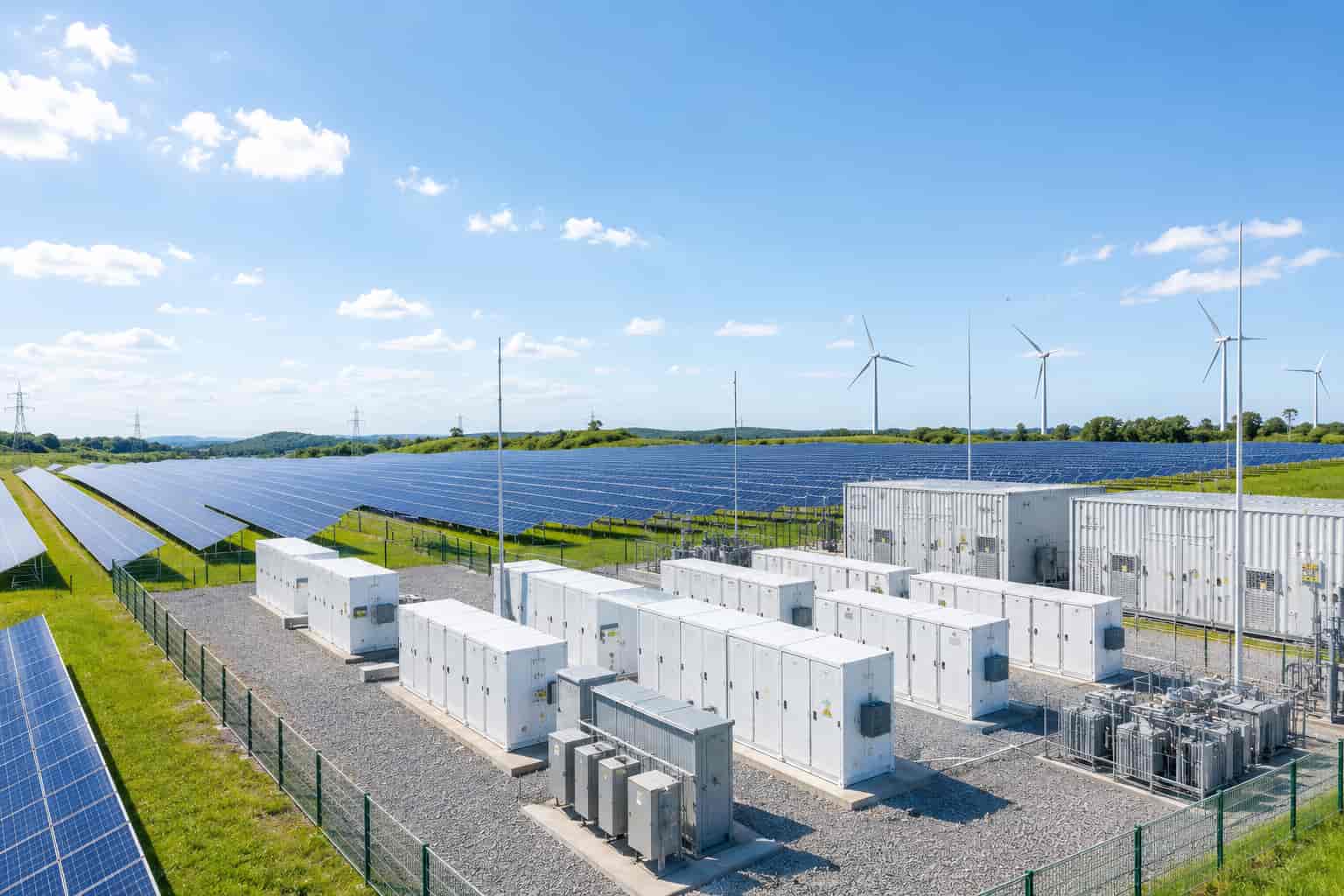

$950-m Avaada financing signals the emergence of India’s next-generation renewable power model
Avaada Group’s financial closure of nearly around ₹9,000 crore ($950 million) for a firm and dispatchable renewable energy (FDRE) project in Rajasthan, along with two 300 MW solar projects, is more than another renewable-energy financing deal.
It represents one of the clearest signs yet that capital markets are beginning to back a new phase of India’s energy transition—one focused not merely on adding renewable capacity, but on delivering reliable, schedulable clean power.
The financing involves a consortium of global and domestic lenders and is being described as India’s largest financing transaction in the FDRE segment.
The significance extends beyond the projects themselves. India’s renewable sector is increasingly confronting the challenge of intermittency, transmission congestion and evening peak demand. FDRE projects, which combine renewable generation with storage and advanced scheduling capabilities, are emerging as a potential bridge between conventional baseload generation and a high-renewable future.
The willingness of lenders to commit such large sums suggests growing confidence in this evolving business model.
The transaction also highlights a broader shift in infrastructure finance. Investors are no longer evaluating renewable projects solely on generation capacity but on their ability to provide grid services, reliability and dispatchability.
As India moves towards a more complex power system, financing structures are likely to increasingly favour integrated renewable-storage platforms over standalone solar and wind projects.
India’s clean-energy buildout could create a $400 billion equipment market by 2035
Forecasts suggesting that India’s energy transition could generate a US$400 billion equipment market by 2035 highlight an often-overlooked dimension of decarbonisation: industrial manufacturing opportunity.
The transition is frequently discussed in terms of climate targets or generation capacity additions. However, the larger economic story may lie in the equipment ecosystem required to support that transition—solar modules, batteries, inverters, transformers, transmission systems, electrolysers and associated manufacturing infrastructure.
For policymakers, the challenge is not simply deploying clean-energy assets but ensuring that a meaningful share of value creation occurs domestically. The scale of the projected market underscores why production-linked incentives, localisation efforts and supply-chain development have become increasingly important elements of India’s energy strategy.
If realised, the equipment opportunity could reshape manufacturing investment patterns, create new industrial clusters and strengthen India’s position within emerging global clean-energy supply chains.
India’s battery race accelerates as Amara Raja commits $178-m to lithium-ion manufacturing and storage
Amara Raja’s decision to earmark 1,700 crore (US$178 million) of capital expenditure this year for lithium-ion cell manufacturing and battery energy storage systems (BESS) reflects the growing strategic importance of batteries in India’s industrial and energy-transition agenda.
The company is developing a gigafactory in Telangana and aims to build 16 GWh of cell manufacturing capacity through phased expansion.
The investment illustrates how India’s battery sector is evolving beyond electric-vehicle demand alone. Battery storage is increasingly becoming a critical infrastructure segment linked to renewable integration, grid balancing and industrial decarbonisation. Amara Raja’s growing focus on energy storage systems suggests that future battery demand may be driven as much by the power sector as by transport electrification.
From an industrial-policy perspective, domestic cell manufacturing remains central to reducing dependence on imported battery technologies and supply chains dominated by East Asia.
While challenges remain around raw materials, technology licensing and scale economics, investments of this nature indicate that India’s battery ecosystem is moving from policy ambition towards large-scale industrial execution.
Uttar Pradesh’s largest battery-storage factory reflects the industrialisation of India’s energy transition
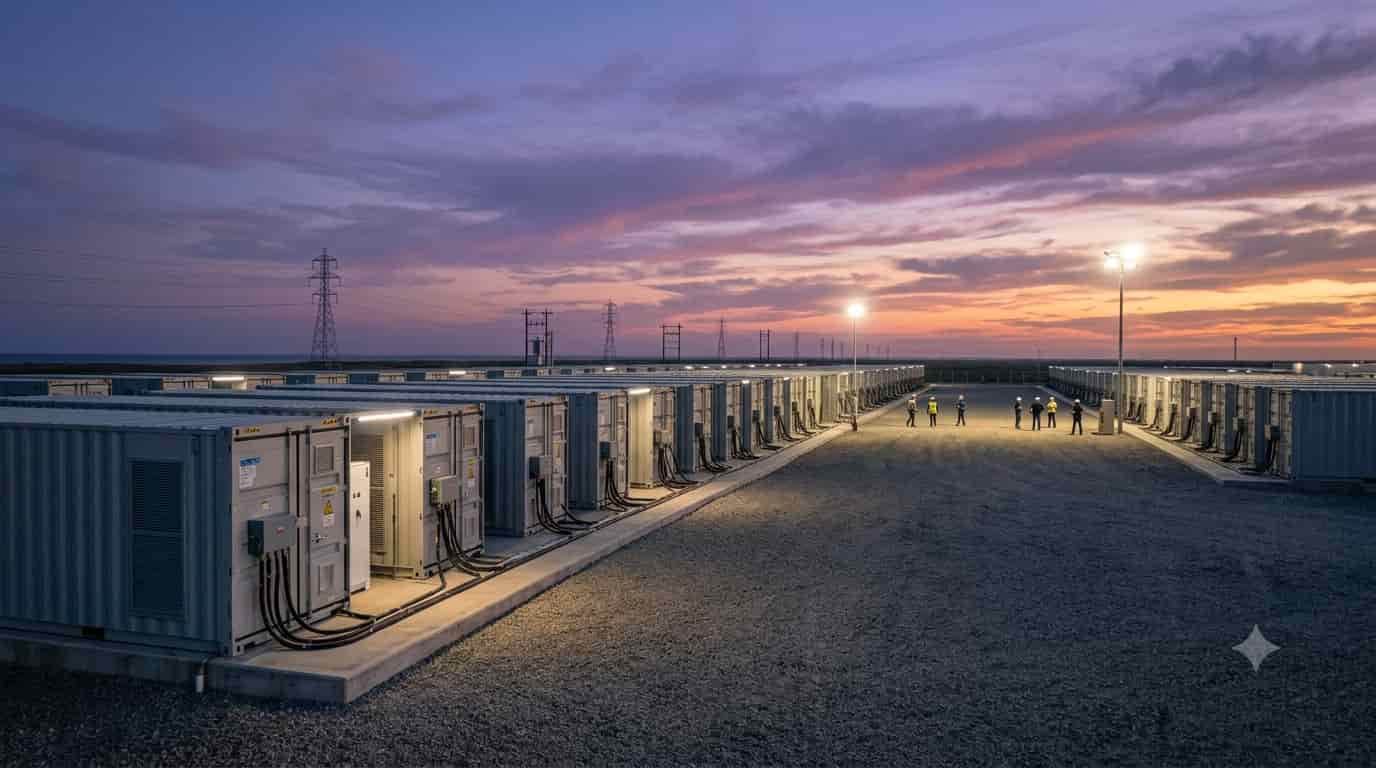
The commissioning of what is being described as India’s largest battery energy storage system (BESS) manufacturing facility by Invergy in Uttar Pradesh points to a structural shift underway in the country’s clean-energy ecosystem.
For years, renewable-energy expansion focused primarily on solar and wind deployment. Increasingly, however, storage infrastructure is emerging as an industrial sector in its own right.
The significance lies not only in manufacturing capacity but in supply-chain formation. As utilities, renewable developers and industrial consumers seek solutions for balancing intermittent generation, demand for grid-scale batteries is expected to rise sharply.
Manufacturing facilities built today could become foundational assets supporting India’s future electricity architecture.
The project also highlights the geographic diversification of clean-energy manufacturing. Rather than being concentrated in a few industrial clusters, energy-transition investments are beginning to spread across multiple states, creating new manufacturing ecosystems linked to storage, power electronics and advanced materials.
Green methanol moves from pilot concept to industrial strategy as JSW backs 300,000-tonne project
JSW Steel’s agreement to develop a 300,000-tonne green methanol project demonstrates how India’s decarbonisation agenda is gradually expanding beyond electricity into hard-to-abate industrial sectors.
While renewable power dominates energy-transition discussions, industries such as steel, shipping and chemicals will require alternative low-carbon fuels if emission reductions are to deepen.
Green methanol is attracting growing global interest because it can serve both industrial feedstock and maritime fuel markets. For Indian industry, early investments may provide a strategic foothold in emerging low-carbon value chains before international regulations and carbon-border measures become more stringent.
The project also reflects the growing convergence between renewable-energy development, green hydrogen production and industrial manufacturing.
As India seeks to position itself in future clean-fuel markets, projects of this nature may become important indicators of industrial competitiveness rather than purely environmental initiatives.
A $158-m crore storage pipeline shows batteries are becoming a standalone infrastructure asset class
Ganesh Green’s disclosure that its battery energy storage pipeline has reached ₹1,510 crore (US$158 million), overtaking its solar business, offers an important signal about changing investment priorities within India’s clean-energy sector.
For much of the past decade, solar generation attracted the bulk of renewable investment. Increasingly, however, the market is recognising that storage infrastructure may become equally critical to maintaining grid stability and enabling higher renewable penetration.
The growth of battery pipelines across developers and manufacturers suggests that storage is evolving into a distinct infrastructure segment rather than an adjunct to solar projects.
The development also mirrors a broader global trend. As renewable deployment scales up, value creation is shifting from electricity generation alone towards flexibility, reliability and energy management. Companies that position themselves early in storage-related value chains could benefit from this structural transition.