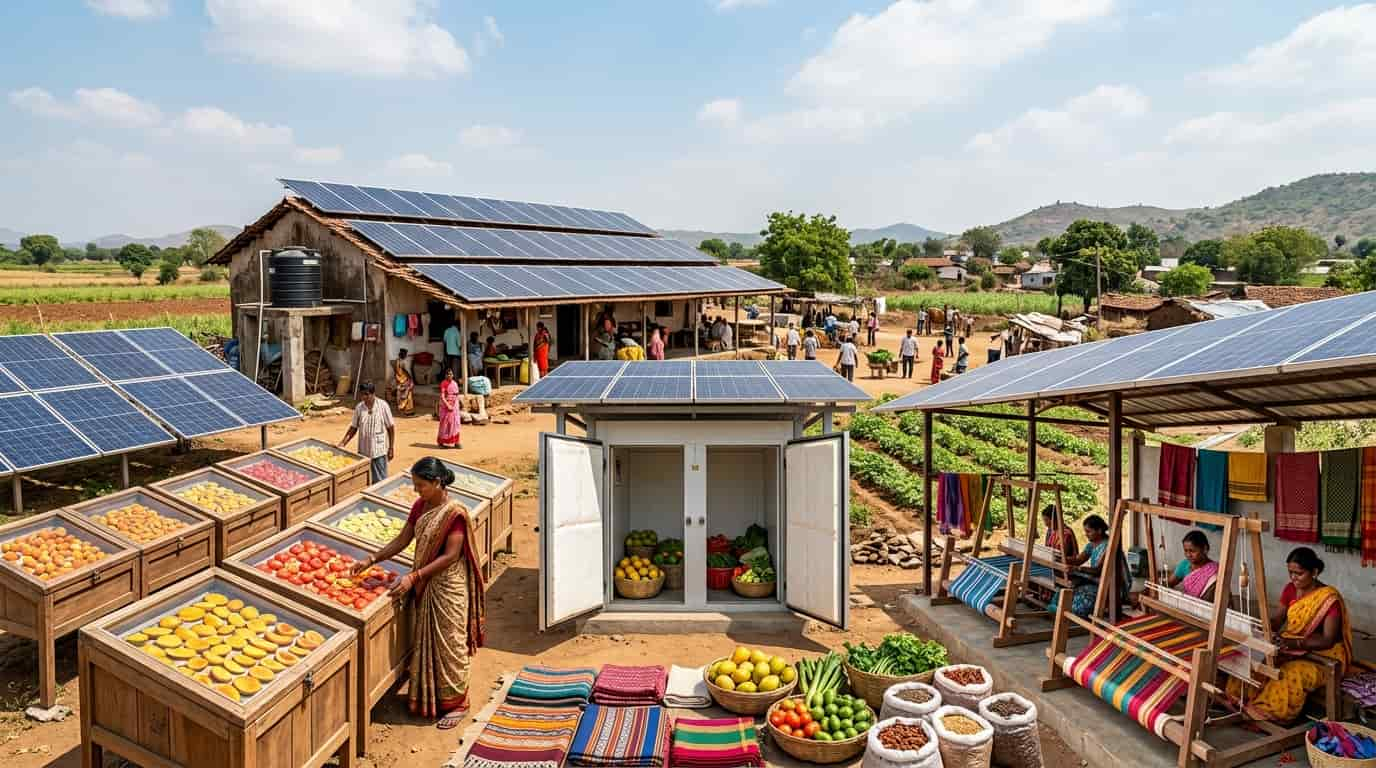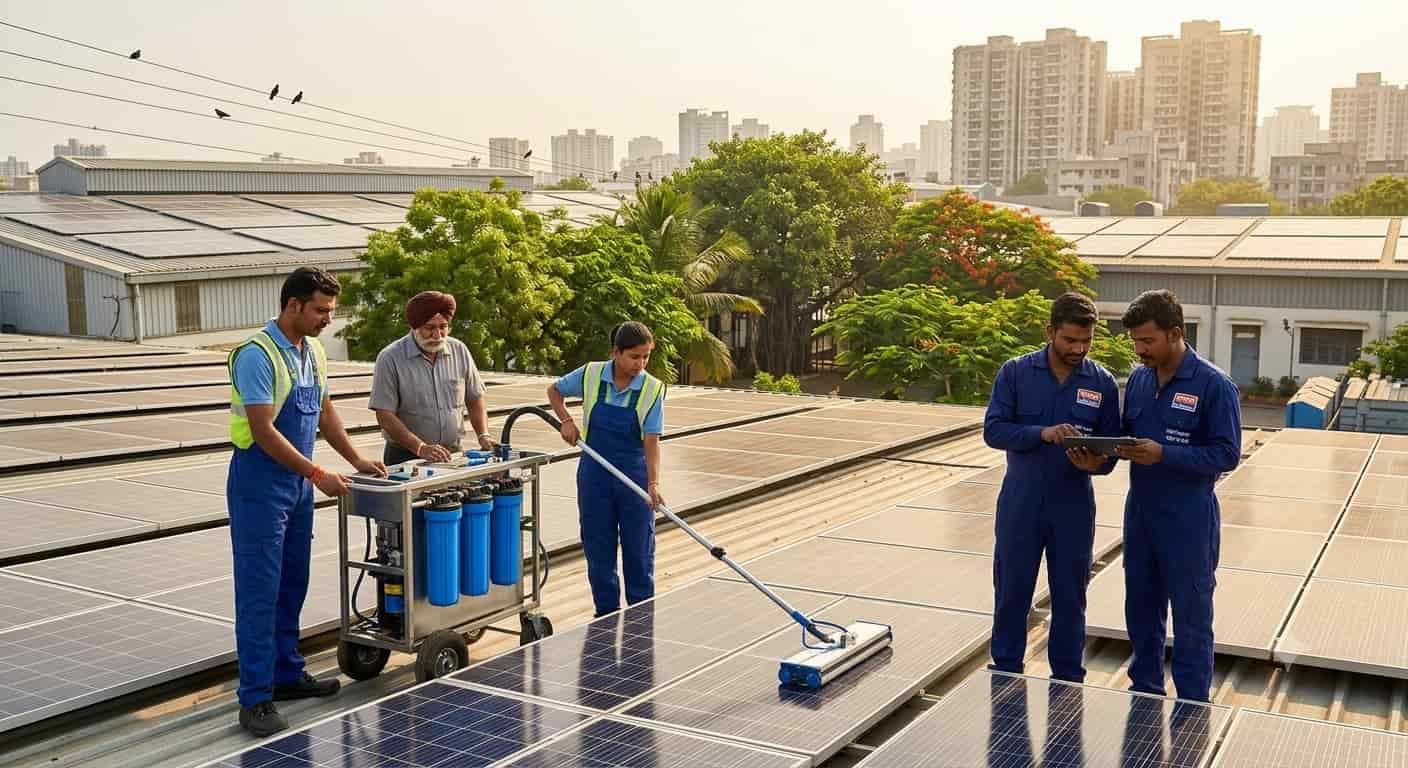
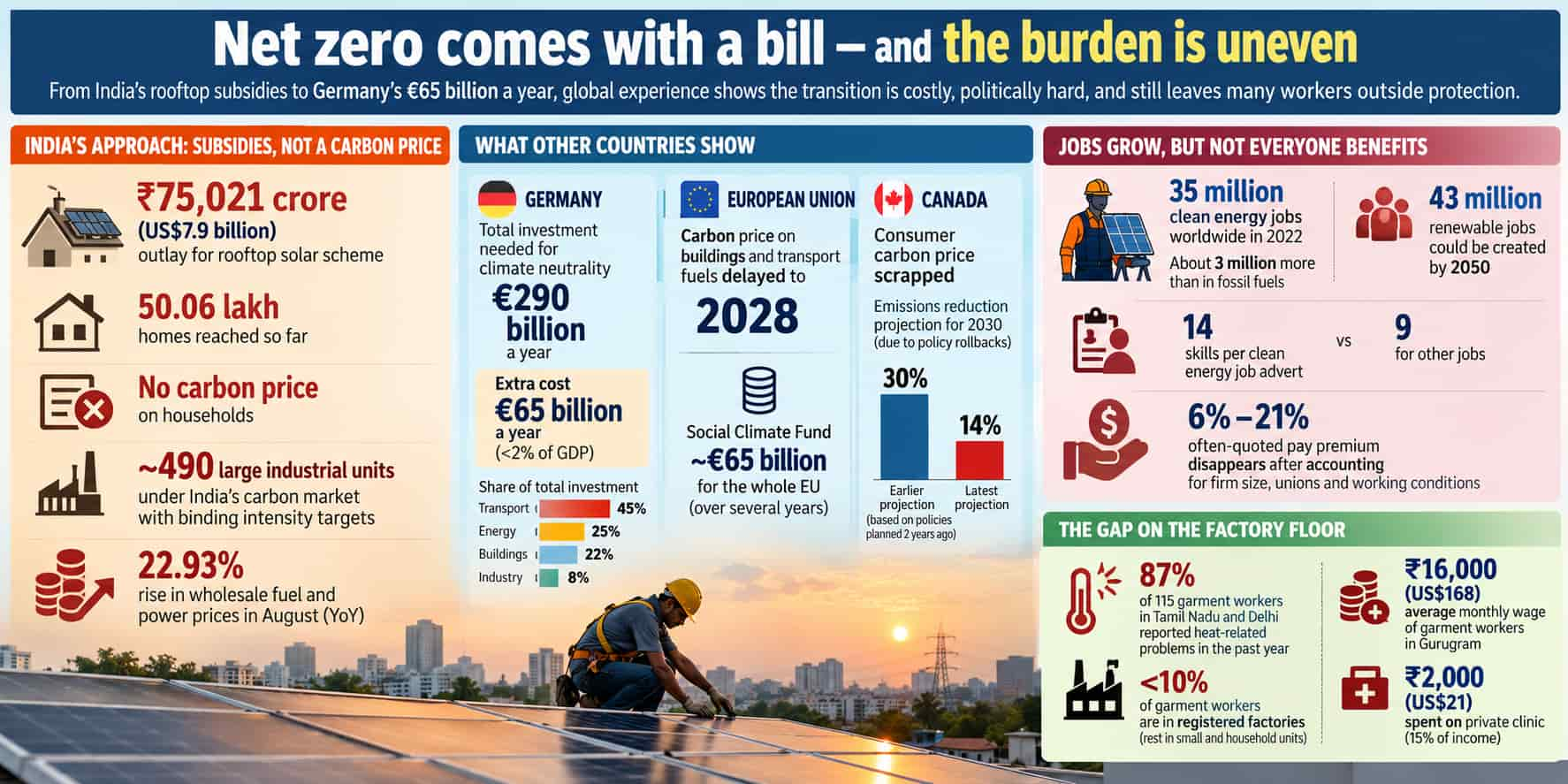
India has decided to pay for its energy transition through subsidies, not through a carbon price on households. The rooftop solar scheme alone has an outlay of ₹75,021 crore (US$7.9 billion) and has reached 50.06 lakh homes, as Indoen reported earlier. No family is asked to pay a tax and wait for a refund.
That choice looks smart, given how other countries are faring. But it does not make the question of who pays go away. It only moves it. Subsidies need fiscal room, and some workers fall outside every scheme.
A price India chose not to charge
India has no explicit carbon price on households. Its carbon market has binding intensity targets for around 490 large industrial units. It is slated to start issuing credits around this month, according to a media report, though dates have moved before. Households get help through subsidies instead.
This avoids one trap but opens another. A recent study, published in Nature Climate Change, flags information and credit barriers that keep poorer families from using subsidies. India’s own scheme is racing a March 2027 deadline for one crore homes, and its next phase is being shaped by rules more than cash.
Indian households also face a price shock that has nothing to do with climate policy. Wholesale fuel and power prices rose 22.93% year on year in August, as the West Asia war and the Hormuz blockade lifted oil costs, as per recent reporting. Seen this way, a rooftop panel is insurance against imported fuel, not only a climate measure. That may be an easier sell to voters than a carbon price ever was.
At the Pre-COP31 meeting in Fiji, India’s environment minister said there can be no one-size-fits-all pathway. He asked for equal attention to adaptation, mitigation and means of implementation, according to an official release.
The study’s authors say much the same about local context. Both are right. But local context can describe a good design. It can also excuse a gap.
 What Germany, Canada and the EU show
Germany has put a number on becoming climate neutral. Its development bank, KfW, says the country must invest about €290 billion a year, according to a media report. Much of that would happen even with fossil fuels. The extra cost is about €65 billion a year, or less than 2% of GDP.
A rich economy can find that money. The split shows the harder part. Transport would take 45% of the total, energy 25%, buildings 22% and industry 8%. Households would have to renovate homes and switch to electric vehicles. Germany invested about €110 billion a year in climate action between 2018 and 2023, less than half of what is now needed.
The usual answer is a carbon price with a rebate. The above-mentioned study says this is too simple. It used data from over 260,000 households in 25 EU countries.
Researchers compared three ways of cutting emissions by 55% by 2030. Standards alone hurt poorer families, who spend more of their income on energy. Tighter carbon pricing raises bills. The best result came from a mix, with nearly half the extra revenue used to subsidise clean energy at home. Even then, outcomes depend on local conditions.
Politics shows the same limit. Canada has scrapped its consumer carbon price. Policies planned two years ago were projected to cut emissions 30% below 2005 levels by 2030. With many now removed or weakened, that projection has fallen to 14%. The same assessment says the United States has ended federal clean energy incentives, and that renewable additions after 2030 could fall nearly 80% below earlier forecasts.
Europe is hesitating too. The EU has pushed its carbon price on building and transport fuels to 2028, after poorer member states raised concerns about low-income households.
The Social Climate Fund meant to cushion them is roughly €65 billion for the whole bloc, industry reports suggest, to be spread over several years. Germany alone needs that much in extra investment every year.
“Handing the money back is the easy half,” said a policy adviser familiar with European carbon-pricing debates. “Households judge a policy by the bill at the pump this month, not by the rebate that may arrive later.”
Jobs will not settle the argument
Supporters of net zero often point to jobs. The numbers are real. The world had 35 million clean energy jobs in 2022, about three million more than in fossil fuels, according to a recent economics explainer. Renewable jobs could reach 43 million by 2050.
But the story has limits. Job growth is fastest while plants and grids are being built, and it can level off later. Clean energy roles ask for more skills, about 14 per advert against nine for other jobs. The much-quoted pay premium of 6% to 21% in some countries all but disappears once firm size, unions and working conditions are accounted for. A green job is not automatically a better-paid job.
Regions that lose coal or oil work may also not be the regions that gain new jobs. Germany’s Ruhr valley is the success story most often cited. Even there, it took early retirement packages, reskilling and close work with unions.
The worker between two nets
The gap shows up on the factory floor. India’s new labour codes took effect on 21 November 2025. They raised the size at which a unit counts as a factory, from 10 workers with power to 20. The government says health and safety protections still apply to units with 10 or more workers. But the code only says the Union government may prescribe standards on temperature and ventilation.
Most garment work sits below even that line. Factory workers make up less than 10% of employment in the garment industry, researchers at IIT Delhi found, with the rest in micro, small and household units. In a survey of 115 garment workers in Tamil Nadu and Delhi, 87% reported heat-related problems such as headaches, dizziness and cramps in the past year. Managers at nine garment factories reported a 3% to 10% fall in productivity during peak summer.
Wages are thin. Garment workers interviewed in Gurugram earn about ₹16,000 (US$168) a month. An operator at an auto-component unit in Faridabad earns ₹13,500 (US$142) and spends about ₹2,000 (US$21), or 15%, on a private clinic. State insurance exists on paper, but workers say the dispensary is far and the wait is long. The number of ESI dispensaries per 100,000 insured people has halved in 15 years, from 9.80 to 4.47.
“The code leaves temperature standards to rules that the Centre may or may not frame,” said a researcher at a New Delhi-based policy think tank. “For a worker on a tin-roofed floor, that is little protection.”
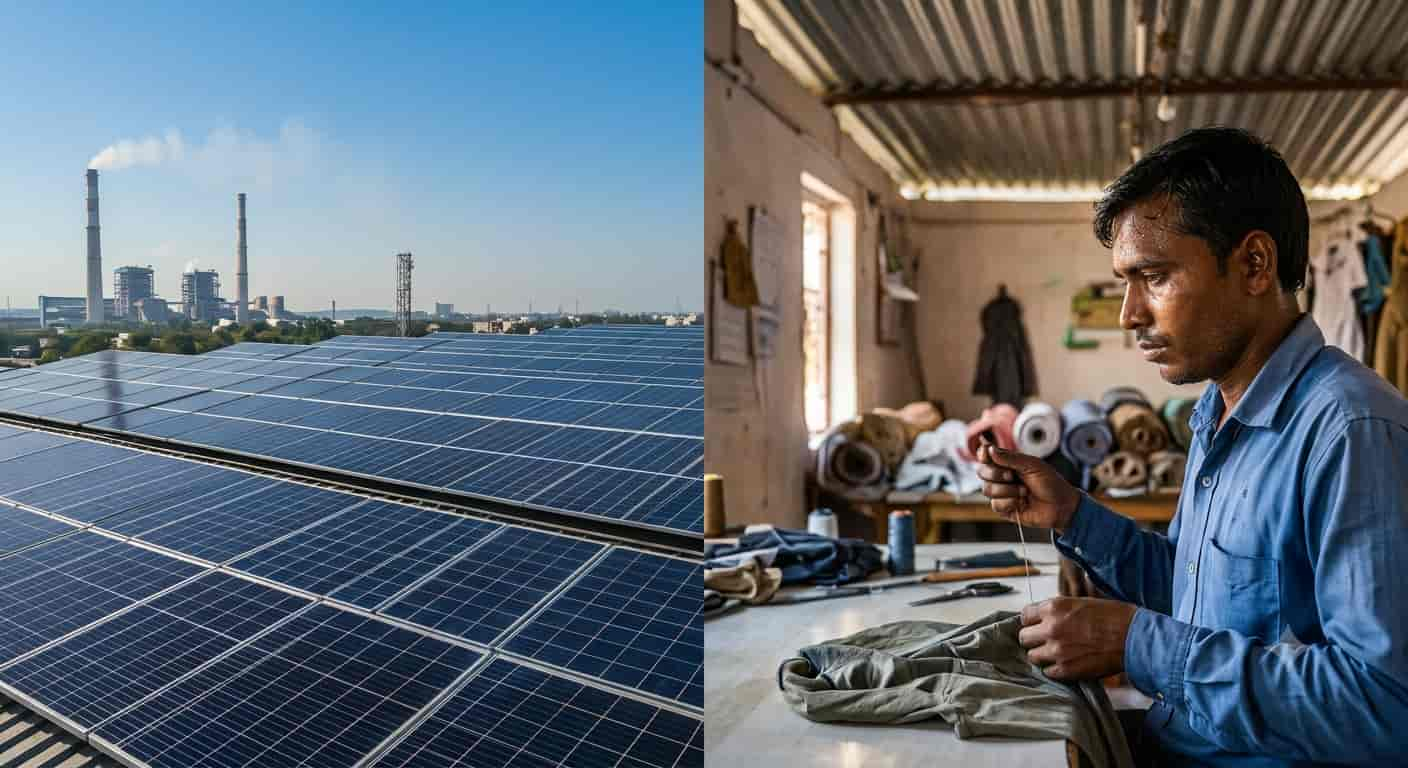
Consider what this may mean. India’s carbon market reaches about 490 large plants. The labour code’s strongest duties apply to registered factories above a size threshold. Many small garment units may sit outside both nets. Yet their workers pay the earliest physical price of a warming climate, in lost wages, medical bills and slower hands on the line.
What to watch
Three markers will tell how this plays out. COP31 opens in Antalya in November, where India will press for equity and means of implementation. The EU’s building and transport carbon price starts in 2028, and its test will be whether the Social Climate Fund calms the politics. In India, Haryana is yet to finalise its rules under the new codes, so heat standards remain open.
The lesson is plain. National cost figures make good headlines. Transitions succeed or fail on the household bill and the temperature on the shop floor. A policy mix that protects both may cost more than the headline numbers suggest. But it may cost less than losing public trust.